With the official release of OpenAI’s GPT-5.6 model family (gpt-5.6-sol, gpt-5.6-terra, and gpt-5.6-luna), OpenAI updated its developer documentation with the GPT-5.6 Model Guidance & Prompting Best Practices. This guide highlights major advances in reasoning, intent inference, and front-end visual design, while establishing a new set of prompt engineering rules for AI developers.
Legacy prompt techniques popularized during the GPT-4 era—such as packing dozens of few-shot examples, repeating ALWAYS / NEVER constraints, and adding “think step by step” meta-prompts—are not only unnecessary with GPT-5.6, but actively degrade performance.
This article unpacks OpenAI’s official model guidance, breaking down lean prompt principles, autonomy boundaries, text.verbosity controls, Pro mode execution, and Programmatic Tool Calling (PTC) architecture.
1. Core Benchmark Finding: Leaner Prompts Boost Evaluation Scores by 15%
Developers frequently over-engineer system prompts with exhaustive micro-rules and defensive guidelines. However, internal coding agent evaluation runs conducted by OpenAI revealed a striking benchmark result:
Configurations with leaner system prompts and simplified tool descriptions improved task evaluation scores by roughly 10%–15%, while reducing total token consumption by 41%–66% and lowering API costs by 33%–67%.
Why Do Lean Prompts Outperform Bloated Prompts?
GPT-5.6 features powerful System 2 reasoning and context inference. Overly dense instructions and repeated constraints create “intent collision,” forcing the model to expend reasoning tokens reconciling micro-rules rather than focusing on task execution.
Official Prompt Pruning Checklist
- State Instructions Once: Avoid repeating the same rule across system prompts, user prompts, and tool descriptions.
- Remove Ineffective Few-shot Examples: Unless an example enforces a strict product schema, excessive examples lock model exploration into narrow demonstrations.
- Expose Essential Tools Only: Expose only the tools required for the task and keep their descriptions concise.
- Prune Built-in Model Meta-Prompts: Omit instructions like “think step by step” or “check your work carefully,” as reasoning and verification are native model behaviors.
2. Define Autonomy and Approval Boundaries
GPT-5.6 exhibits strong proactivity and persistence on multi-step tasks. Without explicit approval boundaries, the model may either pause unnecessarily or take unauthorized actions.
OpenAI recommends embedding a compact policy in the prompt:
For requests to answer, explain, review, diagnose, or plan, inspect the relevant
materials and report the result. Do not implement changes unless the request also
asks for them.

For requests to change, build, or fix, make the requested in-scope local changes
and run relevant non-destructive validation without asking first.

Require confirmation for external writes, destructive actions, purchases, or a
material expansion of scope.
Avoid repeating cautionary phrases like “ask first” or “do not mutate.” Overly repetitive warnings cause unnecessary confirmation requests for safe, local actions like reading logs or running tests.
3. Control Response Length and Style
GPT-5.6 is more concise by default than GPT-5.5. Legacy prompts telling the model to “be concise” can cause responses to become overly terse.
Utilize API-Level text.verbosity
Decouple length management from natural language prompts by using the API parameter text.verbosity (low, medium, or high).
Specify Content Preservation Order for Short Answers
When a concise answer is required, specify what the model must preserve versus what it may trim:
Lead with the conclusion. Include the evidence needed to support it, any material
caveat, and the next action. Omit secondary detail and repetition.

Keep all required facts, decisions, caveats, and next steps. Trim introductions,
repetition, generic reassurance, and optional background first.
Define Writing Tone via Specific Behaviors
Replace vague adjectives like “be empathetic” with clear writing rules:
State the answer directly. If the user reports a problem, acknowledge the
specific issue before giving the next step. Use reassurance only when it is
relevant. Omit generic praise and unnecessary sign-offs.4. Pro Mode Best Practices (reasoning.mode: "pro")
GPT-5.6 supports Pro Mode (reasoning.mode: "pro") in the Responses API. Pro Mode applies more model work to explore and verify solutions before returning a single, highly reliable answer.
- No Meta-Prompts Needed: Do not ask the model to “think step by step,” “use pro mode,” or “generate 5 candidates before selecting.”
- Reasoning Effort (
reasoning.effort): GPT-5.6 supportsnone,low,medium,high,xhigh, andmax. When migrating, preserve your baseline effort first, then benchmark one level lower (e.g., testingmediumagainsthigh) to evaluate token and latency savings. - Persisted Reasoning (
reasoning.context): Setreasoning.context: "all_turns"withprevious_response_idfor multi-turn tasks with stable goals to preserve reasoning context and leverage prompt caching discounts. Usecurrent_turnwhen topic context shifts.
5. Programmatic Tool Calling (PTC) Orchestration
GPT-5.6 introduces Programmatic Tool Calling (PTC), allowing the model to write JavaScript that executes inside a hosted runtime. PTC executes multiple tool calls, passes intermediate data, and performs aggregation without round-trip latency (RTT) or token bloat.
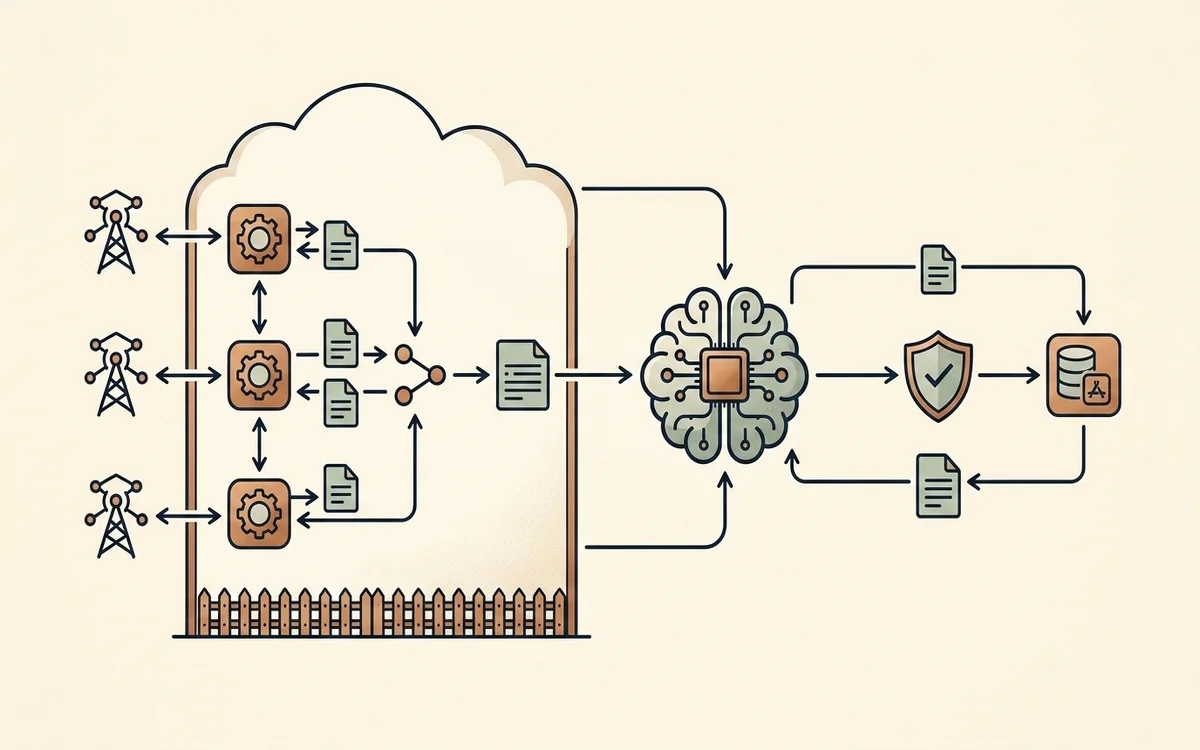
To orchestrate tool-heavy workflows, structure prompts with <tool_orchestration> tags:
<tool_orchestration>
Use Programmatic Tool Calling for [bounded stage] using only [eligible tools].
Run independent calls concurrently when safe. Use only documented tool input
and output fields.

Process and reduce the intermediate results, then emit exactly [output schema],
including the evidence needed for the final answer.

Stop when [condition] is met. Retry transient failures at most [R] times.
Do not repeat completed calls or perform side-effecting actions. If a required
result is still missing, return a clear structured failure.

Use direct tool calls for [semantic judgment, approval, or final validation].
</tool_orchestration>
For tasks requiring a single tool call or where every intermediate output alters the next decision, maintain direct tool calling.
Conclusion: Prompt Engineering Shift for GPT-5.6
| Dimension | Legacy Prompting (GPT-4 / 5.4) | GPT-5.6 Best Practice |
|---|---|---|
| System Prompt | Packed with micro-rules & defensive constraints | Minimalist; focus on core goal & autonomy bounds |
| Few-shot Examples | Loaded with long conversational examples | Minimalist; rely on tool parameter types |
| Length Control | Prompt text instructions (“Be concise”) | API parameter text.verbosity |
| Tool Execution | Multi-turn model-to-API round trips | Hosted Programmatic Tool Calling |
| Reasoning Mode | Prompts like “think step by step” | API configuration (reasoning.mode: "pro", effort) |
By adopting lean prompts, clear autonomy boundaries, API-level verbosity controls, and PTC orchestration, developers can unlock the full potential of GPT-5.6 to build faster, cheaper, and more reliable AI agents.
Primary Sources and Further Reading
- Official Guide: OpenAI Developers: Model guidance for GPT-5.6
- Related Bloss0m Guide: The New Rules of Context Engineering for Claude 5 Models
- Related Bloss0m Guide: GPT-5.6 Sol Prompting: Why Shorter Prompts Score Higher
- Related Bloss0m Guide: What Is GPT-5.6 Sol: Routing, Pricing, and Evaluation
- Related Bloss0m Guide: AI Agent Guide: Architecture, Tools, Evaluation, and Production
Related engineering notes
- Enterprise AI Phil Schmid: Why Agent Harness Is More Important Than Model Leaderboards in 2026 Deep dive into the Jan 2026 article: durability, OS analogies, system evaluation gaps, lightweight Harness under the Bitter Lesson, and hill climbing alongside training-inference convergence.
- AI Engineering Gemini 3.8 Flash Coding-Agent Workflow: Routing Uncertainty from Planning to Execution Using Astra planning and Flash execution as an example, this article adds a SPEC verification gate, escalation rules, and a careful reading of DeepSWE costs.

- AI Engineering What Is AgentEscapeBench: Measuring Out-of-Domain Tool Reasoning A deep read of AgentEscapeBench: why agents fail on out-of-domain, long tool chains, and what this benchmark can and cannot show.