讀法可搭配 三遍掃描法。在本站的基礎方法主線中,本篇接在 AlexNet(上)/(下)、ResNet 與 YOLO 之後。前三篇處理 CV 分類與偵測;Transformer 則讓序列轉換只依賴 attention、不再依賴 recurrence,核心證據包括訓練並行度與 WMT BLEU。
90 秒掌握論文 / The paper in 90 seconds
- 問題:2017 年前 SOTA 序列轉換(seq2seq)多靠 RNN/LSTM/GRU encoder–decoder,計算沿時間步序列展開,難以在長序列上充分並行;Bahdanau 等雖已把 attention 接到 RNN 上,但 recurrence 仍是骨幹(Section 1–2)。
- 核心洞見:提出 Transformer:encoder 與 decoder 皆由 multi-head self-attention 與 position-wise FFN 堆疊而成,以 sinusoidal positional encoding 注入順序,完全拿掉 recurrence 與 convolution。控制點是 可並行的 global attention 對 循序 hidden state;路徑長度對遠距依賴為 (Table 1)。
- 最強證據:WMT 2014 newstest2014(Table 2):Transformer (big) EN-DE 28.4 BLEU(超越先前含 ensemble 的最佳結果)、EN-FR 41.8 BLEU;big 在 8×P100 上訓練 3.5 天(300K steps)。Base 模型 EN-DE 27.3 BLEU,訓練 FLOPs ,低於 GNMT+RL 的 。硬體段落:base 12 小時/100K steps、每 step 0.4 秒(Section 5.2)。
- 主要邊界:任務是 監督式 MT encoder–decoder,不是預訓練語言模型、不是 BERT 雙向編碼、不是 decoder-only GPT、不是 ViT。BERT/GPT-2/3/T5/LLaMA/ChatGPT 的 benchmark 不屬本 PDF;YOLO VOC mAP、ResNet ImageNet 4.49% 亦不是 MT 契約。
我的結論是:Transformer 最值得保留的貢獻,是以 attention 建立新的序列 inductive bias,並讓訓練能夠並行。WMT 28.4/41.8 BLEU 與 12 小時/3.5 天訓練時間,則不能直接當成 2026 LLM 產品的 SLA。
版本與閱讀範圍 / Version and reading scope
本文讀的是 Vaswani et al., NeurIPS 2017 對應的 arXiv:1706.03762 v7(2017-12-06 修訂)。PDF 與 arXiv HTML 標示 arXiv.org perpetual non-exclusive license;Google 另授權在學術評論中重製圖表。作者順序以 v7 為準(隨機排列、同等貢獻):Ashish Vaswani、Noam Shazeer、Niki Parmar、Jakob Uszkoreit、Llion Jones、Aidan N. Gomez、Łukasz Kaiser、Illia Polosukhin。
除摘要外,本文核對 Section 3 架構與 attention、Section 4 與 RNN/CNN 複雜度對照(Table 1)、Section 5 訓練、Section 6 結果(Table 2–4、Figure 3–5 附錄視覺化),以及截至 2026-08-28 的 tensorflow/tensor2tensor 連結。BERT、GPT-2/3、T5、ViT、LLaMA 數字,都不回填。
讀者真正要回答的問題
當你要做 序列到序列 轉換(本篇是英德/英法翻譯)時,該繼續用 RNN encoder–decoder + Bahdanau attention,還是把 recurrence 整段換成 self-attention?Vaswani et al. 選後者,並用 WMT BLEU 與 訓練 FLOPs/牆鐘時間同時報告取捨。
比較精確的讀法不是「Transformer 是不是 2026 最強 LLM」。真正的問題是:global parallel attention 如何改寫 seq2seq 的資料流與訓練成本、WMT-era 數字支持什麼、以及哪些後來預訓練 LM 數字不能寫回這篇。
證據地圖 / Evidence map
| 層次 | 本文採用的說法 |
|---|---|
| 論文直接支持 | Figure 1 encoder–decoder 堆疊;Figure 2 scaled dot-product 與 multi-head attention;Equation (1) attention、Equation (2) FFN;Table 1 路徑長度與並行度;Table 2 WMT BLEU 與訓練 FLOPs;Table 3 base/big 消融;Table 4 句法分析 F1;附錄 Figure 3–5 attention 視覺化。 |
| 作者主張 | 完全依賴 attention 的 transduction 模型品質更好、可並行化、訓練更快;self-attention 路徑短,利於長距依賴;可泛化到 constituency parsing。 |
| 論文未證明 | 雙向預訓練 LM(BERT);decoder-only 生成式預訓練(GPT);視覺 Transformer(ViT);instruction tuning/RLHF;任意長度推理的產品 SLA。 |
| Bloss0m 工程判斷 | 把本篇放在基礎方法主線的序列轉換段落。CV 起點可讀 AlexNet/ResNet/YOLO。BERT GLUE、GPT-3 少樣本與 ViT ImageNet 的結果不屬於原始 Transformer 表。 |
先前方法為何不足 / Why the previous approach is insufficient
Section 1–2 把脈絡寫清楚。RNN/LSTM/GRU seq2seq(Sutskever et al.、Cho et al.)沿時間步更新 ,本質上 序列計算,長序列時 batch 內並行受限。Bahdanau et al. 在 encoder–decoder 上加 additive attention,讓 decoder 對 encoder 全位置加權,但 recurrence 仍是骨幹。ConvS2S、ByteNet 用卷積並行,但遠距依賴需堆疊多層或 dilated conv,路徑長度仍隨距離成長(Table 1)。
YOLO 解的是 整圖偵測一次迴歸;ResNet 解的是 ImageNet 分類深度——它們都沒處理 可變長符號序列的 transduction 與 MT BLEU。
核心直覺 / Core intuition
先不要背公式。想像英→德翻譯一句話:RNN encoder 從左到右讀完英文,壓成一條 hidden 鏈;RNN decoder 再一步一步生成德文,並可用 attention 回頭看 encoder 各位置。Transformer 則讓 encoder 每一層裡 每個英文 subword 直接 attend 到所有英文位置(self-attention),decoder 則 masked self-attention(只看已生成左側)加上 encoder–decoder attention(看全部英文),全程 無 遞推。
對照三種容易混在一起的下一步:
- Bahdanau seq2seq + attention:attention 連接 encoder/decoder,但兩側仍是 RNN。
- Transformer(本篇):encoder/decoder 堆疊 self-attention + FFN;順序靠 positional encoding。
- 後續方法:BERT 雙向 MLM、GPT decoder-only 預訓練、T5 text-to-text、ViT patch attention——數字與任務都不屬於 2017 PDF。
用一個例子走完整個方法 / Walk one example through the method
以下用簡化英→德片段走 推論 一步(Bloss0m 教學例,非論文表格編號)。
- Input:英文子詞序列,例如
The / cat / sat(實際為 BPE,約 37K 詞表,Section 5.1)。 - Intermediate representation:每個 token embedding()加上 positional encoding → 進入 6 層 encoder;每層先 8-head self-attention(每頭 ),再 FFN(512→2048→512),殘差 + LayerNorm(Section 3.1–3.3)。
- Model or system decision:decoder 已生成
Die / Katze;下一步對 masked self-attention(只看左側已生成)與 encoder–decoder attention(對全部英文)輸出下一 token 分布;beam search(beam=4,,Section 6.1)選擇下一子詞。 - Output:完整德文假設
Die Katze saß(對應英文 sat)。 - Likely failure point:句子變長時,self-attention 的計算與記憶體成本隨序列長度呈 成長;罕見詞被切成多個 BPE 子詞後,翻譯也可能失準。附錄 Figure 3–5 只顯示部分 attention head 的定性模式,不能據此推論模型已可靠掌握句法或指代。
技術機制 / Technical mechanism
Encoder–decoder 堆疊(Figure 1、Section 3.1)
- Encoder: 層;每層 = multi-head self-attention + FFN;殘差 + LayerNorm;輸出維度 。
- Decoder: 層;每層 = masked self-attention + encoder–decoder attention + FFN。
- Big 模型(Table 3 末行):、、、300K steps、(EN-FR)。
Scaled dot-product attention(Equation 1、Figure 2)
來自線性投影;除以 避免大 時 softmax 飽和。增大某 key 與 query 的相容性 → 該 value 權重升高 → 輸出更偏向該位置的表示。
Multi-head attention(Section 3.2.2)
頭,;各頭學不同子空間的依賴(附錄視覺化顯示句法/指代等分工)。Encoder–decoder attention 讓 decoder 位置查詢 encoder 全序列。
Positional encoding(Section 3.5)
正弦/餘弦函數注入位置;因 無 recurrence,順序資訊必須顯式加入。Table 3 row (E):學習式位置 embedding 與 sin 版 幾乎相同 BLEU。
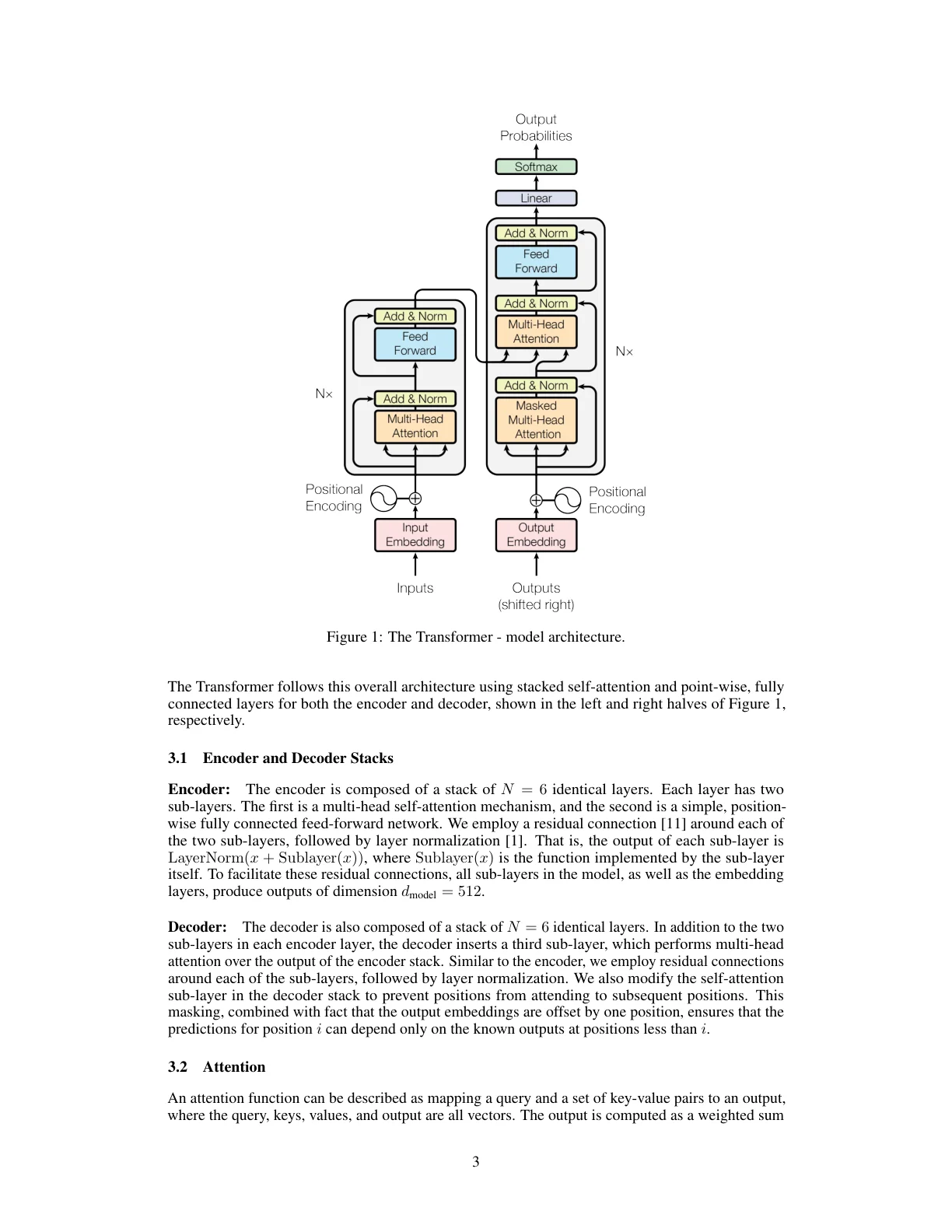
Figure 1,論文 Section 3:Transformer 架構。原圖見 arXiv PDF Figure 1。圖檔自 NeurIPS 2017 camera-ready PDF 擷取;Google 授權學術重製,見 arXiv HTML 頁首。本頁擷取含周邊正文,細節以 PDF 為準。
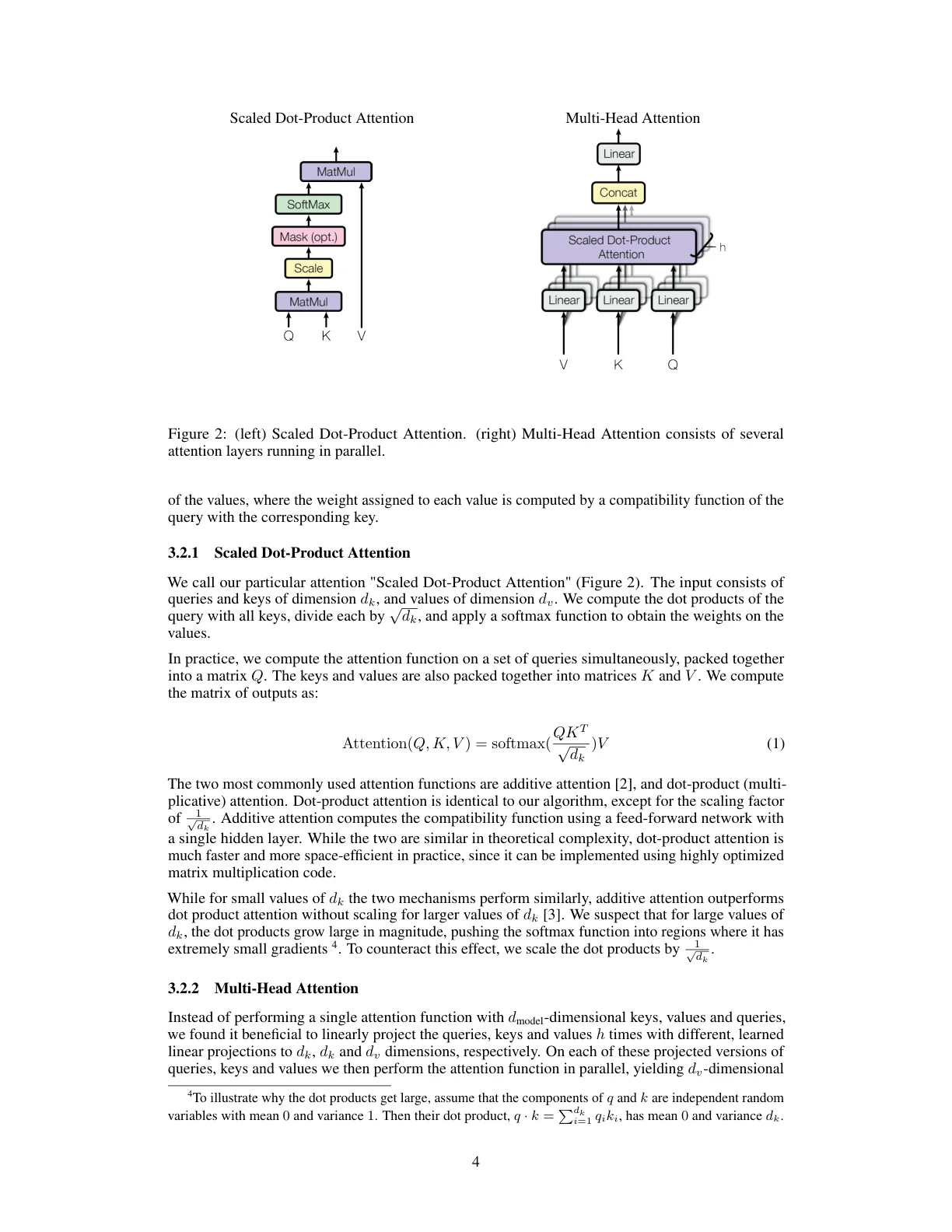
Figure 2,論文 Section 3.2:attention 機制。原圖見 arXiv PDF Figure 2。擷取與授權說明同 Figure 1。
實驗如何讀 / How to read the evidence
Table 2:BLEU 與訓練成本(Section 6.1)
問題:能否在 更低訓練 FLOPs 下超越 GNMT/ConvS2S(含 ensemble)?控制:WMT 2014 newstest2014;beam=4、length penalty 0.6;big 平均最後 20 checkpoints。觀察:Transformer (big) EN-DE 28.4、EN-FR 41.8 BLEU;訓練 FLOPs big EN-DE ,低於 GNMT+RL ensemble 的 。邊界:這是 2014 MT test set,不是 MMLU/HumanEval;41.8 來自 Table 2 欄位(與 abstract 一致)。
Table 1:為何敢拿掉 RNN(Section 4)
問題:self-attention 在 並行度與路徑長度 上相對 RNN/CNN 的代價?觀察:self-attention 每層 sequential ops、最大路徑 ;RNN 為 。邊界:每層複雜度 ——長序列仍貴,論文計畫未來做 restricted attention(Section 4 末段)。
Table 3:消融(Section 6.2)
問題:heads、層數、 誰在動 BLEU?觀察:base(6 層、8 頭)dev newstest2013 25.8 BLEU;單頭 24.9; 僅 23.7; 升至 26.0。邊界:全在 EN-DE dev,不是 EN-FR test。
附錄 Figure 3–5:attention 視覺化(Section 4 末、Appendix)
問題:head 是否學到可解釋結構?觀察:encoder layer 5 對 making…difficult 長距依賴;部分 head 處理 指代。邊界:視覺化是 定性 支持,不是額外 BLEU 增益。
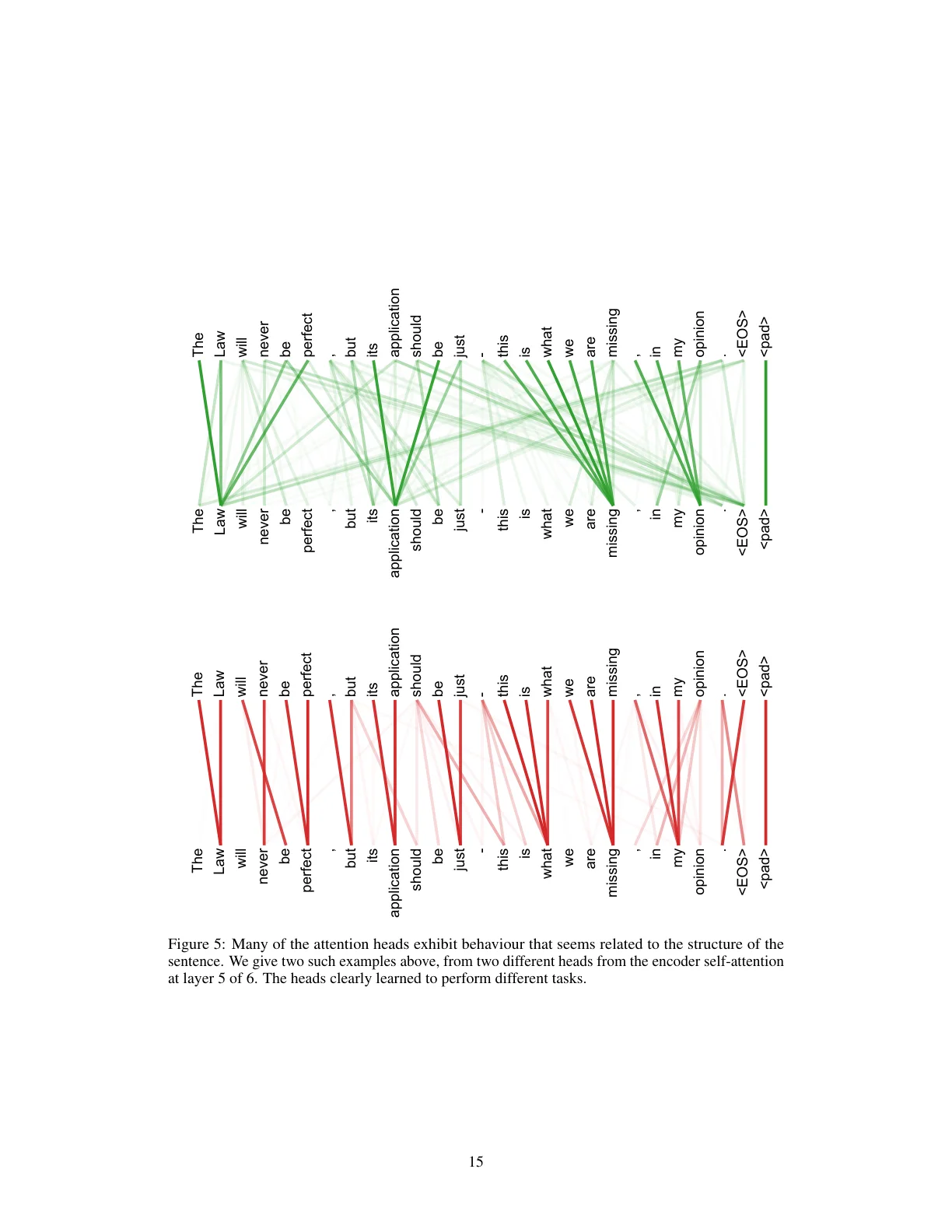
Figure 3,論文 Appendix:attention 視覺化(layer 5 of 6)。原圖見 arXiv PDF 附錄。擷取含頁面其他內容;顏色區分不同 head,以 PDF 為準。擷取與授權說明同 Figure 1。
Table 4:句法分析轉移(Section 6.3)
4-layer Transformer 在 WSJ 91.3 F1(僅 WSJ 訓練),semi-supervised 92.7——顯示架構可轉移,但 超參數仍沿用 MT base,不是 parsing 專用 SOTA 產品。
消融與設計選擇 / Ablations
- Head 數(Table 3A):8 頭最佳;太少或太多都降 BLEU。
- 縮小(Table 3B):dot-product 相容性變難。
- 層數 (Table 3C):6 層優於 2/4 層。
- Dropout/label smoothing(Table 3D):、 為 base 預設。
- Checkpoint averaging:base 平均最後 5 個、big 最後 20 個(Section 6.1)。
限制、威脅與不該過度推導的話 / Limitations and threats to validity
- 任務邊界:監督式 MT;不是 zero-shot LLM、不是檢索增強生成。
- attention:長文/高解析度輸入需別的近似(論文自述 future work)。
- 硬體年代:8×P100、12 小時/3.5 天——今日需重測你的叢集與模型規模。
- 不要混入後續結果:BERT、GPT-2/3、T5、ViT、LLaMA、ChatGPT 的 benchmark 不屬於本 PDF。
- 與 CV foundations 分開記:ResNet/YOLO 的 ImageNet/VOC 數字 不能 寫進 MT 證據表。
工程判斷與不適用條件 / Engineering decision and when not to use it
何時借用本篇? 當系統需要 序列元素之間的全域依賴、且能接受 attention 成本時,encoder–decoder Transformer 仍是教科書級起點。實作上先量 單層 attention 的記憶體與延遲,再談 BLEU 或下游分數。
何時不要照搬?
- 需要 雙向上下文預訓練(BERT 路線)或 純 decoder 生成式預訓練(GPT 路線)——任務與目標函數不同。
- 需要 影像 patch 序列(ViT)——模態與 inductive bias 不同。
- 把 28.4 EN-DE BLEU 寫進 2026 chat 產品 SLA。
- 混淆 tensor2tensor 歷史倉庫 與 2017 論文實驗契約。
Artifact 與可重現性 / Artifacts and reproducibility
截至 2026-08-28:
- 論文:arXiv abs、PDF v7、NeurIPS 2017 頁面 可讀。
- 程式:論文稱訓練/評估碼在 tensorflow/tensor2tensor(Section 7)。此環境未逐項驗證能否 一鍵復現 Table 2;現代 PyTorch/JAX 實作為 downstream ports。
- 資料:WMT 2014 EN-DE(約 4.5M 句對)、EN-FR(36M 句);需自行申請/下載當年預處理管線。
最小有用 reproduction:在 tiny 平行句對 上跑通 encoder–decoder forward + 一步 masked attention,對照 每層 attention map 是否非退化——驗證機制,不是復現 28.4 BLEU。
三個記憶點 / Three things to remember
- 技術想法:seq2seq transduction 用 stacked self-attention + FFN 取代 recurrence;positional encoding 補順序;控制點是 並行 global attention。
- 證據:Table 2——Transformer (big) EN-DE 28.4、EN-FR 41.8 BLEU;base 12 小時/big 3.5 天(8×P100);訓練 FLOPs 低於多數 RNN/CNN SOTA。
- 邊界:這是 MT encoder–decoder,不是 BERT/GPT/ViT。AlexNet→ResNet→YOLO→Transformer 這條基礎方法主線,依序處理 CV 訓練、殘差網路、即時偵測與序列轉換。
延伸閱讀
若尚未讀過 CV 起點,可回到 AlexNet(上)、(下)、ResNet 與 YOLO。讀法見 三遍掃描法。本篇只討論原始 Transformer;下一篇 InstructGPT 處理預訓練後的人類回饋對齊,而不是新架構。BERT、GPT、T5、ViT 等後續方法刻意不展開。