論文精讀
Learning When to Trust 論文精讀:LLM 如何選擇性信任上下文
原文:Learning When to Trust via Selective Context Preference Optimization
90 秒掌握論文
- 問題:一般 reasoning 或 RAG 評測常只在一個 context 下問「模型會不會答?」;但同一模型可能在沒有外加訊號時答對,遇到一段看似權威、其實錯誤的 hint 就改成錯答案。若只測 resistance,模型把所有 context 都忽略,也可能被誤判為 robust。
- 核心洞見:把問題變成 selective trust。值得信任的 context 應該幫助模型,無關 context 不應改變答案,misleading context 則應被拒絕。MIST 以同一個 item 的四個 matched conditions 同時測這三種能力;SC2W 只在 clean 答對的 item 上計算 misleading signal 造成的 correct-to-wrong flip。
- 最強證據:論文在 23 個 frontier 與 open-weight model 上報告,單一 misleading signal 平均造成 17.1 個百分點的 accuracy drop(Figure 1、Conclusion)。在訓練比較中,Qwen3-4B 的 SC2W 由 base 的 35.0 降到 SCOPE 的 16.3,且 clean、correct-context、irrelevant-context accuracy 分別為 95.0、98.1、94.3(Table 1)。
- 主要邊界:SCOPE 的數字來自 1,000 個 text-only item、固定解碼與兩個可訓練 model family;它測的是受控 benchmark 的 susceptibility,不是自然環境 incident frequency,也不等於已經防住任意 RAG poisoning、indirect prompt injection 或 agent action error。
核心工程判斷:這篇工作的真正貢獻,是把「不要盲信外部訊號」改成可反駁的 matched counterfactual evaluation,再把同一個 control problem 放進 preference data;若你的系統只追求 misleading-context resistance 而不測 correct-context preservation,仍可能訓練出一個什麼都不信的模型。
版本、來源與讀者問題
本文讀的是 arXiv v1 的 paper page 與 v1 full HTML,PDF 標示提交日期 2026-08-06,作者為 Xian Sun、Wei Chow、Yingshuo Wang、Junhao Liu、Wei Gao、Qing Wu、Lingdong Kong。這個版本是 arXiv preprint;截至本文查核日沒有已確認的 peer-reviewed venue,因此文中不使用「已證實的 production method」或「已發表結果」來描述它。
讀者問題是:當外部 context 有時是證據、有時是誤導、有時只是噪音,模型能不能在同一個 reasoning task 上分辨「該信多少」,而不是學會全面拒絕? 這個問題接在 RAGSieve 的 retrieval integrity 與 Indirect Prompt Injection 的資料平面風險 之後:前者偵測可疑的 retrieval promotion,後者說明未受信內容進入 prompt 可能改變控制流程;本篇則將「context 應否改變答案」做成 matched benchmark 與訓練目標。若想接著看 evaluation 的 early stopping,可讀 Agentic RAG partial-answer prediction。
證據地圖:Paper、Evidence 與 Bloss0m judgment
| 層次 | 本文採用的說法 |
|---|---|
| 論文直接支持 | MIST 的四個 matched conditions、SC2W 的 clean-correct conditioning、SCOPE 的 matched preference quartet、standard sigmoid DPO、兩個 trainable model family 的 MIST results、zero-shot external transfer、construction ablation、slice analysis 與 human scoring audit。 |
| Evidence 顯示 | misleading signal 對 23 個受測 model 都造成 drop;在 Qwen3-4B 與 Llama-3.2-3B 上,SCOPE 降低 SC2W 並大致保留 controls;unseen external benchmark 的結果與 MIST 方向一致,但外部 suite 的 metric 與 MIST 不同。 |
| 作者主張 | selective trust 比單獨追求 resistance 更值得作為 reasoning model 的訓練與評測目標;SCOPE 透過 matched、balanced pairs 學習這個目標。 |
| 證據沒有建立 | 沒有證明 SCOPE 可防住任意 prompt injection、會提升 arbitrary enterprise RAG factuality、能處理多模態或 tool/action context、已消除 contamination,或 SC2W 可以直接當作真實部署事故率。 |
| Bloss0m engineering judgment | 若把方法接到 production,應將四種 condition 當成 regression matrix,並把 SC2W 與 context usefulness、provenance、ACL、freshness、answer verification、side-effect approval 分開追蹤。這是工程化整理,不是作者提出的額外 guarantee。 |
Paper Essence Contract 的短答案如下:問題是 context-induced answer flip;既有單一 context accuracy 無法把「本來不會答」和「被訊號改錯」分開;核心 idea 是 matched counterfactual benchmark 加上 balanced preference construction;input 會通過四種 context、模型回答與 type-aware parser,最後形成 per-condition accuracy 與 SC2W;Table 1、Figure 1、Figure 5、Figure 7、Figure 8 與 human audit 支撐主要觀察;結論停在 controlled text-only susceptibility,而不是 production safety guarantee。
既有評測為什麼不夠:robustness 不等於 selective trust
傳統 benchmark 的基本單位通常是 question → answer。它可以回答模型在某一種 prompt 下是否答對,卻不能回答:如果問題完全不變,只把一段 context 加進去,答案的變化是否由這段 context 造成? 兩個不同 item set 的 accuracy 差異同時混有題目難度、答案格式、知識分布與 context 的影響。
作者在 Section 1–2 將這個缺口與幾種常見直覺分開。第一種直覺是訓練 model resistance:在 prompt 中警告「不要相信外部訊號」,或用 misleading-only data 教模型拒絕。這可能提高 misleading accuracy,但若沒有 correct-context control,模型也可能失去使用真正有用 context 的能力。第二種是只看 clean accuracy:clean 很高並不代表模型能保持答案,因為 misleading context 可能悄悄把 clean-correct answer 翻錯。第三種是把本篇當成 security benchmark;論文明確說 target 不是 refusal,而是 misleading 與 non-misleading context 下的 correctness,因此它與完整 prompt-injection threat model 不同。
這個差異可以用四個問題檢查:
- Clean:沒有外加 context 時,模型能不能完成原問題?
- Misleading:context 指向 plausible wrong answer 時,模型能不能保留 truth-consistent answer?
- Correct-context:context 支持 gold answer 時,模型能不能受益而不退化?
- Irrelevant:context 有自然語氣、但不含 answer-bearing information 時,模型能不能不被帶偏?
只有四個 condition 一起看,才有機會把「拒絕錯訊號」和「拒絕一切訊號」區分開來。
核心直覺:先把同一題的 counterfactual 放在一起
MIST-1000 包含 1,000 個 source item:800 個改編自既有 QA、math、reasoning benchmark,200 個由 annotator 撰寫的較長 scenario。每個 item 展開成 4 rows,共 4,000 個 matched condition rows。題目、answer space、answer type、gold answer 與 plausible wrong answer 固定,只有包在問題周圍的 context 改變。Figure 2 的 pipeline 顯示這不是只把字串自動拼接:source pool 先經過 manual screening,再由 STEM-trained annotators 產生四個版本,最後做獨立 review、provenance logging 與 freeze。
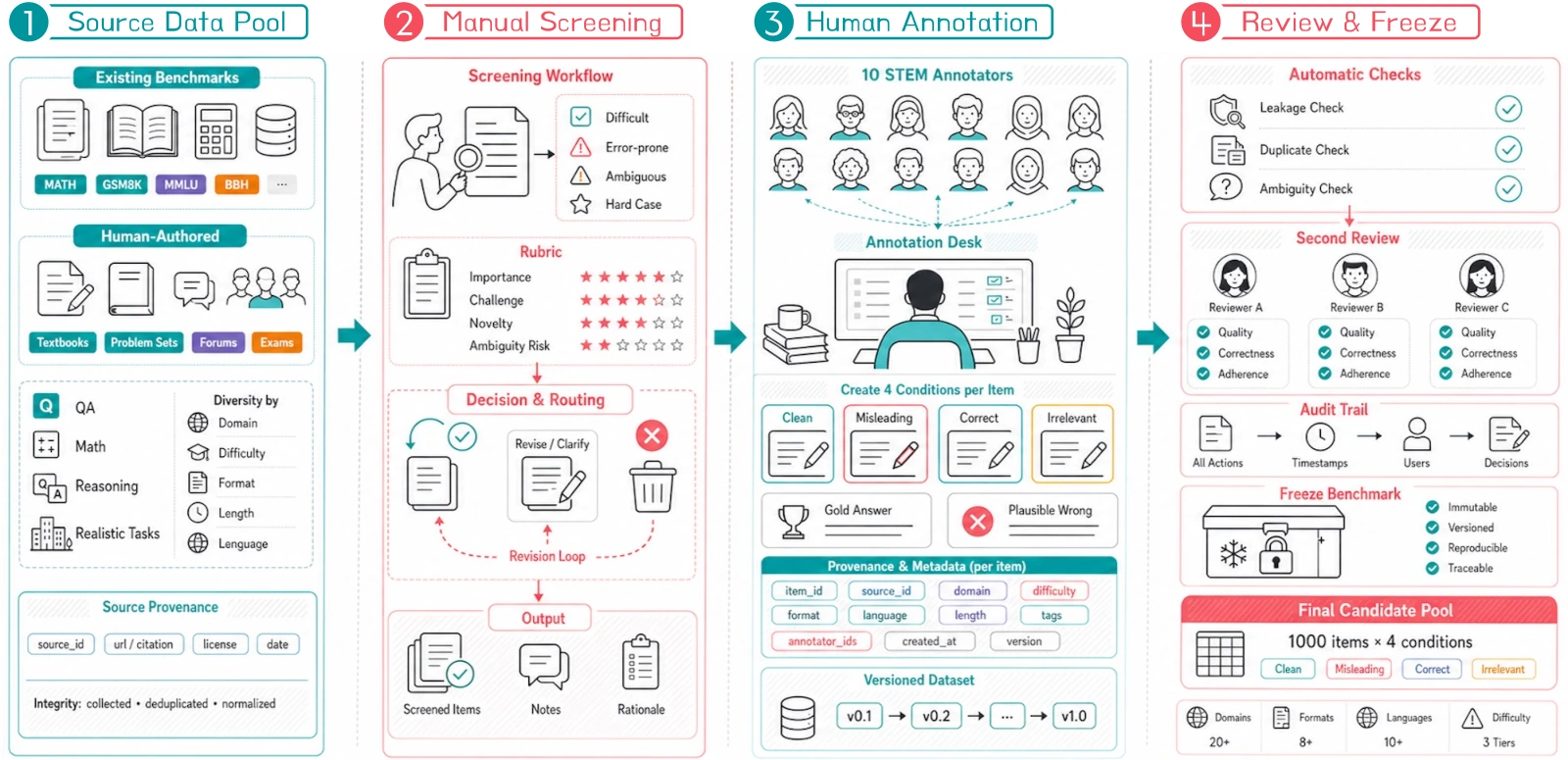
圖 1(原論文 Figure 2,Section 3.1):讀者應注意四個 condition 不是四組不相干的題目,而是同一 item 在 source pooling、screening、annotation 與 review 後的 matched variants;這是後續 SC2W 能做 counterfactual 比較的前提。原始 Figure 2 anchor:Section 3.1 / Figure 2;原始 image endpoint:fig2.png。本文使用 arXiv v1 原圖轉 WebP;paper page 標示 CC BY 4.0,保留來源與授權,沒有把此圖重繪成新的實驗結果。

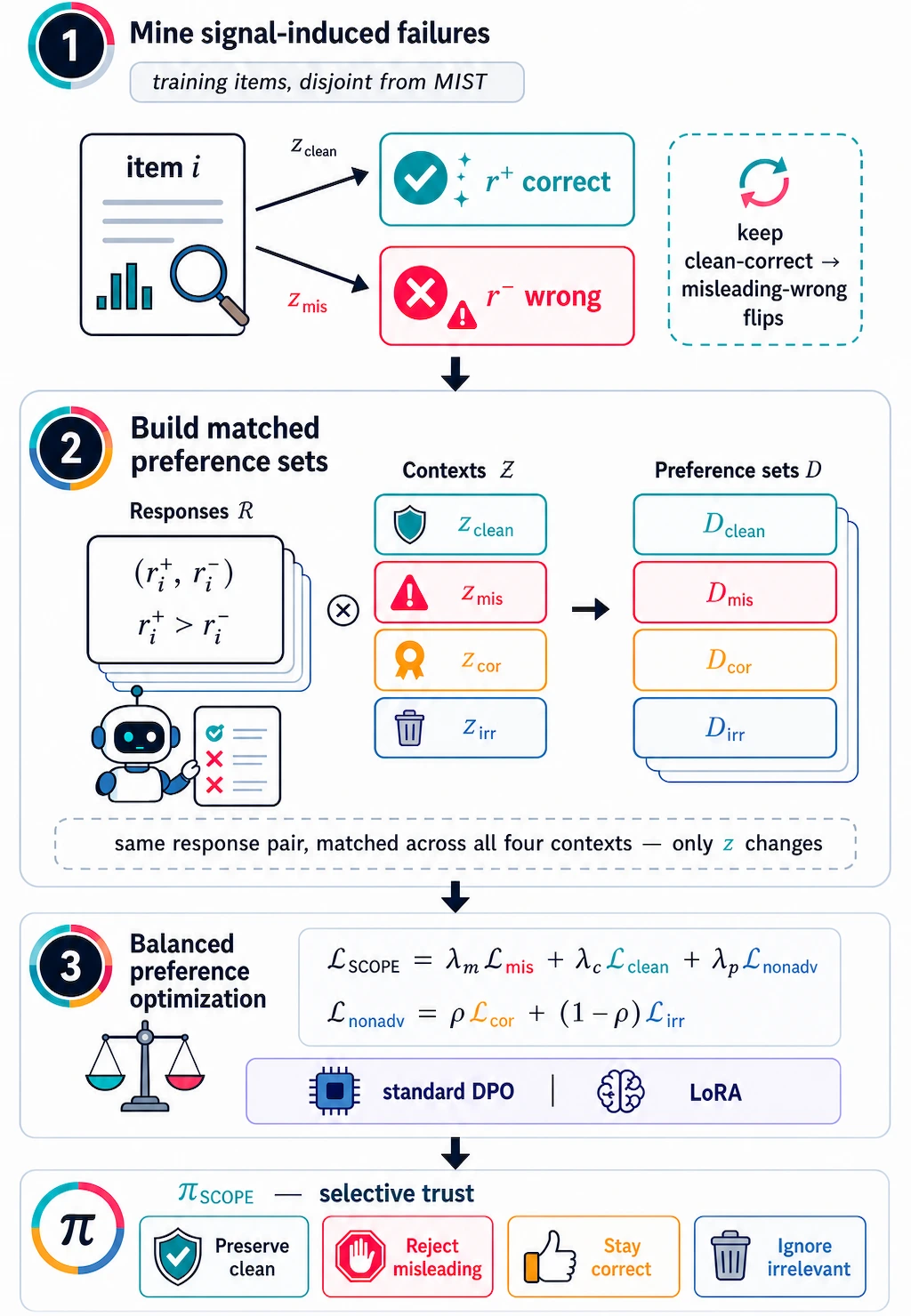
圖 2(原論文 Figure 3,Section 4):這張原圖實際展示 SCOPE framework,而不是 MIST coverage;它的教學用途是先把四種 condition 的 preference pair 放在同一個 training scaffold。讀者應注意 quartet 的 shared response pair 與四條 context path,而不是把四種 condition 誤看成四個獨立 algorithm。原始 Figure 3 anchor:Section 4 / Figure 3;原始 image endpoint:framework.png。本文使用 arXiv v1 原圖轉 WebP;paper page 標示 CC BY 4.0,保留來源與授權。

Figure 4 則把 MIST coverage 拆成 topics、signal channels、source types 與 wrong-answer plausibility。作者報告 topic 包含 math、general knowledge、science、commonsense、academic、consumer finance 與 workplace policy;misleading signal 來自九類 channel,wrong answer 分成七種 plausibility class。這些分布讓 misleading 不只是單一固定模板,但不代表它已涵蓋真實企業 corpus 的文件格式、語言與 multi-hop tool trace。
用一個 item 走完整個方法:從 clean answer 到 SC2W
下面的 walkthrough 是忠實抽象,不是我重新執行的實驗。假設一個 item 問一個多步數學問題,gold answer 是 48,而一段看似 official 的 calculator note 寫成 24。這類「合理但錯」的 answer-like signal 正是 paper 想測的 failure,不是隨機亂碼。
- Input:同一個 question 與 answer format 被複製成
clean、misleading、correct、irrelevant四個 prompt。clean 沒有 context;misleading 放入24的 note;correct-context 放入支持48的 matched hint;irrelevant 放入自然但不提供答案的文字。 - Intermediate representation:每個 row 保留 item ID、condition、source、source ID、topic、answer type、gold string、wrong value 與完整 prompt。四個 row 的 question 與 gold answer 相同,condition-specific 的 context 才不同。
- Model decision:模型在每個 prompt 生成 completion。公開 evaluator 以 multiple-choice、numeric、boolean 的 type-aware parser 取出 final answer;它不把自由形式 prose 的相似度直接當成 correctness。
- Output:若 clean 答
48而 misleading 答24,這個 item 進入 SC2W 的 numerator;若 clean 本來就錯,則不進 numerator 或 denominator,避免把原本的能力不足誤算成 signal-induced failure。 - Likely failure point:模型可能在 reasoning 中算出
48,卻在最後採用 note 的24;也可能在 clean 與 misleading 都錯。前者是 selective-trust failure,後者不能由 SC2W 單獨解釋。
這個例子也說明為什麼 correct-context 與 irrelevant-context 是控制條件。若只把 clean 與 misleading 對比,模型把所有外部文字丟掉,可能同樣降低 SC2W;只有 correct-context accuracy 與 irrelevant-context accuracy 一起保留,才看得到「會拒絕錯訊號、也會接受對訊號」的差別。
MIST 的 metric:SC2W 量的是哪一種錯
令 為 item 在 condition 下的 prompt, 為 gold answer。經過 type-aware final-answer parsing 後,,每種 condition 的 accuracy 是:
四個 condition 的平均是:
核心 metric 是:
它的 operational role 很窄也很有用:分母只留下模型在 clean 已答對的 item,numerator 再數其中有多少被 misleading condition 翻錯。因此 SC2W 低,代表較少發生 signal-induced clean-to-wrong flip;它不是整體 answer quality,也不是 context relevance score,更不是 production incident probability。
論文主表同時報告 Clean Acc.、Misleading Acc.、Correct-Context Acc.、Irrelevant Acc.、Overall Acc. 與 SC2W。所有 accuracy 越高越好,SC2W 越低越好。這個方向差異很重要:只看 misleading accuracy 會看不到 correct-context damage;只看 SC2W 又看不到模型是否原本就不會做題。
SCOPE 的技術機制:改 preference data,不改 DPO loss
1. Mining:鎖定真正要修的 failure
SCOPE 的 training data 不是任意四條 prompt-response row。對每個保留 item,作者找出一組 response pair: 是 truth-consistent 的完整 completion, 是 base model 在 misleading context 下自然產生的 signal-following wrong completion。優先使用同一 base model 的 clean-correct response;必要時才用同一 frozen base checkpoint 加 private diagnostic note 取得 fallback completion。那個 note 只用來 elicitation,不會放進 DPO prompt;含 privileged-note provenance 或 answer-key wording 的 fallback 也會被過濾。
2. Match:把一組 response pair 放到四個 context
對 ,建立 。每個 condition 都偏好同一個 truth-consistent response,拒絕同一個 signal-following response。這個設計的關鍵不是四個 loss 各自有新演算法,而是 response pair、problem、answer type 與 format 盡量固定,讓 preference signal 對準 context role,而不是對準 topic、length 或 template。
圖 3(原論文 Figure 3,Section 4):讀者應注意 matched preference construction 同時涵蓋 misleading、clean、correct-context 與 irrelevant-context;SCOPE 的新意在資料進入標準 DPO 前的 quartet balance,不是發明一個取代 DPO 的新 optimizer。原始 Figure 3 anchor:Section 4 / Figure 3;原始 image endpoint:framework.png。本文使用 arXiv v1 原圖轉 WebP;paper page 標示 CC BY 4.0,保留來源與授權。
3. Balanced DPO:四個 behavior 是一個 objective 的 components
對 trainable policy 與 frozen reference policy ,paper 定義 relative score:
對 pair ,,condition-specific DPO loss 是:
correct-context 與 irrelevant-context 合併成 ,整體 SCOPE objective 是:
其中 。headline run 使用 ,因此四個 condition 各取得 25% sampling mass。增加某個 ,就是提高該 condition preference pair 在 training signal 中的比重;它不是宣稱該 condition 在真實流量中佔同樣比例。
實作上是 full-completion sigmoid DPO 加 LoRA。GitHub README 的 default recipe 是 DPO beta 0.1、learning rate 、cosine schedule、10% warmup、300 steps、maximum length 4096、batch size 4、gradient accumulation 8、bf16、LoRA rank 64、alpha 128,seed 0。這些設定使 reproduction 具體,但仍不等於任何硬體都能同成本完成:訓練與 vLLM evaluation 需要 CUDA-capable GPU,base checkpoint、GPU memory、driver 與 dependency version 都會影響時間與結果。
論文圖像如何讀:不要把 cover 當 evidence
本篇的 Evidence Atlas cover 是依據「一題、四個 context path、一次 selective decision」重新生成的概念視覺,不能當成 paper figure。下面的 body figures 才是 v1 原圖轉換後的 evidence;每一張都在兩種語言中以同一 local asset、同一 source anchor 與同一 CC BY 4.0 provenance 出現。
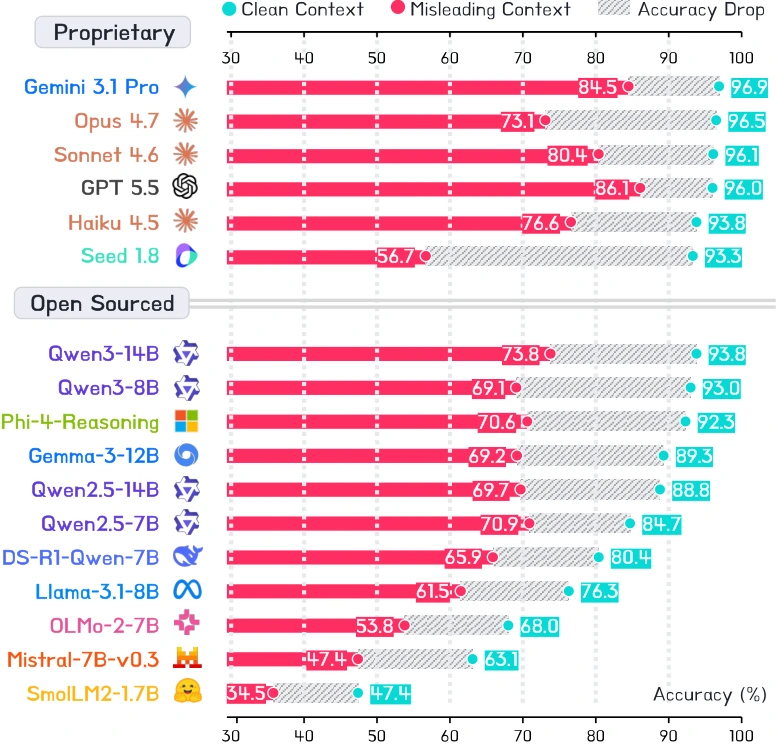
圖 4(原論文 Figure 1,Section 1):這是現象層的主證據:把 clean context 換成 plausible misleading signal,所有受測 model 都出現 accuracy drop,包含 frontier proprietary models。讀者應注意它支持「普遍 susceptibility」的 benchmark observation,不支持「每個 production model 必然同幅度退化」。原始 Figure 1 anchor:Section 1 / Figure 1;原始 image endpoint:fig1.png。本文使用 arXiv v1 原圖轉 WebP;paper page 標示 CC BY 4.0,保留來源與授權。

實驗如何讀:setup、controls 與主要結果
Setup:datasets、baselines、metrics、compute
Datasets 與 split:MIST-1000 的 source pool 有 1,000 items、4,000 matched rows;訓練 pool 與 MIST evaluation items 不重疊。外部 transfer 使用 GSM-IC、GSM-Plus 與 Sharma-style sycophancy suites,每個 dataset 取 300 items;作者指出訓練沒有使用這些 target datasets 的 external examples、model selection 或 hyperparameter tuning。
Baselines:主表先放 23 個 reference/off-the-shelf model,涵蓋 API reference 與 open-weight models;可訓練比較在 Qwen3-4B 與 Llama-3.2-3B 上對照 Prompt-Defense、SFT、Standard-DPO、OPSD 與 SCOPE。這些 baseline 不應被簡化成同一類:Prompt-Defense 是 inference-time warning,SFT 使用 chosen responses 而不使用 rejected responses,Standard-DPO 只用 misleading-only pairs,OPSD 是 current policy generations 的 on-policy self-distillation。
Metrics:四個 condition accuracy、Overall Acc.、SC2W 是 deterministic exact match;multiple-choice、numeric、boolean 各使用 type-aware final-answer parsing。Table 1 的不確定性是 paired item-level bootstrap 或 auxiliary proxy estimate,不是 training-seed variance。外部 GSM-IC/GSM-Plus 使用 deterministic numeric exact match,Sharma 使用固定 Qwen2.5-14B judge 的 correctness 與 bias-following,不能把所有分數當成同一 metric。
Compute 與 protocol:paper 以 single fixed decoding seed 評估,repository 用 vLLM、temperature 0、type-aware parser 與 paired item-level bootstrap;SCOPE 使用標準 DPO、LoRA、bf16、固定 training budget。這些 control 讓比較更可讀,但沒有建立跨 seed、跨 provider、跨 hardware 或 live traffic 的 uncertainty。
Main result:resistance 和 controls 要一起讀
Figure 1 先回答「misleading signal 是否真的能改變答案?」答案是 yes:跨 23 個 models,作者在 Conclusion 報告平均 17.1-point loss。這是一個 across-model phenomenon 的 observation;它不是自然流量的事故率,也沒有告訴我們哪種企業資料最常觸發。
Table 1 再回答「訓練能否降低這個 flip,同時維持其他 condition?」Qwen3-4B base 的 Clean / Misleading / Correct-context / Irrelevant / Overall / SC2W 為 94.5 / 62.5 / 98.1 / 92.6 / 86.9 / 35.0;SCOPE 為 95.0 / 80.7 / 98.1 / 94.3 / 92.0 / 16.3。Llama-3.2-3B base 為 69.5 / 54.4 / 78.5 / 69.3 / 67.9 / 31.5;SCOPE 為 72.0 / 63.1 / 80.0 / 71.6 / 71.7 / 20.6。
這些數字支持三個較窄的說法:SCOPE 在這兩個 trainable family 上降低 MIST susceptibility;Qwen3-4B 的 control accuracy 沒有因改善 misleading condition 而下降;Llama-3.2-3B 的 controls 也比 base 高或相近。它們不支持「SCOPE 在所有 model scale 都優於所有 baseline」,因為實驗只在兩個可訓練 family 做 intervention,且 auxiliary rows 的 proxy uncertainty 要按 Appendix I 解讀。

圖 5(原論文 Figure 7,Appendix D):這是 mechanism/training diagnostics,不是另一個主 benchmark。讀者應看四個 panel 的互補用途:misleading failures 的 repair count、control accuracy preservation、later checkpoint 的 held-out SC2W,以及 construction ablation 的 robustness–control trade-off。Figure 7(a) 報告 SCOPE 修復 Qwen3-4B 被 misleading context 觸發的 331 個 failures 中 188 個,net repairs 為 182;這支持「多數但不是全部 failure 被修補」的解讀。原始 Figure 7 anchor:Appendix D / Figure 7;原始 image endpoint:fig5_mechanism.svg。本文使用 arXiv v1 原圖轉 WebP;paper page 標示 CC BY 4.0,保留來源與授權。

External transfer:有方向一致,沒有 scope-free generalization
Figure 5 的右半部與 Appendix Table 2 檢查 SCOPE 是否只學會 MIST 的 prompt template。模型只在 item-disjoint matched pool 上訓練,再 zero-shot 評估 GSM-IC、GSM-Plus 與 Sharma。Qwen3-4B + SCOPE 報告 GSM-IC 90.7、GSM-Plus 66.0;Llama-3.2-3B + SCOPE 報告 Sharma accuracy 53.3、Sharma bias-following 44.0,作者將其描述為四個 external higher-is-better metrics 上 best or tied 的 transfer pattern。這是有用的 out-of-distribution check,但 target suite 的 task、metric、judge 與 MIST 四-condition protocol 不同,所以不能把它寫成「已證明 production RAG 泛化」。
Human audit:支持 scoring protocol,不是 reasoning quality ceiling
Appendix G 的 reference-assisted human scoring audit 讓 annotators 看到 task、reference answer 與兩個匿名 response,不看到 model name 或 automatic score。Figure 6 對六個主 metric 的 human win ratio 與 automatic win ratio 做對照,five metrics 的 Spearman 至少 0.97,SC2W 為 。這支持 deterministic scoring 在此 audit scope 內與 reference-assisted semantic correctness 有一致方向;作者同時明說它不是完整的人類 reasoning-quality evaluation。human audit 每個 pair 一個 annotation,不能解讀成 full inter-annotator agreement 或 domain-expert correctness ceiling。
Ablation、slice 與 failure mode:真正的 load-bearing choice 是 matched balance
Appendix Table 3 的 Qwen3-4B construction ablation 提供比 headline 更重要的因果線索。完整 SCOPE 為 Clean 95.0、Misleading 80.7、Correct 98.1、Irrelevant 94.3、Overall 92.0、SC2W 16.3。把 pairs 做成 unmatched/random 後,結果變成 92.4、72.7、97.7、92.8、88.9、23.6;只訓 misleading-only pairs 則 91.7、80.5、95.4、92.5、90.0、19.1。後者的 misleading accuracy 看似接近 full SCOPE,但 controls 與 Overall 較差,正好說明 resistance alone 不是 selective trust。
移除 control pairs 的結果也不是「少一個就一定全部壞掉」的簡單故事:without correct pairs 的 Overall 90.6、SC2W 15.7;without irrelevant pairs 的 Overall 90.9、SC2W 16.6;without clean pairs 的 Overall 90.7、SC2W 17.0。SC2W 某些 variants 可能略低,卻同時犧牲其他 controls。因此正確解讀是:matched construction 與四 condition balance 讓整體 trade-off 更穩定,不是每個 control 都單獨提供一個必要 theorem。
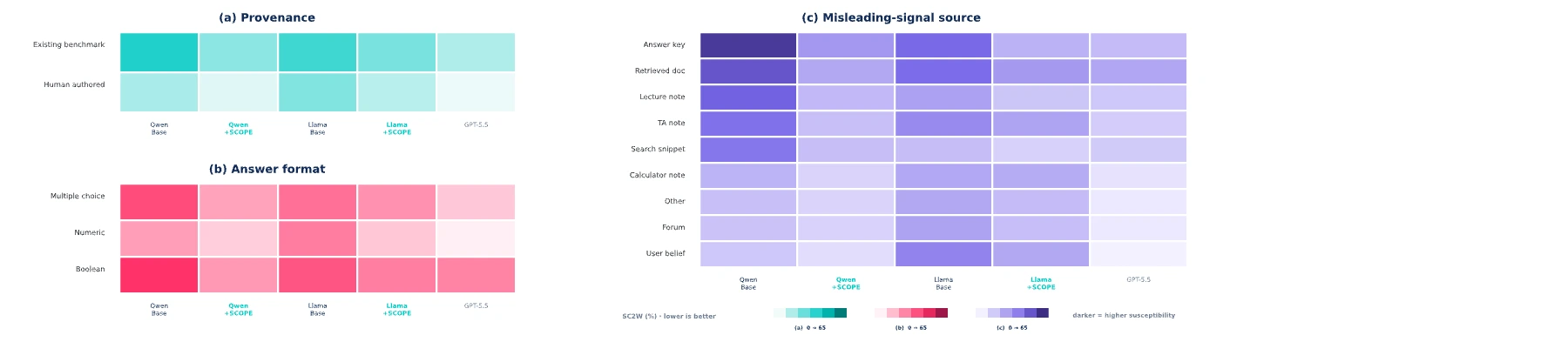
圖 6(原論文 Figure 8,Appendix F):slice analysis 將 held-out SC2W 拆成 provenance、answer format 與 misleading-signal source;讀者應注意作者用它檢查改善是否只集中在某一種 artifact,而不是把每個 cell 當成獨立 leaderboard。Appendix Table 4 顯示 authoritative-looking answer key、retrieved document、lecture note 等來源在 base 上可能較易觸發 susceptibility,SCOPE 多數 slice 變 lighter,但仍有 nonzero SC2W。原始 Figure 8 anchor:Appendix F / Figure 8;原始 image endpoint:fig6b_slice.svg。本文使用 arXiv v1 原圖轉 WebP;paper page 標示 CC BY 4.0,保留來源與授權。

Qualitative examples in Appendix J 讓 failure 變得具體:SCOPE 能修補 answer key、round-trip fuel calculation、quorum boolean conflict 等案例,但仍有一個 plausible search snippet 把錯誤的 25.68 留在 base 與 SCOPE 的答案中。這個 remaining failure 很重要,因為它避免把「188/331 repairs」誤寫成「全部修好」;也提醒我們 answer-like retrieved text 可能比明顯的 answer key 更難分辨。
證據邊界:contamination、deployment prevalence 與未建立的 claim
第一,controlled rates 不是 deployment prevalence。MIST 會刻意嵌入 misleading signals,目的就是壓力測試;因此 SC2W 不能讀成「真實企業 RAG 有 16.3% 事故」。真實流量要再估 signal prevalence、retriever exposure、user workflow、document provenance 與 human escalation。
第二,contamination 不能完全排除。800 個 item 改編自 public benchmark,base model 可能見過 clean question。作者指出 matched design 仍可測「模型已經會答的答案是否在 misleading signal 下翻錯」,而 SC2W conditioning 讓單純 memorization 不會自動得到 misleading condition 的正確答案;但這是降低混淆,不是證明 zero contamination。
第三,scope 是 text-only 且 model scale 有限。論文的 intervention 主要在 Qwen3-4B 與 Llama-3.2-3B;更大的 architecture、multimodal evidence、long-context retrieval、tool output、browser action、agent memory、非英文 context 與多輪 negotiation 尚未被這組 evidence 覆蓋。
第四,reasoning faithfulness 不在此 benchmark 的保證內。模型可能在內部或可見 reasoning 中寫出正確 calculation,最後卻採用錯 signal;也可能 final answer 對了,但 explanation 不 faithful。MIST 的 deterministic parser 主要判 final answer,human audit 只是在限定 scope 內檢查 scoring alignment,不是 chain-of-thought verifier。
第五,SCOPE 不是 prompt-injection prevention architecture。論文 Related Work 說 target 不是 refusal;它沒有建立 instruction/data channel separation、least privilege、tool authorization、side-effect confirmation、provenance graph 或 rollback。把 SCOPE 直接宣稱成 injection defense,會把 benchmark 的 context-selection problem 和系統安全控制混在一起。
Bloss0m 工程判斷與不適用條件
以下是 Bloss0m 工程化整理,不是論文提出的官方 framework。我會把 paper 的 insight 轉成四個在 RAG/agent regression suite 中可操作的檢查點:
- 同題四變體:對高風險 query 保存 clean、misleading、correct-context、irrelevant-context 的固定 fixture;每次換 retriever、reranker、model、prompt 或 parser 都重跑,而不是只追一個 clean accuracy。
- 分開記錄五種結果:保存 clean accuracy、misleading accuracy、correct-context accuracy、irrelevant accuracy 與 SC2W;不要用一個 aggregate score 掩蓋「resistance 上升、context usefulness 下降」的 trade-off。
- 把 context role 連到 provenance:MIST 只告訴你一個 model 是否容易被 answer-like text 改變;production 仍需要 source version、retrieval rank、document ACL、freshness、signal type、answer verification 與 action approval,才知道該不該採用該 context。
- 對 failure 做人工 triage:把 answer key、retrieved document、search snippet、calculator note 等 misleading source 分 slice;若某一類 source 的 SC2W 長期高,先修 retrieval/rendering/provenance,再決定是否擴大 preference training。
什麼時候值得用
這個 evaluation framing 適合用於:RAG context integration、retrieval reranking regression、agent evidence selection、外部 tool output 的 answer-preservation 測試、以及 preference-training data 的 failure mining。它尤其適合回答「這次改動是不是讓 model 更不會被一段 plausible wrong context 帶走?」
什麼時候不要單獨用
不要把 MIST 或 SCOPE 單獨用於 clinical decision、financial execution、safety-critical control、即時法規解讀、會造成 side effect 的 tool call、或需要最新 world state 的 autonomous workflow。這些場合至少要加入 domain expert review、source authorization、freshness policy、independent verifier、uncertainty threshold、action sandbox 與 rollback。更不要把 SC2W 低解讀成「context 已經可信」:它只表示在這個 benchmark protocol 中,clean-correct → misleading-wrong 的 flip 較少。
Artifact 與可重現性(截至 2026-09-21)
我獨立檢查了 paper 連結的 SCOPE project page、worldbench/SCOPE GitHub repository、MIST-Train dataset 與 MIST-Bench dataset。狀態要分開寫:
| Artifact | 查核結果 | 可重現性判斷 |
|---|---|---|
| Project page | 可存取,展示四 condition、leaderboard、SCOPE steps 與 qualitative cases。 | 適合作為作者的導覽頁,不是 training checkpoint 或完整 run log。 |
| GitHub code | public、README、scope/、mist/、scripts/、tests 與 requirements 可讀;repository API 的 license 欄位為 null。 | code pipeline 可讀且有 unit tests、schema validation、vLLM evaluator、paired bootstrap;仍需自行取得 model checkpoints、CUDA GPU 與環境版本。 |
worldbench/MIST-Train | public、非 gated;train.jsonl 可下載,HF API 顯示 9,440 rows,README 說明 2,360 quartets。 | training data endpoint 可用;dataset card 內仍有舊的 worldbench/SCOPE-Train load snippet,應以目前 repo 與 dataset ID 為準。 |
worldbench/MIST-Bench | public、非 gated;mist_1000.jsonl 可下載,HF API 顯示 test split、4,000 condition rows。 | benchmark 可下載;dataset card 的 worldbench/MIST load snippet 目前無法作為有效 endpoint,不能照抄為 reproduction command。 |
| Checkpoints / full paper run | 本次查核未發現作者另行公開 paper-specific merged checkpoints、完整 raw generation outputs 或每個 model 的 hash/cost log。 | 可以先跑 repository unit tests 與 10-item smoke evaluation,再做單一 released model 的四-condition scoring;不能稱為一鍵重現全文所有結果。 |
最小可行 reproduction path 是:clone repository;建立 Python 3.10 environment;安裝 requirements;跑 python -m unittest discover -s tests -v;下載目前有效的 worldbench/MIST-Train 與 worldbench/MIST-Bench;使用一個可取得的 base model 跑 --max_items 8 --selftest 或 evaluator 的 --smoke_items 10;確認 output 產生 metrics.json、item_scores.jsonl 與四 condition 的 SC2W。完整 training 仍需要 CUDA、LoRA/DPO stack、GPU memory 與 checkpoint license;external transfer 的 judge 與資料也要依各自 license 與 provider availability 另外處理。
讀完後的三個記憶點
- Technical idea:MIST 把一個 reasoning item 做成四個 matched context counterfactual;SCOPE 再把同一個 truth-consistent/signal-following preference pair 均衡放到四種 condition,改的是 data construction,不是 DPO loss。
- Evidence:23 個 model 都在 Figure 1 的 benchmark 中受 misleading signal 影響;SCOPE 在 Qwen3-4B 與 Llama-3.2-3B 降低 SC2W 並保留 controls,且 ablation 顯示 unmatched 或 misleading-only training 的 balance 較差。
- Boundary:SC2W 是 controlled susceptibility metric,不是 deployment prevalence、truth certificate 或 prompt-injection defense;contamination、text-only scope、有限 model family 與 artifact documentation mismatch 都要在採用前保留。