論文精讀
RAFT 論文精讀:故障排除 Agent 的狀態式檢索增強框架
原文:RAFT: A Stateful Retrieval-Augmented Framework for Troubleshooting Agents
本文讀的是 RAFT: A Stateful Retrieval-Augmented Framework for Troubleshooting Agents 的 arXiv v1。論文於 2026-09-17 提交,並註明已接受 EMNLP 2026 Industry Track;本文核對了 arXiv HTML/PDF 的 Sections 1–6、Tables 1–9、Figures 1–2、Appendices A–D,以及 Microsoft 的 RAFT artifact repository。原論文頁面標示 CC BY 4.0;下方原圖與證據頁面的來源和定位都保留在圖說中。
這篇 paper 問的不是「把 support case 丟進 embedding model 會不會找到相似句子」,而是更貼近現場的問題:當一個 ticket 從症狀、假設、檢查一路走到 root cause 與修復時,檢索器能不能找到曾經走過相似中間狀態、而且真的留下可行動證據的完整案例? RAFT 的回答是:先把 closed case 抽成由 meaningful state transitions 串成的 directed timeline,再對每個 entry 做 hybrid retrieval;命中 entry 後回升到 parent case,讓 Agent 同時看到「哪個狀態相似」和「那個案例最後怎麼走到解法」。
90 秒掌握論文
- 問題:傳統 RAG 把長而雜的 support history 切成 chunks,容易只抓到症狀、客服禮貌文字或單一 log,卻遺失診斷順序與修復脈絡。
- 核心洞見:troubleshooting 的檢索單位不應只是文件或 chunk,而是案例內「目前理解如何改變」的 timeline entry;查詢也不是一次性的,而是 active case 每得到新證據就更新一次。
- 最強證據:在 826 個由 Microsoft Learn Windows Server 文件生成的合成案例上,RAFT 比 vanilla RAG、HippoRAG2 與 Fast-GraphRAG 在三個 progress points 的三項指標都高;Case Hit 0%/30%/60% 為 0.842/0.871/0.888,且相對 vanilla RAG 的 Case Hit 差異都有 issue-group clustered bootstrap 的統計支持(Section 5.4、Table 2、Appendix C.3、Table 5)。
- 主要邊界:Apache Jira 的 30 組 duplicate cases 與 570 個 distractors 只提供方向性的 transfer evidence;論文評估的是 retrieval layer,不是最終 diagnosis、resolution success、工程師生產力或 production incident。
核心工程判斷:RAFT 最有價值的改變,是把「哪個案例相似」改寫成「目前這個 investigation state 對上哪個歷史 state」,再用 parent trajectory 保留因果脈絡。它讓 retrieval 更像 stateful memory,但沒有因此自動得到正確診斷;抽取錯誤、過時修復、資料隱私與案例缺漏仍會沿著整條 trajectory 被帶進 context。
既有方法為什麼不夠:症狀相似,不等於現在的狀態相似
企業 support case 通常不是一問一答。初始 ticket 可能只有 error code 和一句「登入失敗」;接著工程師查看 log、提出多個 hypothesis、排除其中一些,再確認 root cause,最後驗證 mitigation。不同案例可能在 opening symptom 很像,但在第二個檢查後走向完全不同;也可能症狀不同,卻在中段暴露出同一個 root cause 或相同的 remediation。
Vanilla RAG 直接對原始 emails、notes、logs 做 chunk-level embedding。它遇到四個問題(Section 3):
- 訊號散落且混有噪音:有用的技術細節跨越多個 turns,非技術內容卻可能在 lexical 或 semantic score 中搶到位置。
- 命中後缺乏 coherent case:即使一個 chunk 來自正確案例,Agent 仍不知道它前後發生了什麼;把多個 chunks 拼回完整 history 又很浪費 token budget。
- closed 不代表 actionable:有些 ticket 因為客戶不再回覆或行政流程而結案,沒有可重用的診斷或修復證據。
- privacy 不是 retrieval 後才處理的附加功能:企業資料含有 PII,必須在抽取與索引邊界先做 abstraction、redaction 或 deployment-specific filtering。
這也說明 RAFT 為何沒有把全部 higher-order reasoning 固定在 offline graph 裡。作者把 retrieval scope 限定在「找相似案例與診斷/行動所需證據」,至於案例之間如何形成更高階的 issue family,仍交給 online Agent 根據 active case 判斷(Problem Statement)。
核心直覺:先找 matched state,再把它放回完整 trajectory
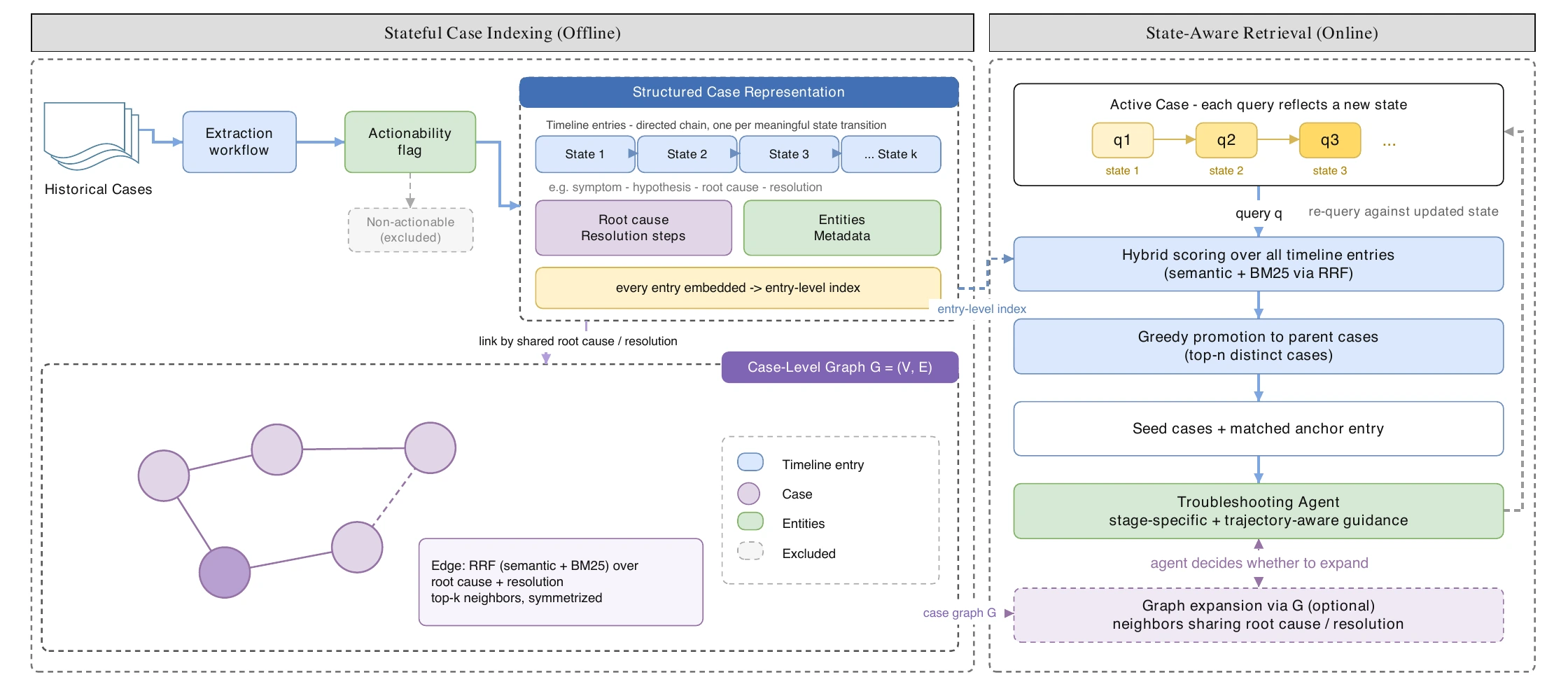
圖 1(原論文 Figure 1,Section 4):左側是 historical case 的 extraction 與 actionability filtering,中間是每個 meaningful state transition 的 directed timeline 與 optional case-level graph,右側是 active case 隨狀態更新而重新 query,最後回傳 parent case 加 matched anchor entry。原圖來源:arXiv Figure 1 anchor/arXiv PDF。原論文頁面標示 CC BY 4.0;本文為本地鏡像,重用時請遵守原授權。
把 RAFT 和 vanilla RAG 放在同一個問題上比較:
| 檢索設計 | 它實際在找什麼 | Agent 收到什麼 | 主要風險 |
|---|---|---|---|
| Vanilla RAG | 原始 case 裡排名高的 chunks | 可能互不相鄰的片段,再由 Agent 自己拼接 | 命中症狀但遺失中間推理,或把行政內容當證據 |
| RAFT entry-level retrieval | 所有 timeline entries 中與當前 query 最像的 state | distinct parent cases、完整 structured representation,以及觸發命中的 anchor entry | 抽取錯誤會把錯誤 state 與錯誤 trajectory 一起放大 |
| RAFT + graph expansion | seed cases 之外,和設定中的 root cause/resolution view 相近的鄰居 | 額外的 case-level related evidence | graph view、k、edge threshold 與維護成本會影響噪音 |
所以 RAFT 的 central control point 不是「用了 graph」;Figure 1 裡 graph 甚至是 optional。主要改變是:把每個案例切成語義上的狀態轉移,對 entry 做排名,然後把 entry 的命中結果 promotion 回 parent case。 這保留了局部相似度,也保留了完整處理路徑。
用一個例子走完整個方法:同一個案例如何從 symptom 走到 resolution
下面的例子取自論文 Appendix A 的合成案例風格,但為了說明流程而縮寫,不是額外的實驗 trace,也不是 RAFT 對這個案例的獨立結果。原案例是 Windows Server 的 logonHours auditing 問題;本文只保留它的狀態轉移。
- Input:初始狀態。 Active case 只有「想限制 service account 的登入時段,並記錄誰修改了
logonHours」。這時 Agent 的 query 仍是模糊 symptom,應優先找歷史案例的 opening entries。 - Intermediate representation:案例抽取。 RAFT 的 extraction workflow 讀取有順序的 artifacts,輸出 entities、timeline、root cause、resolution steps;timeline 不是每一個 message 一節,而是在 framing 或 current understanding 發生有意義變化時才開新 entry(Section 4.1)。
- Decision:state-aware match。 active case 得到新證據後,query 更新成「需要只針對
logonHoursproperty write 的狹窄 SACL,而不是所有 attribute」。這個 query 可能命中歷史案例的 hypothesis 或 finding entry,而不是第一個症狀 entry。 - Output:parent trajectory 加 anchor。 混合 semantic similarity 與 BM25 的 RRF score 對全部 entries 排名;再依 context budget 貪婪地挑選最多 n 個 distinct parent cases。每個被選中的 case 同時回傳完整
h̃_i與最高分的k*anchor,讓 Agent 知道「為什麼這個案例被叫回來」。 - Likely failure point:state extraction 或 evidence drift。 如果抽取器把「廣泛 SACL」誤記成已確認解法,後續查詢可能命中一條看似相似、其實不適用的 trajectory。若歷史 resolution 已被新版本取代,完整回傳 trajectory 也不會自動判斷它過時。
這個例子裡最重要的不是最後那個 SACL 設定,而是 query 在調查過程中會改變。0% progress 的 query 與 60% progress 的 query,不應被當成同一個 static lookup;它們應該對應歷史案例內不同深度的 states。
技術機制:兩層 representation,而不是一張萬能 knowledge graph
Offline indexing:從 raw history 到 structured case
論文把 historical corpus 寫成 H = {h_i}。每個 raw case 有 unique id u_i、metadata m_i,以及按時間排列的 turns x_1 ... x_T。抽取後的 structured representation 可概括成:
h_i → h̃_i = (reviewer assessment ρ_i,
              timeline {φ₁ … φ_K},
              root cause r_i,
              resolution / mitigation a_i,
              entities e_i)
這個表示式的 operational meaning 是:φ_k 對應一段連續 artifacts 所代表的 meaningful state;r_i 與 a_i 是在案例中有明確證據時才保留的 diagnosis 與 action;e_i 和 metadata 可以支援產品、error code、版本或時間篩選;ρ_i 則是 application-defined 的 reviewer assessment,不等於「只要結案就可用」。
抽取流程用 bounded batches 讓長 history 超過單次 context window 時仍能處理:worker 每次拿下一批 artifacts、metadata 與累積 state,透過 targeted JSON Patch 加入、修改或刪除狀態;reviewer 最後檢查完整 state、source evidence 與 revision history,再產生 assessment(Appendix B.2、Figure 2)。注意 processing batch 和 semantic timeline segment 不是同一件事:一個 batch 可以產生多個 entries,一個 entry 也可以跨 batch。
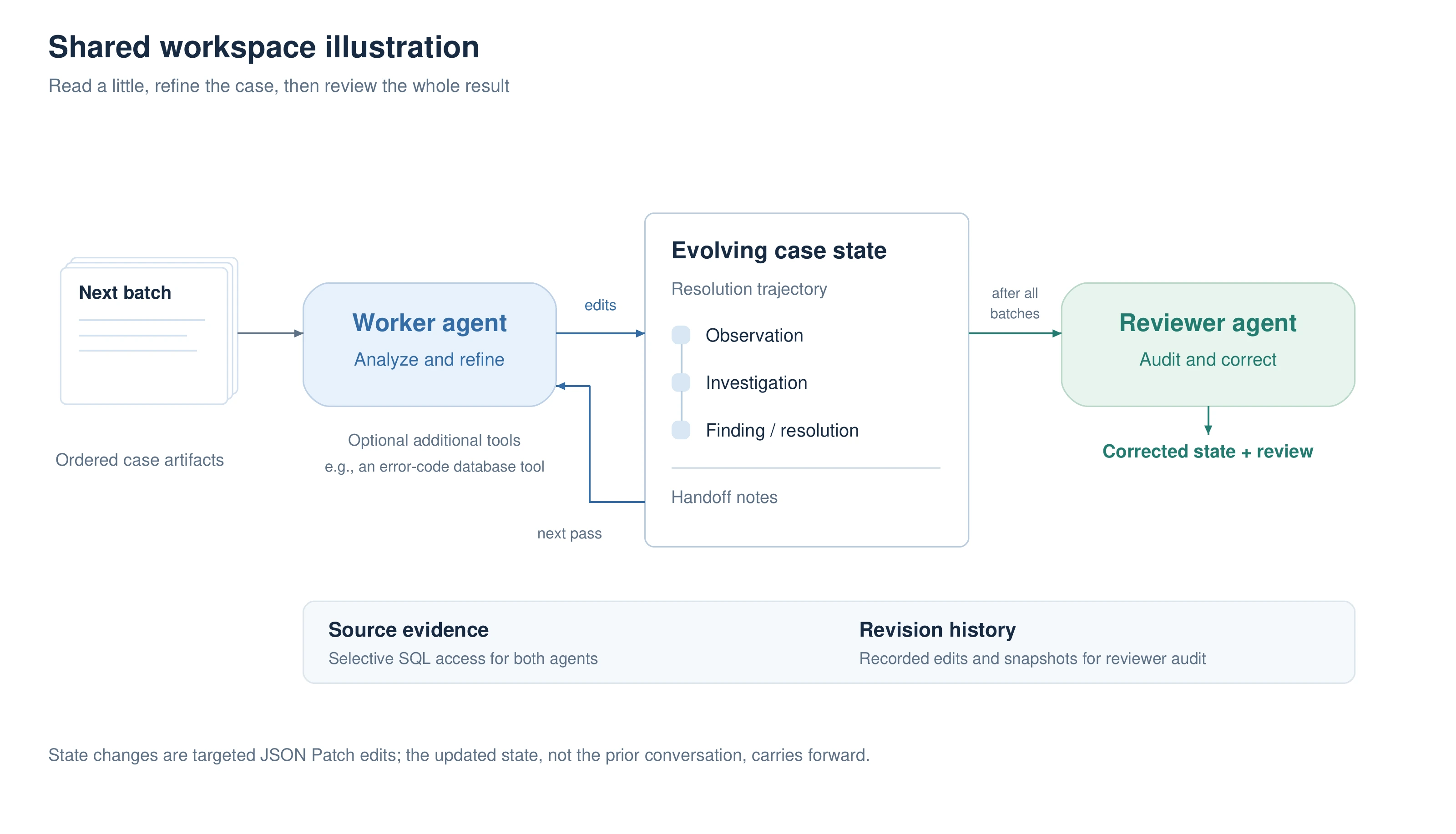
圖 2(原論文 Figure 2,Appendix B.2):worker 逐批讀取 ordered artifacts,將 state、handoff notes 與 targeted edits 帶到下一次 pass;reviewer 再用 source evidence 與 revision history audit、修正並輸出 assessment。原圖來源:arXiv Figure 2 anchor/arXiv PDF。原論文頁面標示 CC BY 4.0;本文為本地鏡像,重用時請遵守原授權。
Timeline entry:state transition,不是任意摘要段落
每個 φ_k 是 contiguous segment,代表 investigation 的一個有意義階段。作者舉出的 transition 包括 opening symptom、加入/排除/確認 hypothesis、確認 root cause,以及提出並驗證 resolution。沒有新 insight 的 acknowledgement 或小更新會併回目前 entry,所以目標是讓 K_i << T_i,但每個 entry 仍有 action、investigated hypotheses 與 current understanding。
這個定義保留了三個容易在文章中被壓平的區分:
- timeline entry 不是 capability:它是被抽取、被 embedding、被搜尋的 state representation。
- case-level graph 不是 timeline:graph 的 vertex 是整個 structured case,edge 由可配置的 similarity view 產生。
- actionability assessment 不是 theorem 或 universal filter:作者提供 schema 與 flag 的位置,但哪些 cases 要排除仍是 deployment-specific policy。
Online retrieval:hybrid score、case promotion、optional expansion
在線 query q 到來時,系統先依 user-specified filter 限縮 parent cases,再對符合範圍的 timeline entries 計算 semantic 與 lexical score,透過 Reciprocal Rank Fusion(RRF)合併。演算法不是單純取 top chunks:它沿著 entry ranking 走,第一次遇到某個 parent case 才把該 case 放入 C,並把完整 case size 累加到 context budget B;當達到 n 個 distinct cases 或預算無法容納下一 case 時停止。回傳的是:
R = {(full structured case h̃_c, matched entry k*_c) : c in selected cases}k*_c 是該 parent case 中最高分 entry 的 index。這個 anchor 是重要的 provenance:Agent 不只知道「case c 很像」,還知道「它是在 hypothesis、finding 還是 resolution state 被叫回來」。
Graph G=(V,E) 位於第二層。實驗以 root-cause text 加 resolution text,對 case pairs 做 semantic + BM25 的 RRF,取 top-k neighbor、去掉低於固定 embedding threshold 的 link,再 symmetrize。graph expansion 的角色是把與 seed case 有同一 underlying cause 或 remediation strategy、但 entry-level symptom 不相似的 sibling 拉進來;它不是 RAFT 主收益的必要條件。
實驗如何讀:證據支持的是 retrieval quality,不是 repair success
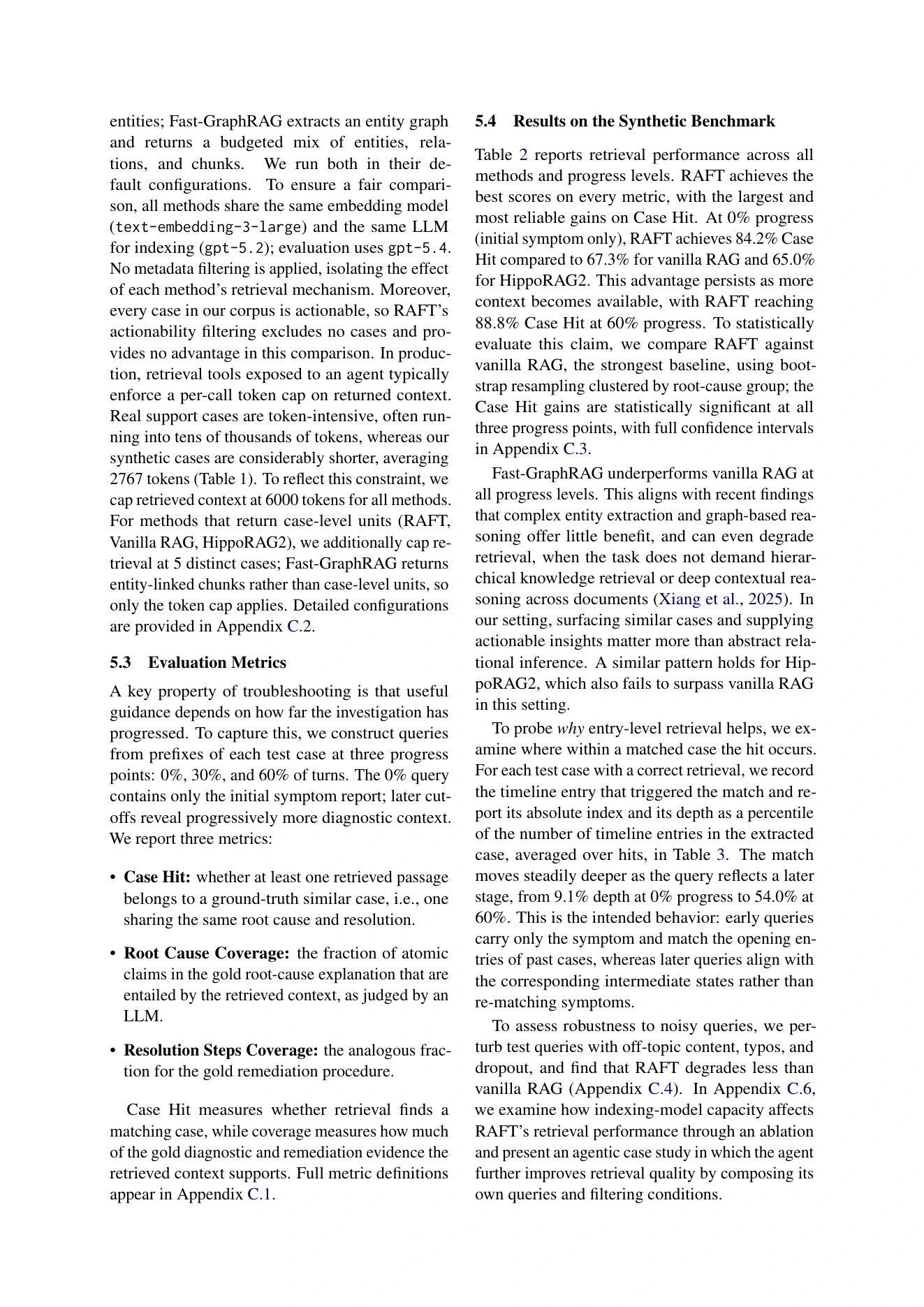
圖 3(原論文 Table 2 與 Table 3 的原文 evidence panel,Section 5.4):Table 2 比較三個 progress points 的 Case Hit、Root Cause Coverage 與 Resolution Steps Coverage;Table 3 檢查命中位置是否隨 active case 進度往 trajectory 深處移動。原文定位:Table 2 anchor/Table 3 anchor/arXiv PDF。這是原論文頁面中的表格證據,不是本文重新繪製的 benchmark 圖;原論文頁面標示 CC BY 4.0,本文為本地鏡像。
研究問題、控制條件與 headline result
作者先用 Microsoft Learn Windows Server troubleshooting documentation 建立 structured wiki,再由每個 root cause 生成 2–4 個 cases;最後得到 826 個合成 support cases,分布在 Active Directory、Windows Security、Remote Desktop、Group Policy、Licensing and Activation、Networking、Backup and Storage 七類(Section 5.1、Table 1、Appendix A)。每個 root-cause group 留一個 case 作 test query,其餘進 index。
比較方法包括 vanilla RAG、HippoRAG2、Fast-GraphRAG 與 RAFT。所有方法共用 text-embedding-3-large、gpt-5.2 作 indexing,以及 gpt-5.4 作 evaluation;沒有 metadata filtering,且 context budget 是 6,000 tokens。RAFT、vanilla RAG 與 HippoRAG2 最多回傳 5 個 distinct cases;Fast-GraphRAG 依其 entity/relation/chunk budget 配置(Section 5.2)。這些控制使比較主要聚焦在 retrieval mechanism,但也代表合成 cases 平均 2,767 tokens,遠短於作者所說 production cases 可能達到的數萬 tokens。
三個 progress points 以 test case 的 turns prefix 建立 query:0% 只有 initial symptom,30% 與 60% 暴露更多 investigation context。三個 metrics 的問題不同:
- Case Hit:至少一個 retrieved case 是否與 query 共用 root cause 與 resolution。
- Root Cause Coverage:retrieved context 是否蘊含 gold root-cause explanation 被 atomize 後的 claims,由 LLM judge 判定。
- Resolution Steps Coverage:retrieved context 是否支持 gold remediation procedure 的 claims。
因此 Case Hit 高,表示找到了同一 issue group 的案例;不等於 Agent 已完成正確診斷,更不等於實際修復成功。
Synthetic result:RAFT 的優勢和它的解釋
Table 2 的 Case Hit 是:
| 方法 | 0% | 30% | 60% |
|---|---|---|---|
| Vanilla RAG | 0.673 | 0.719 | 0.769 |
| HippoRAG2 | 0.650 | 0.688 | 0.711 |
| Fast-GraphRAG | 0.421 | 0.442 | 0.583 |
| RAFT | 0.842 | 0.871 | 0.888 |
對照答案是:RAFT 在三個 stage 都更常找回同一 root-cause/resolution group,且不是只在後期 context 比較完整時才有效。Authors 對 RAFT 和 vanilla RAG 在相同 held-out groups、progress points、context budgets 的 paired results 做 issue-group clustered bootstrap;Table 5 的 Case Hit differences 為 0% +16.79 pp [13.91, 19.78]、30% +14.79 pp [12.02, 17.73]、60% +12.19 pp [9.75, 14.68]。
機制上的佐證來自 matched-entry depth:命中 entry 的平均深度從 0% query 的 9.1%,移到 30% 的 20.0%,再到 60% 的 54.0%(Table 3)。這與 state-aware hypothesis 一致:早期症狀會對上早期 entry;active case 得到更多診斷證據後,query 會對上歷史案例更深的中間狀態,而不是永遠重新命中 opening symptom。
但這不能解讀成「GraphRAG 一律不適合 support」。在這個 setting,HippoRAG2 與 Fast-GraphRAG 的 entity-centric graph 沒有超過 vanilla RAG;作者的合理解釋是,這個 task 優先需要 coherent similar cases 與 actionable guidance,而不是跨文件的抽象 relation inference。它不會證明所有 production GraphRAG 都會退步。
Coverage、noise 與 ablation:哪些現象值得保留
RAFT 不只在 Case Hit 高,Table 2 也在 Root Cause Coverage 與 Resolution Steps Coverage 的九個欄位都取得最高 point estimate。不過 Appendix C.3 對 confidence intervals 的解讀更保守:early-stage coverage gains 和 30% root-cause gain 有統計支持,60% root-cause 的 interval 跨過 0,30% resolution gain 接近 interval boundary,60% resolution gain 沒有可支持的差異 claim。這是很重要的 claim-strength 邊界:表格的最佳數字不自動等於每一格都已被證明優勢。
Appendix C.4 做 paired query robustness:加入 typo、刪掉 40% updates,或插入 unrelated turn。typos 與 dropout 的兩方法差異沒有被統計解決;插入 unrelated turn 時,RAFT 的 Case Hit 下降幅度小於 vanilla RAG,尤其 60% progress 的 paired difference favor RAFT +39.94 pp [35.73, 44.10]。但作者明說這是 controlled query-robustness 與 benchmark evidence,不是 noisy corpus robustness、production-scale behavior 或 cross-domain generalization。
Graph contribution 也應該讀成有限的 engineering option。以 k=3 的 budget-matched graph expansion,full-sibling recovery 在 0% 與 30% 稍有改善,60% 幾乎不變;overall Case Hit change 只有 +0.22、−0.28、−0.06 pp。因此 graph 是 evidence-diversification mechanism,而非 RAFT 主要 retrieval gain 的來源。Indexing-model ablation 則顯示 gpt-5.4-mini 與 low-reasoning 只有 modest drops,gpt-5.4-nano 退步較明顯;這支持「抽取品質重要,但較小模型可能可用」的 cost trade-off,不支持任意便宜模型都安全。
Apache Jira transfer:更接近真實,但樣本仍小
Apache Jira evaluation set 來自 Cassandra、Hadoop、HBase、Spark 的 public issue histories。後來的 duplicate report 作 held-out query,較早且在 query 開啟前已 Fixed 的 issue 作 exact target;其他 570 個 Fixed issues 是 distractors,不被視為 certified semantic negatives,因為 Jira links 可能不完整。最終是 30 個人工稽核 duplicate groups、600 cases 的 corpus;所有 30 組可評估 0%/30%,60% 只剩 19 組有足夠 pre-disclosure history(Appendix D)。
RAFT 沿用 synthetic 實驗的 extraction prompt、schema、models 與 retrieval procedure,只把 context cap 改成 5,000 tokens。Jira 沒有 gold root-cause 或 resolution-step annotations,因此只報 Case Hit:vanilla RAG 在 0%/30%/60% 為 0.667/0.667/0.789,RAFT 為 0.833/0.840/0.895。這是 +16.7、+17.3、+10.5 percentage points 的方向性 evidence,但作者不提供 confidence intervals,也不把它包裝成 production validation。
這個 transfer test 的價值在於:它沒有把合成 Windows Server 的 group label 當成唯一世界,且直接使用 contributor-written、unredacted issue histories。然而它同時有三個限制:樣本是 30 組、60% progress 的有效組數更少、Jira duplicate link 不是完整負例標註。更重要的是,它仍只驗證「找回被標記 duplicate 的 case」,不是用 RAFT 修完 Cassandra 或 Spark issue 後能否真的通過測試。
限制與不該過度解讀
RAFT 的限制不是附錄裡可以略過的 housekeeping,而是決定這個 retrieval layer 能不能安全轉移到 production 的條件:合成資料規模仍中等,Apache Jira transfer sample 很小,且論文沒有評估 end-to-end troubleshooting outcome。更不能把較高 Case Hit 解讀成「一定找到正確修復」;抽取、freshness、privacy 與 incomplete history 都可能讓整條 trajectory 帶入錯誤。
Evidence map:Paper、Evidence 與 Bloss0m judgment 要分開
Paper 直接提出的內容
- closed case 的 structured representation,包含 reviewer assessment、timeline、root cause、resolution、entities 與 metadata;
- entry-level hybrid retrieval、greedy promotion to parent cases、matched anchor entry;
- 可配置、optional 的 case-level graph;
- synthetic Microsoft Learn benchmark、Apache Jira transfer set,以及 Case Hit、Root Cause Coverage、Resolution Steps Coverage 三項 retrieval metrics。
Evidence 實際支持的內容
- 在作者設定的合成 benchmark 中,RAFT 在三個 progress points 的三項主 metrics point estimate 都較高,Case Hit 相對 vanilla RAG 的三個差異有 clustered bootstrap 支持;
- matched-entry depth 隨 query progress 往 trajectory 深處移動,與 state-aware retrieval 的機制預期一致;
- Apache Jira 的小型人工稽核 transfer set 顯示方向一致的 Case Hit 優勢;
- graph expansion 在這個 benchmark 只帶來很小、依 progress 改變的 sibling recovery 影響。
尚未建立的事情
- 沒有證明 RAFT 會提高 final diagnosis、resolution success、engineer productivity 或 end-to-end agent reward;
- 沒有證明較長、持續變動、含大量 PII 的 production cases 會保有同樣的 gain;
- 沒有把 extraction cost、index latency、embedding storage、revision/deletion policy 量化成完整的 deployment TCO;
- 沒有證明 current repository 中可直接重跑 paper 全部合成 benchmark 的資料與腳本都已經公開。
Bloss0m 工程化整理
本文把 adoption 判斷整理成三個 deployment gates,這是 Bloss0m 工程化整理,不是論文提出的三階段框架:
- State gate:若團隊無法定義什麼叫 meaningful state transition,先不要上 RAFT;timeline 會變成任意摘要,entry-level score 也失去意義。
- Evidence gate:每個 entry 要能回到原始 artifacts、revision history 與 reviewer decision;只保存 LLM 摘要會讓 error propagation 難以稽核。
- Outcome gate:在線上除了 Case Hit,還要量 final diagnosis correctness、resolution verification、stale-action rate、privacy leakage、latency、token cost,以及 failure cases。
Artifact 與可重現性:實作可用,release 目前是 partial
截至 2026-09-21,我獨立檢查了 Microsoft 的 RAFT repository:
| Artifact | 狀態 | 查核內容 | 仍要保留的 caveat |
|---|---|---|---|
| implementation | 可取得 | public GitHub、MIT License、Python 3.11+ package;包含 extraction、retrieval、graph、LocalPipeline 與 tests | 需要外部 model credentials;版本與 provider 設定會影響重跑 |
| Apache Jira corpus / queries | 可取得 | datasets/Apache_Jira/corpus.jsonl(600 cases)與 queries.jsonl(30 held-out queries),並附 README 的欄位與評估規則 | Jira source histories 會隨時間變動;要固定 commit/snapshot 才能做可比重跑 |
| synthetic Windows Server benchmark | repository tree 未找到 | README 與 paper 仍描述它是 released benchmark,但目前 public tree 的 datasets/ 僅見 Apache_Jira | 不能把 paper 的 release claim 寫成目前已核實可下載;需要作者補充 direct endpoint 或 commit |
| full paper rerun | 部分可行 | Apache Jira Case Hit 可依 README 的 corpus.jsonl、queries.jsonl、valid progress flags、target key 重建 | synthetic table、五次 split、model endpoint、judge prompts 與 exact generation snapshot 仍需完整固定 |
README 提供的 quickstart 需要 git clone、Python 3.11+、pip install -e . 與 provider credentials;LocalPipeline 適合 quick local experiments,production usage 還需要自行準備 case source、persistent vector/hybrid index 與 retry queue。這是「實作可讀、部分資料可取」而不是「任何人不需額外資料即可重現所有結果」。
Bloss0m 工程判斷與不適用條件
可能值得採用的條件
- support/incident records 有清楚的時間順序,並且「現在的假設」會隨 logs、工具結果或人員介入而改變;
- 團隊需要在多次 query 中追蹤同一類 investigation,而不是只回答一次 FAQ;
- 原始 cases 太長,讓 Agent 每次重讀全文的 token cost 高於一次 offline extraction 的成本;
- 能建立 artifact-level provenance、review policy、PII redaction 與 stale-case invalidation。
不應直接套用的條件
- corpus 主要是靜態規格、FAQ 或短文件,沒有 state transition;在這裡 timeline extraction 可能只增加 cost;
- case history 不完整、沒有可信的時間順序,或解法常常是一次性的未驗證猜測;回傳 parent trajectory 會製造假連續性;
- 類別的 remediation 會快速過期,但沒有 version/validity metadata;
- 團隊沒有能力 audit extraction,卻想把
root_cause與resolution_steps當成 ground truth; - success metric 只有 Case Hit,沒有 downstream diagnosis、safety 或 outcome check。
比較務實的 rollout 是先把 RAFT 當 retrieval component,而不是 autonomous troubleshooter:離線抽取與 reviewer audit → versioned index → online query/matched anchor → Agent 自己判斷是否採用 → action 前再做 current-state verification。這個 sequence 是 工程解讀,不是作者聲稱的 production protocol;它只是把論文的 retrieval boundary 和 artifact caveat 翻成較安全的導入方式。
讀完後的三個記憶點
- Technical idea:RAFT 的核心是「entry-level state match + parent trajectory return」;optional graph 只是第二層的 related-case expansion,不是主要 insight。
- Evidence:合成 Windows Server benchmark 與小型 Apache Jira audit 都支持較高 Case Hit;matched-entry depth 也隨 progress 變深,但 coverage、graph contribution 與 transfer 都有更細的統計邊界。
- Boundary:它證明的是 retrieval layer 在特定 protocol 下更會找相似案例,不是證明 Agent 已經會正確診斷、修復 production ticket,或能免除 extraction、privacy、freshness 與 index maintenance。
延伸閱讀
- 如果你想先理解一般 RAG 如何把 evidence 帶進生成,可讀 RAG 與證據基礎。
- 如果你關心 Agent 如何保存與更新長期狀態,可接著讀 Agent 記憶與適應。
- 如果你要把 retrieval quality 與 final agent outcome 分開評估,可讀 Agent 評測與可觀測性。
Primary sources
- Zhang et al., “RAFT: A Stateful Retrieval-Augmented Framework for Troubleshooting Agents,” arXiv:2609.20754v1(paper identity、Sections 3–5、Appendices A–D、CC BY 4.0)。
- arXiv HTML full text(Figures 1–2、Tables 1–9、locatable section anchors)。
- Microsoft RAFT repository(implementation、MIT License、Apache Jira artifact 與 quickstart;截至 2026-09-21 核對)。