論文精讀
DocMemo 論文精讀:多模態文件的記憶引導檢索
原文:DocMemo: Dynamic Evidence Discovery via Probabilistic Memory-Guided Retrieval for Multi-Modal Document Understanding
90 秒讀懂 / The paper in 90 seconds
- 問題:長文件的答案可能分散在數十頁、表格、圖與跨頁線索中。static retrieval 一開始就固定 top-k pages;若第一輪漏掉 evidence,後續 reasoner 沒有狀態可以解釋「哪一頁可能有用、哪些頁面已被排除、還缺什麼」。
- 核心直覺:把 retrieval 做成 dynamic evidence exploration。Document Schema Memory 保存文件結構,Page Belief Memory 更新頁面相關性信念,Question Episodic Memory 記住當前問題的發現與 query refinement。
- 最強證據:在 MMLongBench-Doc、LongDocURL、PaperTab 三個 long-document DocVQA benchmark 上,DocMemo 的 accuracy 為 71.3、81.1、80.4,平均 77.6;Table 4 的 ablation 也顯示移除 memory 或 Bayesian update 會使 MMLongBench-Doc accuracy 從 71.3 降到 68.5 或 68.8。
- 主要邊界:評估依賴 GPT-4.1 binary judge、PDF rendering、Qwen3.5-VL-9B、ColQwen2.5、MinerU 與三個 benchmark 的 annotation;它沒有證明任意企業 corpus 的 citation faithfulness、access-control correctness、freshness 或總成本。
核心工程判斷:把跨回合的 retrieval feedback 寫回 page belief,確實能讓長文件 QA 找回更多 evidence;但它仍是一個受特定 visual QA stack 限制的 retrieval method,不是通用 RAG reliability layer。
先建立地圖 / What to know first
把文件切 chunk 後一次取 top-k,優點是 latency 與流程簡單,缺點是早期 ranking error 會把後續 reasoning 鎖在錯誤 page pool。另一條路是 iterative retrieval,但若每一輪只重新搜尋,系統仍不知道先前看過什麼、哪些頁面被判斷為 irrelevant、哪些 query refinement 已經嘗試過。
DocMemo 的設計可以和 RAG-ANYTHING 的 multimodal RAG path、GraphRAG vs. RAG 的 evaluation、BM25 Wins at Scale 與 FinRank 的 evidence-grounded retrieval 對讀:前者提供表示與圖結構的背景,後兩者提醒我們要把 evidence coverage、negative cases 與 evaluation protocol 和答案分數分開看。
為什麼 static top-k 不夠 / Why the previous approach is insufficient
如果關鍵答案在第 37 頁與第 91 頁,但第一輪只取了第 4、8、12 頁,static retriever 可能讓 reasoner 在錯誤上下文中產生一個看似完整的回答。即使做第二輪,如果系統不保存「第 4 頁的線索提高了哪幾頁的可能性」與「第 8 頁已被判定為無關」,下一輪仍可能重複相同 search。
DocMemo 把這個缺口定義成 state propagation problem:不是只需要更多 retrieval rounds,而是需要能在 rounds 之間傳遞 document structure、page relevance 與 query-local discoveries 的 state。
核心直覺 / Core intuition
DocMemo 的 mental model 是:第一次 retrieval 提供一個不完整的 hypothesis,reasoning feedback 再修改下一輪要探索的 page distribution。
三層 memory 分工不同:
- Document Schema Memory:offline 建立 document type、section layout 與 structural page prior;它與 query 無關。
- Page Belief Memory:對目前 query 維護每一頁的 relevance belief,並在每輪接收 useful/irrelevant page feedback。
- Question Episodic Memory:保存已經找到的 evidence、仍缺少的資訊與 refined query,避免 reasoning loop 忘記上一輪的發現。
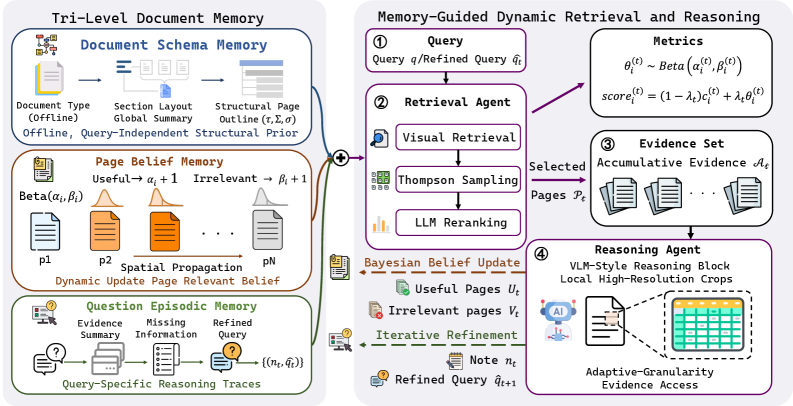
Figure 2(本文使用 paper Figure 2),論文 Section 3 的方法 overview:三層 document memory 透過 Bayesian update、Thompson sampling、LLM reranking 與 adaptive-granularity evidence access 支援 iterative QA。原始 figure;圖片取自 arXiv HTML figure endpoint。DocMemo arXiv 頁面標示 CC BY 4.0;本文保留 attribution,並附上 CC BY 4.0 license。

上面使用的是 paper Figure 2 的直接下載圖,檔名保留為 repository asset;它不是本文自行繪製的 Evidence Atlas cover。這個 distinction 很重要:cover 解釋文章的 bounded engineering conclusion,body figure 才是原論文的 evidence。
把一次漏頁走過一遍 / Walk one example through the method
以下是依 Figure 4 與方法段落整理的 faithful walkthrough;它是說明,不是 paper 之外的新 benchmark:
- Input:使用者問一個跨頁的財務或學術文件問題,答案需要正文的一段定義與表格的一個數值。
- Intermediate representation:Schema Memory 先提供文件 section 與 page layout;visual retriever 產生 page candidates;Question Episodic Memory 記下目前 query、已找到的定義與缺失的 table evidence。
- Decision:reasoner 將看過的頁面分成 useful、irrelevant 或未判定。Page Belief Memory 以 Beta-Bernoulli update 提高 useful page 的 posterior mean,並把正向訊號以 spatial propagation 傳給鄰近頁面;Thompson sampling 保留探索不確定頁面的機會。
- Output:下一輪以更新後的 page score 重新選頁、rerank,再對表格或圖所在頁面啟用 finer-grained crop,最後由 reasoning VLM 產生答案。
- Likely failure point:若第一輪 reasoner 把真正相關頁面標成 irrelevant,belief state 會把錯誤往後傳;如果 OCR、visual embedding 或 page adjacency 對文件 layout 不適用,adaptive crop 也可能只是在錯誤頁面上增加解析度。
方法骨架 / Technical mechanism
1. Bayesian page belief update
對 page 維護 Beta prior 。每輪得到 useful page set 與 irrelevant page set 後,更新:
page posterior mean 為:
是累積的 relevance confidence,不是「這頁一定包含答案」的 truth probability。正向 feedback 還會以 radius 與 decay 傳給鄰近頁面,因為同一個 section 的 evidence 常集中在相鄰頁。
2. Thompson sampling:不要太早鎖死
如果只按照 posterior mean greedy ranking,第一輪偶然被選到的 page 可能一直佔據名額。Thompson sampling 從每頁的 Beta posterior 取樣,在 exploitation 與 exploration 之間保留不確定頁面的機會。論文 Appendix C.8 的替換實驗把 Thompson sampling 換成 greedy selection,整體 accuracy 從 71.28 降至 68.62。
3. Adaptive-granularity evidence access
Page-level retrieval 對整頁文字與版面有效,但表格、圖或局部 dense region 可能被整頁 representation 稀釋。DocMemo 在 reasoning 時對候選頁抽取局部 visual region;Implementation Details 與 Table 5 設定每 query 最多 5 個 table crops、image long side 1,500 px,並用 MinerU 取得 structure-aware table/figure crop。
4. 三回合的整體 loop
- 用 offline page embeddings 與 schema summaries 建立初始候選。
- 以 retrieval agent、Thompson sampling 與 LLM reranking 選出 pages。
- reasoning VLM 讀取 page 與 local crop,輸出答案、useful pages、irrelevant pages、notes 與 refined query。
- 將 feedback 寫回 Page Belief Memory 與 Question Episodic Memory。
- evidence 不足時再進入下一輪,最多 個 retrieval–reasoning cycles。
如何讀結果 / How to read the evidence
Table 3:跨 benchmark 的 accuracy
DocMemo 在 MMLongBench-Doc、LongDocURL、PaperTab 的 accuracy 分別為 71.3、81.1、80.4,平均 77.6;SimpleDoc 為 60.6、72.3、65.4,平均 66.1。這個比較支持「stateful dynamic retrieval 在這三個 long-document DocVQA protocol 中帶來較高 answer accuracy」。它沒有單獨隔離所有外部因素,例如 preprocessing、visual embedding、prompt、model checkpoint 與 judge。
Figure 3:找回 evidence 的行為
論文 Figure 3 把 evidence recall 與 all-hit rate 畫成 iterative retrieval 的曲線:brief 所記錄的結果是 evidence recall 從 round 1 的 28.32% 增至 round 3 的 69.56%,all-hit rate 從 12.90% 增至 58.05%。這比只報 final answer score 更能回答「系統是否真的找回遺漏頁面」;但 recall 仍是 benchmark annotation 上的 page-level coverage,不等於 answer correctness 或 citation faithfulness。
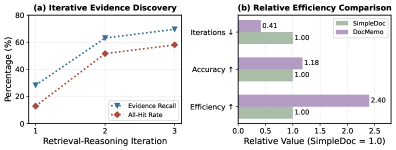
Figure 3,論文 Section 4.4 的 central result:左側呈現 evidence recall/all-hit rate 隨 retrieval–reasoning rounds 上升,右側比較 relative efficiency。原始 figure;圖片取自 arXiv HTML figure endpoint。DocMemo source 標示 CC BY 4.0;本文保留 attribution 並依 CC BY 4.0 license 使用。

Table 4:哪個 component 真的影響結果
MMLongBench-Doc 的 full model overall accuracy 是 71.28。移除 Document Schema Memory、Page Belief Memory、Question Episodic Memory、全部 memory、Bayesian updating、Thompson sampling、adaptive-granularity 後,overall 分別為 70.16、68.80、69.02、68.47、68.80、69.89、69.91。這個 pattern 讓 Page Belief、cross-round memory 與 adaptive crop 的作用變得可診斷,而不只是把所有 improvement 歸給「multimodal RAG」。
Appendix:迭代效率與 judge verification
DocMemo 在 MMLongBench-Doc 平均每題 1.24 個 retrieval–reasoning iteration;SimpleDoc 固定三輪。按 LLM/VLM call 數量估計,DocMemo 的 relative computation cost 是 0.41、relative efficiency 是 2.40,這個 cost claim 是 paper-defined proxy,不是美元成本。評估主要使用 GPT-4.1 binary judge;Appendix C.6 對 300 題做人工核對,報告 96.7% agreement 與 Cohen’s kappa 0.92。這是有用的 calibration slice,但仍不是所有 benchmark、所有 evidence type 的獨立 human evaluation。
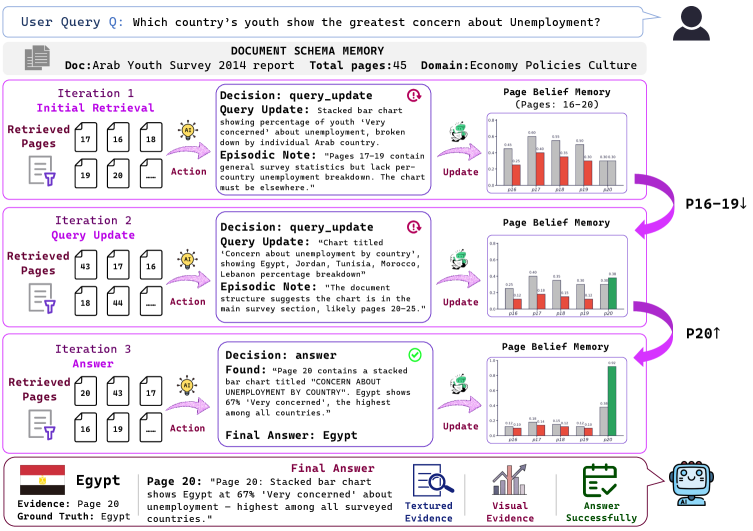
Figure 4,論文 Section 4.5 的 qualitative analysis:展示 retrieval feedback、belief update、query refinement 與後續 evidence access 的關係。原始 figure;圖片取自 arXiv HTML figure endpoint。DocMemo source 標示 CC BY 4.0;本文保留 attribution 並依 CC BY 4.0 license 使用。

證據地圖 / Evidence map
- Paper directly supports:三個 benchmark 的 Table 3 accuracy、MMLongBench-Doc 的 Table 4 component ablation、Figure 3 的 iterative evidence recovery、Appendix C.5 的 call-based efficiency,以及 Appendix C.6 的 300 題 human verification。
- Author interpretation:三層 memory 與 Bayesian belief update 能讓 retrieval state 跨回合傳遞;adaptive granularity 對 table-intensive evidence 特別重要;on-demand iteration 可以比固定三輪更省 call。
- Not established:沒有任意 enterprise corpus 的 freshness、ACL/tenant isolation、citation faithfulness、美元成本或 production latency 保證;GPT-4.1 judge、Qwen3.5-VL-9B、MinerU 與 benchmark annotation 仍是主要外部效度限制。
- Bloss0m engineering judgment:最可移植的 pattern 是把 evidence coverage 與 retrieval state 做成可觀測資料,再用 unanswerable gate 與 citation check 阻止 reasoner 把「沒找到」誤寫成「不存在」。
限制、效度威脅與未支持的解讀 / Limitations and unsupported interpretations
本文的限制不是只有模型分數的高低。第一,所有 evidence feedback 都經過 reasoner 與 benchmark annotation;若 page relevance 判斷錯誤,Bayesian state 可能把早期錯誤放大。第二,三個 benchmark 都是 long-document visual QA,不能直接代表企業內部文件的 ACL、更新頻率、版面噪音與跨 tenant isolation。第三,GPT-4.1 judge 的 human verification 只抽查 MMLongBench 的 300 題,不能取代全量人工審核。最後,論文的 relative computation cost 以 LLM/VLM call proxy 計算,不能解讀成固定美元節省。
因此,DocMemo 尚未證明 通用 RAG citation faithfulness、production latency、資料新鮮度或安全邊界會改善;這些都需要帶有版本、權限與成本記錄的外部評估。
Artifact 狀態與可重現性 / Artifacts and reproducibility
截至 2026-08-12, Harrygof/DocMemo repository 是 public,包含 agent、modules、pipeline、preprocess、prompts、scripts 與 utils,README 提供 Python 3.11、requirements、embedding、vLLM、summary、document memory 與 QA commands。這代表 code and documented pipeline are accessible,但不代表完整 reproduction 已經完成。
README 要求使用者自行放入 dataset PDFs;paper 使用的 Qwen3.5-VL-9B、ColQwen2.5-v0.2、MinerU、vLLM、A100 hardware、checkpoint hashes、dataset license、exact commit、prompt/judge version 與完整 results archive 都需要另外核對。repository 根目錄未提供可確認的 LICENSE endpoint,因此本文把 artifact 狀態分成「程式與流程可讀」以及「資料、權利與完整重現未確認」。
最小可行 reproduction 是準備一個小型 MMLongBench subset,先跑三輪 retrieval–reasoning,對照 static retrieval 與 DocMemo,再重現 evidence recall、all-hit rate 與 Table 4 的關鍵 ablation。完整三 benchmark 需要 A100-class GPU、多階段 PDF preprocessing、offline embedding/summary 與 VLM service,不應把 README command list 當成低成本 replication。
Bloss0m 工程判斷與不適用條件
適合使用:文件長度與 evidence density 讓一次 top-k 不可靠,且團隊能保存 page-level retrieval feedback、query refinement、unanswerable decision 與 citation anchors 時。這時 Page Belief Memory 可以成為 retrieval observability layer,而不必把所有 memory 都塞進 prompt。
不適合直接使用:資料需要嚴格 ACL/tenant isolation、頁面經常更新但沒有 freshness invalidation、評估沒有 human spot check,或 retrieval feedback 本身可能被 prompt injection 污染時。先加上 access-control filtering、versioned index、evidence provenance、unanswerable threshold 與 cost budget,再考慮讓系統跨輪探索。
三個記憶點 / Three things to remember
- 技術想法:把每輪 reasoning feedback 寫回 page belief 與 episodic memory,讓下一輪能探索而不是重新猜測。
- 證據:三 benchmark accuracy、Table 4 ablation、Figure 3 evidence recovery 與 Appendix 的 efficiency/human verification 一起支持「stateful retrieval」這個較窄的 claim。
- 邊界:它改善的是特定 long-document visual QA 的 evidence discovery;enterprise RAG 的 freshness、權限、成本與 citation faithfulness 仍未被證明。