AI Frontier Research & Engineering
Tracking emerging technology, dissecting system architecture, and publishing what I actually build and evaluate.
Article archive — page 5
- GPT-5.6 Sol Prompting: Why Shorter Prompts Score Higher
Reads OpenAI's official GPT-5.6 Sol prompting guidance: what the 15% shorter-prompt figure can and cannot support. This article explains why to write less—not a rules checklist.
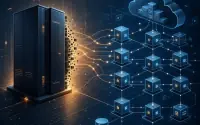
- Decompose with Care: Architecture Patterns, Engineering Disciplines, and Hard Lessons in Banking System Modernization
A comprehensive summary of the AWS ProServ senior consultant's presentation 'Decompose with Care': How a leading Southeast Asian bank modernized its omni-channel monolithic platform serving 20 million active users to AWS cloud-native microservices with zero downtime. Covers four major challenges, Strangler Fig pattern, 3-Tier Facade, Contract-First / Mock-First approaches, and engineering guardrails in the AI era.
- Securely Implementing Multi-tenant AI Agents on AWS EKS: From Sandbox Isolation to BitoClaw Real-world Practice
A summary of the salon sharing by AWS Solutions Architect HC and Bito Group Operations Manager Michael: OWASP LLM Top 10 security red lines, runC / gVisor / Kata sandbox comparison, Kubernetes multi-tenant isolation levels, and how BitoClaw builds a compliant, low-cost AI Agent platform using EKS, KEDA Scale-to-Zero, Pod Identity, and Network Policy.
- From Alexa for Shopping to Agentic Commerce: How Amazon × TapPay Make AI Actually Checkout for You
A source-bounded review of low-latency shopping agents and payment guardrails from the Amazon × TapPay session, checked against first-party Alexa for Shopping and AgentCore material.
- How to Read the Siri AI Hands-on: Beta Capabilities, App Intents, and Unsettled Boundaries
Cross-checking The Verge's hands-on with Apple documentation: what iOS 27 Siri AI exposes in developer testing, what third-party apps can prepare, and what still requires beta evidence.
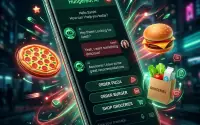
- DoorDash Ask Assistant Architecture: Where the 24% Conversion Lift Comes From
A breakdown of DoorDash Ask Assistant architecture and evaluation framing. The 24% is their published conversion figure—read it with the experiment scope, not as a headline guarantee.
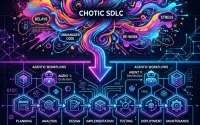
- From Vibe Coding to Harness Engineering: A Comprehensive Guide to Google's New 50-Page SDLC Whitepaper
An in-depth review of Google's latest 50-page whitepaper, 'The New SDLC With Vibe Coding', released in 2026. This article breaks down the transformation of the Software Development Life Cycle in the AI era, the Model + Harness framework, automated feedback loops, and the essential skills for developers transitioning into 'quality arbitrators'.
- What Is Grok 4.5? Capabilities, Benchmarks, and Adoption Decisions
A source-backed review of Grok 4.5's API specifications, coding benchmarks, availability, and the limitations teams should validate before adoption.
- What Is GPT-5.6 Sol: Routing, Pricing, and Benchmarks
A product-oriented read of GPT-5.6 Sol: tiered pricing, model routing, and how to interpret benchmarks. This is not the architecture paper.
- Google Cloud Day Taipei 2026: Agentic AI Takeaways from the Developer Track
Developer-track observations from Google Cloud Day Taipei 2026, checked against official documentation for ADK, Agent Runtime, and enterprise governance.
- Google Cloud × CyberLink: Product Decisions for Generative Multimedia AI
A source-checked reading of CyberLink's multimedia AI work: what the Google Cloud case study supports and what product teams still need to validate.
- Google ADK 2.0: Workflow Graphs, Task Collaboration, and HITL Boundaries
A source-grounded analysis of how ADK 2.0 separates deterministic routing from LLM reasoning, with production boundaries for workflows, tasks, human approval, and durable state.
- Enterprise AI Agent Security: Threat Model, Control Plane, and Rollout Checklist
Build a testable defense-in-depth architecture around prompt injection, tool authorization, exfiltration, memory and identity, supply chain, and observability boundaries.
- Google Cloud Data Agent Kit: Skills, MCP, and Data Workflow Adoption
A practical guide to Data Agent Kit's preview status, open-source artifacts, Skills/MCP/plugin architecture, and enterprise responsibilities for access, cost, validation, and incident recovery.
- Google Colab CLI: A Cloud Terminal for AI Agents
Google Colab CLI lets agents and developers run terminal commands in the cloud. This post covers what it can do, permissions, and limits—not a "compute liberation" launch piece.
- GPT-Live Voice Architecture: Full-Duplex Interaction, Delegation, and API Boundaries
A grounded look at GPT-Live's full-duplex and background-delegation design in ChatGPT Voice, how it differs from the Realtime API, and which failure modes voice teams should test.
- LangChain OpenWiki: The Automated Code Documentation Manager Tailored for AI Agents
An in-depth exploration of LangChain's latest open-source tool, OpenWiki. From the underlying Git Diffs tracking mechanism to the brand-new 'OpenWiki Brains' proactive memory, comprehensively analyzing how to build an exclusive codebase documentation system that reduces Token consumption for AI Coding Agents.
- Meta Muse Spark Through 1.2: Multimodal Reasoning, Parallel Agents, and Version Boundaries
From the original Muse Spark through 1.1 and 1.2, this article separates Meta's published multimodal, parallel-agent, coding, and API capabilities from undocumented internals.















For speaking invitations, internal engineering sessions, or architecture exchange, see the topics and public work I can bring into the conversation.
Speaking & contact