AI Frontier Research & Engineering
Tracking emerging technology, dissecting system architecture, and publishing what I actually build and evaluate.
Article archive — page 9
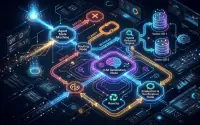
- Agentic RAG: When Vector Search Meets Agentic Reasoning
An engineering walkthrough of agentic RAG: account-policy confusion, hybrid recall, bounded verification, evidence tracing, and a scoped first-party 100-question evaluation.
- Harness Design for Long-Running AI Engineering: Generation, Evaluation, and Verification Chains
A source-grounded engineering guide to Anthropic's long-running application harness, including the planner-generator-evaluator contract, context reset trade-offs, and reported costs.
- Long-Running Agent Harnesses: Handoffs, Verification, and Recovery
A source-grounded analysis of Anthropic's initializer, progress artifacts, feature inventory, Git checkpoints, and end-to-end verification pattern for work spanning context windows.
- Harness Engineering: Making a Codex Repository Legible, Verifiable, and Governable
An analysis of OpenAI's agent-first engineering field report: repository knowledge, observable environments, enforced invariants, and continuous cleanup as a compounding control system.
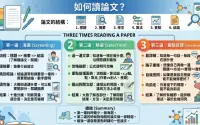
- Efficient Academic Paper Reading: The Three-Pass Approach
Turning the 'three-pass reading method' into an actionable workflow: 5–10 minutes for screening, 1 hour to grasp methods and evidence, and 'virtually re-implementing' to master details. This article integrates Keshav's three-pass method with Mu Li's practical tips, complete with a checklist and literature review guide.
- The Impact of AI on the Labor Market: A New Measure from 'Theoretical Capability' to 'Observed Exposure'
A summary based on Anthropic's 'Labor market impacts of AI: A new measure and early evidence': introduces the 'observed exposure' metric, explains which occupations are most exposed to AI, its relationship with employment growth and unemployment rates, and implications for policy, businesses, and individual careers.
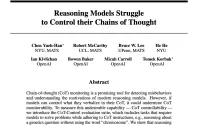
- Why Reasoning Models 'Cannot Control Their Own Train of Thought' — And Why That's Good News for AI Safety
OpenAI's latest research reveals that current frontier reasoning models are almost completely unable to hide or alter their Chain of Thought (CoT) based on instructions, with maximum controllability at only 15.4%. This 'flaw' is not a problem, but rather the key reason why current CoT monitoring mechanisms can be trusted.
- How to Publish LINE Stickers Without Drawing Skills
LINE creator sticker publishing workflow: image specs, main/tab images, packaging, and how to use existing art or AI when you cannot draw.
- How Anthropic Builds Effective Agents: Architecture Patterns and Tactics
An architectural read of Anthropic's Building Effective Agents: workflows, tools, evaluation, and when not to build an agent. This is not the site's complete AI Agent guide.
- BloomRender User Manual: From Text-to-Image to ID Photos, Portraits, Travel Photos, and Virtual Try-Ons
BloomRender is an AI photo studio powered by Google Gemini. This article details the complete workflow and recommended learning path for text-to-image generation, AI ID photos, editor fine-tuning, portraits, travel photos, and virtual try-ons.
- What Is Vibe Coding: How AI IDEs and Code Agents Split the Work
Distinguish Vibe Coding, AI IDEs, and Code Agents: when to chat your way through code and when to hand work to an agent.






For speaking invitations, internal engineering sessions, or architecture exchange, see the topics and public work I can bring into the conversation.
Speaking & contact