90 秒掌握論文 / The paper in 90 seconds
- 問題:工具使用不只是把函式名稱與 JSON argument 填對。Agent 還要從文件、schema、程式碼與不完整對話中辨認工具 affordance,決定何時呼叫、如何串接多個工具,以及缺資料時如何追問或恢復。MidTool 問的是:這些能力能不能在 post-training 之前,就透過專門的 mid-training 建立較強的先驗?
- 資料設計:論文提出 MidTool pipeline,收集 web、PDF、code 與結構化工具 artifact,最後組成 20.3B tokens、11.22M samples 的 MidTool-Mix。它用 context-grounded trajectory augmentation 教 grounding,再用 native agentic trajectory synthesis 教 execution。
- 主要結果:在 Qwen3-4B-Base、固定 100K TOUCAN SFT 的比較中,加入 MidTool-Mix 後 BFCLv3 overall 為 50.25%(無 mid-training 為 39.73%)、\tau^{2}-Bench Pass@4 為 28.06%(20.50%)、MCP-Universe pass 為 5.03%(1.68%)。Qwen3-8B 也有同方向結果。
- 關鍵邊界:MCP-Universe 的 web-search 子集仍是 0.00%。Browser automation、financial、location 有改善,不代表模型已經具備 deep-search 式的證據蒐集、反覆精煉與長程控制能力。
我的 bounded verdict 是:MidTool 最有價值的地方,不是又多一個 agent benchmark 分數,而是把「工具使用的可遷移先驗」拆成 grounding 與 execution 兩個資料問題,並用 ablation 顯示兩者互補;但它尚未證明一般 tool-use mid-training 能自然長成 search agent。
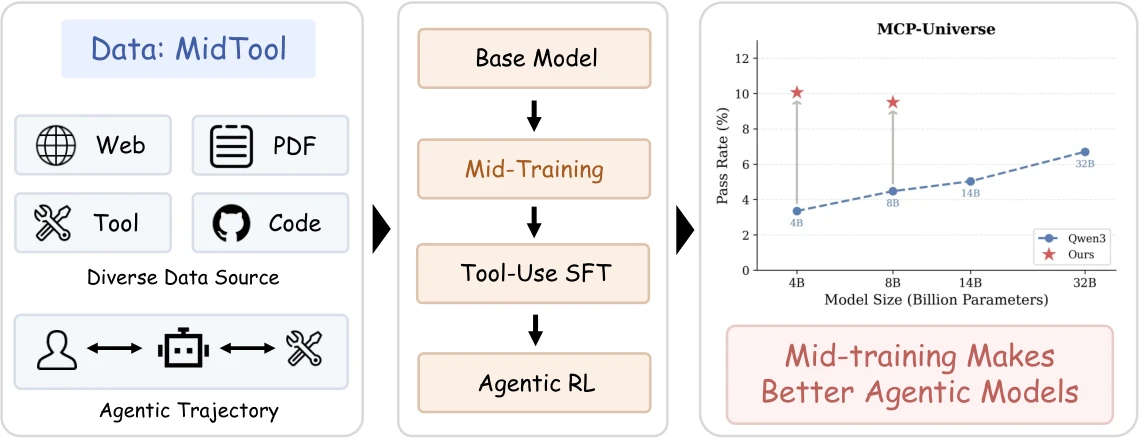
Figure 1,論文 teaser:左側是 web、PDF、tool、code 與 agentic trajectory;中間是 base model → mid-training → tool-use SFT → agentic RL;右側是作者用來說明 transfer 的 MCP-Universe 圖。這張圖是作者的 overview,不是額外的獨立 benchmark;原圖可定位到 Figure 1,取自 arXiv HTML,頁面標示 CC BY 4.0。
版本與閱讀範圍 / Version and reading scope
本文閱讀的是 arXiv:2608.20314 v1,提交日期為 2026-08-20,沒有把它寫成已經通過 peer review 的 conference paper。除了摘要與 PDF,我也逐段核對 arXiv HTML 版 的資料 pipeline、Table 2–6、Appendix A–D、visual tool-use pilot 與 limitations。
截至 2026-08-24,論文摘要的 Data & Model 連結已能對應到 MidTool 的 Hugging Face 組織頁:其中有 MidTool-Mix dataset、4B/8B mid-training checkpoint 與 RL checkpoint。這些資源不是「下載後即可無條件重現」的同義詞:dataset 需要接受 MidTool-Mix License,模型頁也要求接受 Apache-2.0 與 dataset terms;本文把它們列為可見、可申請存取的 artifact,而不是宣稱我已下載並跑完 reproduction。
讀者真正要回答的問題
這篇論文不是在問「把更多 tool-call trajectory 塞進 training 有沒有用」。如果只是 post-training dataset 變大,答案很容易被資料量、教師模型或評測 harness 混在一起。
比較精確的讀法是:在 downstream SFT/RL recipe 固定時,把通用工具使用的資料提前到 mid-training,是否能讓小模型在陌生工具、長回合互動與 schema grounding 上得到可轉移的能力?
這裡的 mid-training 是介於一般 pre-training 與 post-training 之間的一個階段。MidTool 不是把 SFT 拿掉,也不是說 RL 不重要;它的因果主張比較窄:先用專門的 tool-use mixture 改變 base model,再使用相同的 SFT/RL 配方,結果是否比沒有這一段更好。
證據地圖:論文報告與我的判讀
| 層次 | 本文採用的說法 |
|---|---|
| 論文直接支持 | 在固定 downstream recipe 的 4B/8B 實驗裡,MidTool-Mix 提升 BFCLv3、\\tau^{2}-Bench 與 MCP-Universe 的部分整體指標;Table 2–6 與 Appendices A–D 提供資料組成、ablation、污染檢查與 visual pilot。 |
| 作者仍未證明 | 一般 tool-use mid-training 是否能跨模型、跨訓練 budget、跨 benchmark 穩定泛化;也沒有證明它能自然產生 deep-search agent。 |
| 我的工程推論 | 把 raw、context-grounded、native-executable 資料分開記錄,並把 final-answer grounding 與 tool-call success 分開評估,會比只追一個 MCP overall score 更適合產品決策。 |
後文會把數字、作者的 claim 與 Bloss0m 的工程判讀分開;「提升」只指論文報告的 setup,不延伸成 production superiority。
核心直覺 / Core intuition
把 MidTool 想成在模型學會「如何回答」之前,先讓它大量閱讀工具說明、程式碼與可執行互動:模型先建立工具的 affordance map,再在 post-training 學習產品希望的語氣、權限與任務策略。若只在最後階段教 call format,模型可能會填對 JSON,卻不知道何時該呼叫、資料缺了該問什麼,或上一個工具結果如何改變下一步。
這也解釋了為什麼論文刻意把 context-grounded 與 native-executable 兩條分支分開:前者提供「從材料理解工具」的先驗,後者提供「在介面上執行工作流」的先驗。
走完整個方法 / End-to-end worked example
假設一份 API 文件寫著「先用 search_orders 取得 order id,再用 refund_order 退款;若缺少日期要先向使用者確認」。在 MidTool 的流程裡,文件先被品質 classifier 保留,Qwen3-235B-A22B-Instruct-2507 會抽出工具邊界、必填參數與 workflow affordance;rule-based planner 再配置一組單步 QA 與一組需要澄清日期、依序呼叫兩個工具的 trajectory。若資料進入 native branch,生成結果還要通過 turn ordering、required arguments 與 tool-response consistency 驗證。
這個例子不是論文裡某個私有 instance,而是把 Sections 2.2–2.3 的機制走一遍。模型先在 mid-training 看到這類 grounding/execution pattern,之後才用 TOUCAN SFT 與可選 RL 學會在 benchmark 或產品環境中完成任務;最後評估的不只是 JSON 是否合法,還包括多回合互動與陌生 MCP server 的 transfer。
為什麼 post-training 可能不夠
論文把一般 tool use 的困難拆成兩層:
- Grounding:從文件、PDF、code 與 schema 中辨認工具邊界、必填欄位、參數格式與 workflow 結構。
- Execution:在多回合互動中規劃與排序呼叫、遇到缺少資訊時追問、切換工具,並根據 tool response 修正下一步。
如果模型只在狹窄的示範軌跡上做 post-training,它可能學會「長得像一個 tool call」的輸出格式,卻沒有吸收散落在 developer documentation、API reference、manual、code repository 與 structured tool definition 裡的背景知識。MidTool 的策略是把這些材料先轉成一個較廣的 agentic prior,再把產品行為留給下游訓練。
這是一個合理但可被反駁的假說。最重要的實驗不是某個 headline number,而是同一個 SFT recipe 下的 no-mid-training 對照,以及把 raw data、context branch、native branch 拆開的 ablation。
MidTool pipeline:四種來源、兩條合成分支
Stage 1:收集互補的 raw sources
MidTool 不是只抓工具 schema。它刻意把四種訊號放在同一個 mixture:
- Web:從 FineWeb 的 processed Common Crawl dumps 取 2020–2025 的 API reference、developer documentation、troubleshooting、tutorial 與 CLI-style instructions。
- PDF:使用 FinePDFs 的英文內容,補上 manual、product handbook 與較長的 procedural documentation。
- Code:從 GitHub event data 發現 agent/MCP repositories,再加入具有 community signal 的公開 repositories;保留 libraries、SDKs、frameworks、examples 與 documentation-like paths,並排除 benchmark/dataset repository 以降低 leakage risk。
- Structured tool artifacts:收集 REST API 與 MCP skills,直接取得 executable schema、parameter structure 與 tool boundary,供後面的 native trajectory synthesis 使用。
這四種來源各自補不同缺口:web/PDF 給 breadth 與 procedural context,code 提供可執行的 interface pattern,tool artifact 則提供最接近真正呼叫的 schema。它們不是同一種資料的四個 mirror。
Stage 2:source-specific filtering 與 deduplication
Code 會排除 binary、model weights、logs 等低訊號檔案,並用 line count、平均/最大行長、alpha ratio 等 heuristic 過濾,再以 SHA-256 與 MinHash LSH 做 exact/near-duplicate removal。最後,對高品質 repository 優先保留 docs、examples、tutorials、guides、samples、cookbook 等 documentation-like directories。
Web 與 PDF 則走四階段流程:high-recall keyword/URL prescreening、以 LLM-labeled seed data 訓練的 fastText classifier、document-level quality filtering,以及 MinHash LSH deduplication。這讓資料比較偏向 developer-facing technical material,也讓讀者知道 mixture 的品質依賴一串 classifier 與 heuristic,而不是人工讀完所有文件。
Stage 3:把材料變成 supervision
MidTool 有兩條彼此互補的合成分支。
Context-grounded trajectory augmentation 從 web/PDF/code 文件出發。先用 Qwen3-235B-A22B-Instruct-2507 評估文件品質並建立 affordance profile,再由 rule-based planner 按文件品質配置 bounded budget,產生 tool selection、schema-grounded parameter extraction、format-constrained call、workflow recognition、parallel use、clarification 與 long-context reasoning 等 QA/trajectory。只有通過 parsing 與 semantic quality control 的資料才進入 mix。
Native agentic trajectory synthesis 從 REST API 與 MCP skills 的 executable interface 出發。它先建立 tool inventory、解析 definition、整理 canonical schema,再由品質與可行性 profile 決定 single-call、multiple/parallel tool use 與 information-missing trajectory 的配置。生成後嚴格檢查 turn ordering、schema grounding、required arguments 與 tool-response consistency;失敗的生成會帶著 quality-control feedback retry,仍不合格就丟棄。這條分支另外混入 AWM rollout 與 filtered Nemotron Agentic traces。
兩條分支的差異可以這樣記:context branch 教模型從亂的資料中找出工具;native branch 教模型在可執行介面上把工具用起來。
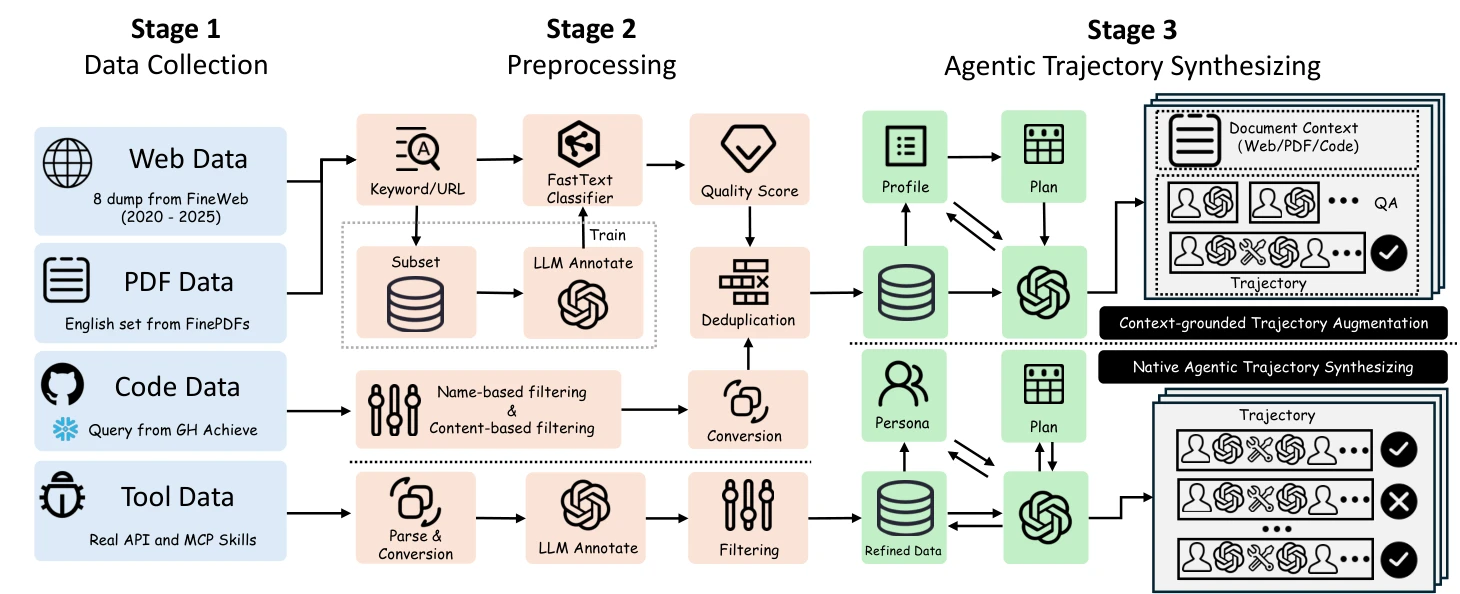
Figure 2,論文 Section 2 的完整 pipeline。注意 Stage 3 並不是把所有文件直接變成成功示範:context-grounded branch 先建立 profile/plan,native branch 先整理可執行 schema,再對生成 trajectory 做結構與 response consistency 檢查。原圖可定位到 Figure 2,取自 arXiv HTML,頁面標示 CC BY 4.0。
這個 pipeline 真正多做了什麼
把 Figure 2 展開,可以看到 MidTool 的 novelty 不在「使用一個大模型生資料」這件事本身,而在於把資料生成拆成幾個可檢查的介面:
- 來源層決定模型看到的是文件語境、程式碼 pattern,還是能直接解析的 tool schema。
- 品質層把 keyword/URL 高 recall、fastText、LLM annotation、deduplication 與 source-specific filtering 串起來;不同來源不共用一個粗糙的 filter。
- 計畫層先產生 affordance profile 與 trajectory plan,再依文件/tool source 的品質、工具數與 argument structure 配置數量,避免大量複製 trivial single-call sample。
- 驗證層在資料進入 training mix 前檢查 turn order、required argument、schema grounding、tool response consistency;不合格資料 retry 後仍會丟棄。
這四層讓資料 pipeline 比「prompt 一個教師模型,然後把輸出全部存下來」更容易審計;但也意味著 reproduction 必須取得 filtering threshold、planner policy、teacher prompt 與 validation code,而不是只有 dataset 名稱。
20.3B tokens 到底怎麼組成
論文 Table 2 的 mixture 統計如下;web/PDF/code 的斜線是 source corpus/context-grounded augmentation 的 token count:
| 子集 | Tokens | Samples | 比例 |
|---|---|---|---|
| Web | 4.4B / 4.1B | 6.86M | 42% |
| 2.6B / 2.1B | 1.34M | 23% | |
| Code | 3.8B / 1.5B | 2.60M | 26% |
| Native agentic trajectory | 1.8B | 0.42M | 9% |
| Total | 20.3B | 11.22M | 100% |
這裡有一個容易忽略的重點:native trajectory 只佔 9%,但它不是「資料少所以不重要」。MidTool 的主張是,廣泛的 raw/context data 先提供 grounding,少量但經過 executable validation 的 native trajectories 補上 execution;後面的 branch ablation 正是用來檢查這個分工。
Appendix 的 inventory analysis 顯示,混合資料含有約 2.60M 個 unique tool names,並有 37.2% 的 domain long tail(依論文的 keyword categorization)。這說明作者想擴大工具表面,但不代表每個 tool name 都對應一個可直接下載、可永久呼叫的 production endpoint。
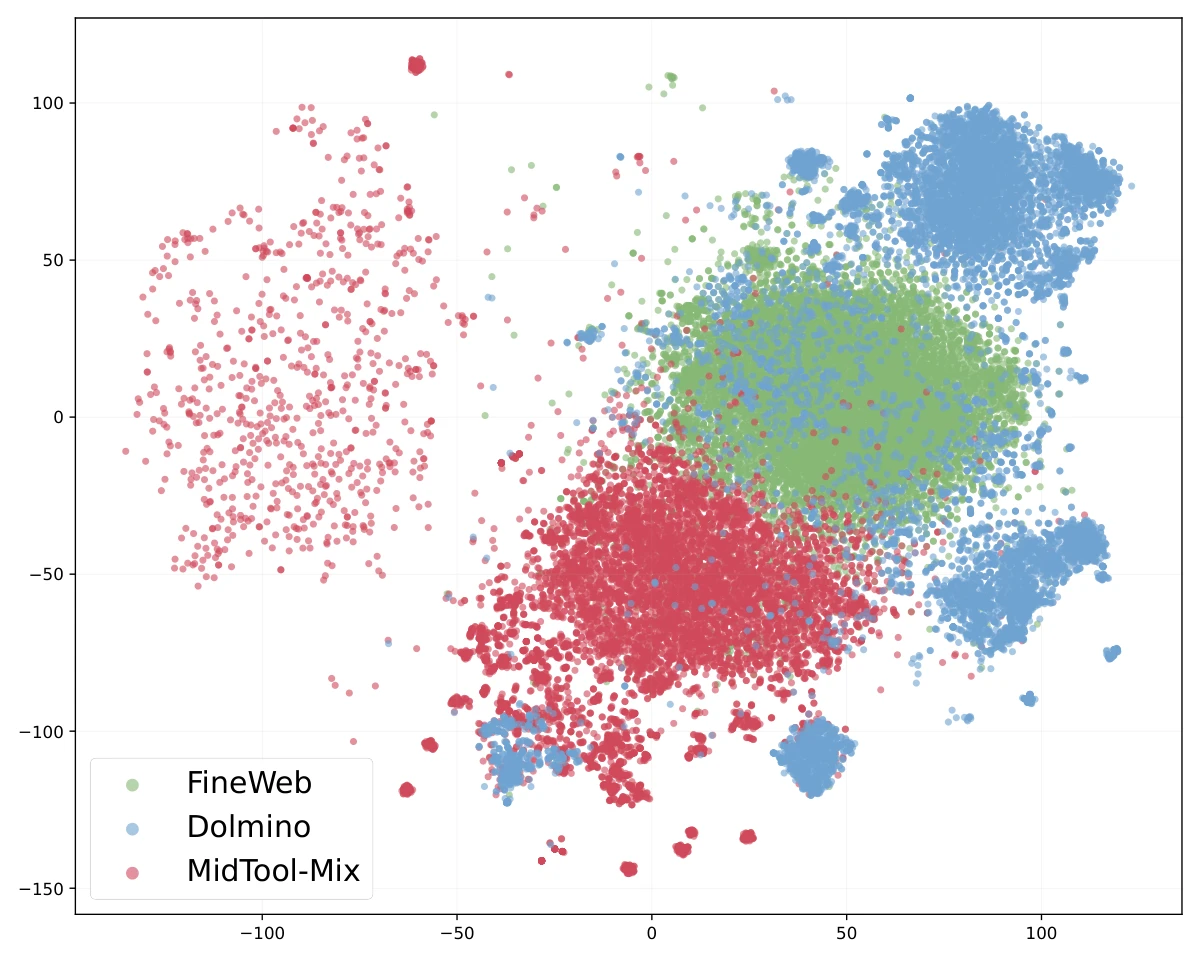
Figure 3,論文 Appendix A.4 的 t-SNE visualization:MidTool-Mix 與 FineWeb/Dolmino 有部分重疊,也有明顯的獨立區域。這是 embedding space 的定性分布圖,不是能力提升的因果證據;原圖可定位到 Figure 3,取自 arXiv HTML,頁面標示 CC BY 4.0。
Figure 3 的正確讀法不是「點分得越開,模型就越強」。作者取樣 2K examples、用 Arctic-Embed-2.0-L 做 embedding,再把 MidTool-Mix 和 FineWeb/Dolmino 放在同一個 t-SNE 空間裡。圖中 MidTool-Mix 同時保留廣泛 web data 的重疊,又出現 documentation-heavy、workflow-oriented、agentic tool-use 的獨立區域;這支持「它不只是把一般 pre-training data 換個名字」的資料分布說法,但不單獨證明 downstream transfer。
實驗怎麼隔離 mid-training 的效果
作者使用 Qwen3-4B-Base 與 Qwen3-8B-Base,先做 MidTool-Mix mid-training,再套用相同的 downstream recipe。SFT 使用 TOUCAN 的 100K tool-use subset;mid-training 與 SFT 以 ArcticTraining 在 32 張 H200 上進行。可選的 RL 使用 AWM 的 526 個 synthetic tool-use environments,在 8 張 B200 上訓練。
評測故意涵蓋三種不同壓力:
- BFCLv3:看 single-turn、multi-turn、schema/argument grounding 與 hallucination。
\\tau^{2}-Bench:在 airline、retail、telecom 等 verticals 觀察 interactive task completion、multi-step execution 與 recovery。- MCP-Universe:在 browser automation、finance、location、web search 等真實 MCP servers 上測陌生工具的 transfer。
這個 setup 的可取之處是 downstream SFT/RL 配方固定;限制則是 mid-training 本身仍涉及資料、教師模型、compute 與訓練 recipe 的共同選擇,不能只把差異簡化成「多看了 20.3B tokens」。
訓練細節:不是一句「mid-train」就結束
Appendix B 的設定把 intervention 具體化:mid-training 使用 1 epoch、最大 sequence length 8192、4M global token batch;SFT 的最大 sequence length 為 32768。RL 使用 64 steps、每步 16 rollouts、最多 20 turns。這些數字很重要,因為長 context、trajectory horizon 與每步 rollout 數會改變工具使用任務的難度與成本;若 reproduction 改掉它們,結果就不能直接和 Table 3–6 對齊。
作者也關掉 thinking mode 來對齊設定,並把同一份 downstream post-training recipe 套在 raw base 與 MidTool-Mix mid-trained base 上。這種設計讓 comparison 比較乾淨,但它仍沒有回答:更長的 mid-training 是否只是在用更多 compute 買分數,或不同 model family 是否需要不同的 mixture ratio。
結果:提升是真的,但要看哪一種工具能力
下面先固定在最容易讀的 Qwen3-4B-Base + SFT 設定,數字取自論文 Table 3–5;比較的是同一 base model 有沒有先做 MidTool-Mix mid-training。
| 評測 | No mid-training | + MidTool-Mix | 差異 |
|---|---|---|---|
| BFCLv3 overall | 39.73% | 50.25% | +10.52 pp |
\\tau^{2}-Bench overall Pass@4 | 20.50% | 28.06% | +7.56 pp |
| MCP-Universe overall pass | 1.68% | 5.03% | +3.35 pp |
BFCL 的提升不只來自 single-turn。multi-turn average 從 15.50% 到 26.63%,代表在 missing function、missing parameter 與 long-context 等子集,mid-training 可能真的補到一些較難由狹窄 SFT 穩定誘導的能力。加入 RL 後 4B 的 BFCL overall 進一步到 54.18%,但這是「mid-training + RL」的結果,不應拿來宣稱 mid-training 單獨造成全部提升。
8B 也呈現同方向:SFT-only 的 BFCL overall 是 47.62%,加上 MidTool-Mix 後是 51.12%;若再加 RL,則是 55.12%。這讓「不是只有 4B 偶然有效」的解讀更有根據,但仍然是兩個 base-model scale 與固定 recipe 的實驗範圍。
| Base model | Downstream recipe | BFCLv3 overall | \\tau^{2}-Bench Pass@4 | MCP-Universe pass |
|---|---|---|---|---|
| Qwen3-4B-Base | SFT | 39.73% | 20.50% | 1.68% |
| Qwen3-4B-Base + MidTool-Mix | SFT | 50.25% | 28.06% | 5.03% |
| Qwen3-4B-Base | SFT + RL | 39.51% | 25.54% | 2.23% |
| Qwen3-4B-Base + MidTool-Mix | SFT + RL | 54.18% | 38.49% | 10.06% |
| Qwen3-8B-Base | SFT | 47.62% | 28.06% | 3.35% |
| Qwen3-8B-Base + MidTool-Mix | SFT | 51.12% | 34.89% | 3.91% |
| Qwen3-8B-Base | SFT + RL | 45.79% | 38.13% | 5.03% |
| Qwen3-8B-Base + MidTool-Mix | SFT + RL | 55.12% | 39.57% | 9.50% |
這張整理表把兩個容易混淆的現象放在一起:MidTool-Mix 的增益在 4B 的三個 headline metrics 都清楚,但 8B 的 MCP SFT gain 很小(3.35% → 3.91%),主要差距在 RL 之後才拉開。也就是說,「8B 也有效」成立,但「每個 benchmark、每個 training recipe 都等比例有效」不成立。
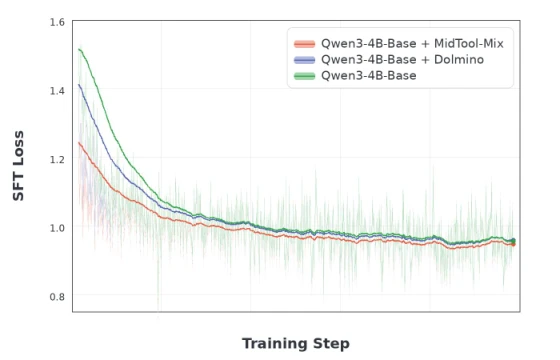
Figure 4,論文 Appendix C.1:Qwen3-4B-Base + MidTool-Mix 從較低的 SFT loss 開始,早期收斂較快,並在大部分 training steps 維持較低 loss;這是 optimization efficiency signal,不是直接的 agent success 指標。原圖可定位到 Figure 4,取自 arXiv HTML,頁面標示 CC BY 4.0。
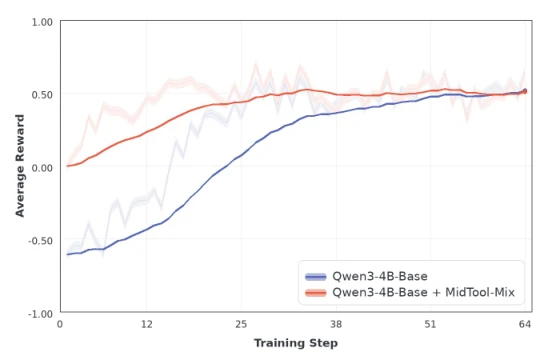
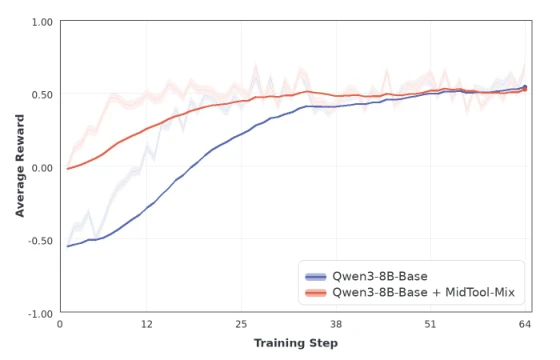
Figure 5,論文 Appendix C.2:MidTool-Mix 初始化的 RL reward 在早期較高、上升較快,非 mid-trained baseline 在相同 environment 後期逐步追上。這比較像「更快適應」而不是「永遠更高」;原圖可定位到 Figure 5,取自 arXiv HTML,頁面標示 CC BY 4.0。
MCP-Universe 的結果尤其有意思。4B 的 overall score/pass 從 13.20/1.68% 到 18.66/5.03%,browser automation、financial 與 location 子集多半改善;這支持它學到一些對陌生 MCP tool 可轉移的 schema/workflow prior。
可是同一張 Table 5 也寫著:web-search 的 score 與 pass 仍是 0.00%。 這個 failure 是論文最重要的結果之一,因為它把「general tool use」和「deep-search-style agency」分開了。搜尋任務需要持續找證據、迭代 query、判斷是否足夠、處理矛盾資訊,再把 evidence 收斂成 grounded answer;只教工具邊界與一般工作流,不會自動長出這整套控制迴路。
Ablation:兩條分支不是可互換的裝飾
論文 Table 6 固定 Qwen3-4B-Base + SFT,只改 mid-training corpus,並與 matched-budget 的 Dolmino-20BT 比較:
- Processed raw data only:BFCL overall 42.30%,比 no-mid-training 多 2.6 pp;MCP pass 3.03%,多 1.4 pp。這表示文件、code 與 filtered raw sources 本身就不是零貢獻。
- 只加 native agentic trajectories:BFCL overall 47.59%,對 function-calling precision 的提升比較強,但
\\tau^{2}-Bench Pass@4 12.95%、MCP pass 1.12%,不能取代完整 mixture。 - 只加 context-grounded trajectories:BFCL overall 44.66%,
\\tau^{2}-Bench Pass@4 21.94%;在 transfer-oriented 評測比 native-only 更穩,但 MCP pass 仍只有 1.12%。 - 完整 MidTool-Mix:BFCL overall 50.25%、
\\tau^{2}-Bench Pass@4 28.06%、MCP pass 5.03%,是唯一在 Table 6 的八個主要指標都比 no-mid-training 好的配置。
| Mid-training data | BFCL non-live | BFCL live | BFCL multi-turn | BFCL overall | \\tau^{2} Pass@1 | \\tau^{2} Pass@4 | MCP score | MCP pass |
|---|---|---|---|---|---|---|---|---|
| No mid-training | 59.94% | 43.75% | 15.50% | 39.73% | 8.54% | 20.50% | 13.20 | 1.68% |
| Dolmino-20BT | 61.44% | 51.74% | 16.13% | 43.10% | 7.37% | 21.22% | 5.41 | 0.00% |
| Processed raw data only | 60.40% | 52.60% | 13.90% | 42.30% | 7.30% | 21.90% | 12.20 | 3.03% |
| + native trajectories | 68.21% | 55.81% | 18.75% | 47.59% | 4.23% | 12.95% | 6.80 | 1.12% |
| + context-grounded trajectories | 62.73% | 50.26% | 21.00% | 44.66% | 8.99% | 21.94% | 8.46 | 1.12% |
| Full MidTool-Mix | 66.38% | 57.74% | 26.63% | 50.25% | 12.23% | 28.06% | 18.66 | 5.03% |
Table 6 還有一個值得停下來看的反直覺:native-only 在 BFCL non-live 是 68.21%,甚至高於 full mixture 的 66.38%,但它在 \\tau^{2}-Bench Pass@4 與 MCP-Universe 反而較差。這說明「更會填 function call」與「更能在陌生環境完成多回合任務」不是同一個 objective;full mixture 的價值在於跨指標的互補,而不是每一列都在單項冠軍。
這個結果很值得工程師拿來當 data design checklist:可執行軌跡比較像把「精確呼叫」教進去,context-grounded supervision 比較像把「理解文件與遷移到陌生環境」教進去;真正穩定的是兩者一起存在,而非迷信某一種 synthetic trajectory。
作者也做了 DeCon contamination audit:少於 20 個 candidate n-gram overlap,人工檢查後都被判為 generic API documentation 的 false positive,沒有看到 benchmark instance 或 reference answer 的 leakage。但這只能約束表面 n-gram overlap,不能排除 semantic 或 schema-level similarity。
VisualToolBench:一個小但重要的提醒
Appendix C.3 做了一個 visual tool-use pilot。在該小型 transfer study 裡,tool success 從 0.5863 升到 0.7231,overall rubric 從 0.0567 升到 0.0661。這個方向很有趣,但不該被讀成一個已經穩健的 multimodal conclusion:作者把它定位成 pilot,且 overall rubric 的增幅遠小於 tool success 的增幅。
它揭露一個 agent evaluation 常被忽略的斷裂:工具有成功回傳,不等於最後答案真的把工具結果用對。 如果評測只記 tool call success,模型可能成功抓到畫面、資料或 API response,卻在 final answer 中漏掉關鍵證據、誤讀結果,或回答一個工具沒有支持的結論。
限制:這篇論文沒有回答什麼
1. 20.3B 不是一個便宜的 baseline
32 張 H200 的 mid-training/SFT、8 張 B200 的 RL,加上多個教師模型與 synthetic environment,離一般團隊「把 tool use 放進 mid-training」的成本很遠。論文自己也指出,尚未能在 matched budget 下完整 sweep mixture design,更沒有 co-design mid-training 與 post-training 的所有組合。
2. 訓練資料的大部分不是人工驗證
Hugging Face dataset card 明確標註:source documents 沒有被逐一人工 review,trajectories 通過 automatic validation 但沒有 human verification,且大量 corpus 是 model-generated。這不等於資料不可用,但它要求使用者把 license、上游內容、過期 API、錯誤文件與 synthetic teacher bias 都放進 reproduction risk。
3. 公開 artifact 不等於無摩擦 reproduction
MidTool-Mix dataset 顯示 42.7 GB,dataset access 受 MidTool-Mix License 與上游 terms 約束;4B/8B model checkpoint 也要求接受 Apache-2.0 與 dataset terms。模型頁提供 loading path,這已經比只有論文數字好很多,但完整 reproduction 仍需要取得資源、確認 license、下載大檔案,並重建作者的 ArcticTraining、AWM、benchmark harness 與固定的後訓練配方。
4. web-search 的 0% 不是小瑕疵
作者把它解釋為 general tool-use prior 對 deep-search-style exploratory behavior 不足。這個解釋和分項結果一致,但仍然是單篇論文、單組 MCP-Universe split 的 evidence。它提醒我們不能把 MCP pass rate 的提升寫成「agent research 已解決」。
5. 指標是 point estimate,不是完整不確定性分析
論文主要報告單次 benchmark numbers,沒有為每個切片提供完整 confidence interval 或跨 seed 分布。當 MCP-Universe 的絕對 pass rate 仍很低時,幾個 percentage points 的差異尤其需要用更多 seeds、任務級 bootstrap 與 action trace audit 來確認穩定度。
給工程團隊的實作讀法
如果要把 MidTool 的想法搬進自己的 model/agent pipeline,我會先做一個小型、可回溯的四段實驗,而不是直接照抄 20.3B tokens:
- 先建立 tool-use data contract:每筆資料標記來源、schema version、required arguments、tool response、權限風險與是否為人工/模型合成。
- 分開 raw、grounded、executable 三種資料:不要把 documentation QA、synthetic call trace 與真實 rollout 混成一個不可解釋的 blob。
- 用同一個 post-training recipe 做對照:至少有 no-mid、raw-only、context-only、native-only、full mixture 五個條件,否則不知道增益來自資料內容、教師模型還是下游 recipe。
- 評估 final answer grounding:除了 tool-call validity、schema accuracy、Pass@k,還要檢查最後答案是否引用實際 tool response,並把 web-search/long-horizon slice 單獨列出。
工程含義與何時不要用 / Engineering implications and when not to use
什麼情況不該先做 mid-training?如果你的瓶頸其實是工具權限、retry policy、context window、錯誤觀測或 post-training label 品質,先修 runtime 與 data plumbing 往往更划算。MidTool 證明的是「更早塑造一個通用 tool-use prior 很有希望」,不是「把所有 agent failures 都丟回 pretraining 解決」。
可重現性與材料狀態(截至 2026-08-24)
- 論文:arXiv abstract、full HTML、PDF v1。arXiv HTML 頁標示論文為 CC BY 4.0。
- 資料集:MidTool/MidTool-Mix 可見、可申請 access,包含 web、PDF、code、native-agent-traj 子集與欄位說明;它不是本文下載進 repository 的資料。
- 模型:Arctic-MidTool-MT-4B、Arctic-MidTool-MT-8B 與相應 RL checkpoint 可見;model card 將 mid-training checkpoint 定義為接下來做 SFT/RL 的 base,而不是 ready-to-use assistant。
- 品質 classifier:web/PDF fastText classifier 也公開,但頁面標示 gated access;它們是 pipeline artifact,不是完整 end-to-end reproduction。
- 未驗證事項:本文沒有聲稱已下載 dataset、載入 checkpoint、重跑 BFCL/
\\tau^{2}-Bench/MCP-Universe,或核對所有上游資料的 license。
三個記憶點 / Three things to remember
- 先驗的位置很重要:MidTool 把工具知識、grounding 與 execution 提前到 mid-training,但仍保留 SFT/RL 的角色。
- 兩條資料分支互補:raw/context-grounded 資料幫助理解與 transfer,native executable trajectories 幫助精確呼叫;完整 mixture 才在主要指標上最穩。
- 能力邊界同樣重要:MCP-Universe web-search 仍是 0.00%,tool-call success 也不等於 final-answer grounding。
一句話帶走
MidTool 的訊息可以濃縮成:工具使用不是 post-training 的格式對齊問題,而是一種需要在模型更早期建立的知識、grounding 與執行先驗;但「會用工具」和「會做深度搜尋」仍是兩個不同能力。
想延伸閱讀,可以接著看目錄級 API 呼叫祖先 Gorilla,以及 Bloss0m 的 RAG-MCP:用檢索降低工具選擇的 prompt bloat 與 MCP roadmap;後兩者分別從 tool selection 與 protocol ecosystem 補上 MidTool 沒有完整處理的 runtime context。