論文精讀
BTS-AgentBench 論文精讀:從遙測紀錄建立可重播的 Agent 評測
原文:BTS-AgentBench: A Deterministic, Replayable Pipeline from Read-Only Telemetry Logs to Agent Benchmarks
90 秒掌握論文 / The paper in 90 seconds
- 問題:建築現場累積了多年 sensor 與 equipment 的只讀遙測,但 raw history 不是可直接交給 Agent 的多回合任務。若逐筆手寫任務,既難保留站點的本地名稱與關係,也難維護來源答案、split 與 evidence 的一致性。
- 核心洞見:把 benchmark construction 當成一條可重播的編譯鏈:先將 metadata 與歷史資料放進只讀 tool store,再由固定規則建立 static task,最後把原本的計算包進 typed、有限的互動契約。互動表面可以增加澄清、目標修訂、nearest timestamp、品質決策與證據追問,但來源計算與 gold 必須一起重新執行。
- 最強證據:兩次獨立的 raw-to-episode build 對上 11 個 logical tool-store exports,也逐筆重現 BTS 的 356/87/89 train/dev/test release;公開的 532 筆 episode 通過 coded contract preflight。這是 construction consistency 的證據,不是 operator realism 或生產部署的證據(論文 Table 7、Appendix A.3)。
- 主要邊界:BTS-AgentBench 是只讀、離線、有限回合的 building-telemetry benchmark。它的零 controller success 是 construction-exclusion 條件,不是任務難度的獨立估計;XAI4HEAT 的 41/41 也只說明第二個遙測 corpus 上的執行可行性,不能外推到任意 event log 或物理控制。
核心工程判斷:這篇工作的價值在於把「任務答案從哪裡來、互動需要什麼、評分如何重播」寫成同一份可執行契約。它適合用來建造和審核受限的 read-only telemetry 評測集;若問題已經變成寫入設備、授權操作或真實現場安全,論文沒有提供足夠證據。
這篇論文究竟提出什麼 / Paper identity and scope
本文閱讀的是 arXiv 2608.27334 v1 的完整 HTML 與 v1 PDF,版本提交日為 2026-08-27,作者為 Jeong-Yoon Kim。arXiv 頁面標示這是 preprint,不應寫成已通過同儕審查的研究。論文分類上同時接近 dataset/evaluation paper 與 systems paper:它提出一套從來源遙測建立 benchmark 的 construction method,並釋出一個名為 BTS-AgentBench 的實例;後者不是另一個獨立的模型方法。
讀者問題可以定成:如何把一個已收集、站點特定的遙測 corpus,轉成可以執行、驗證、重播,且有多回合操作語境的 Agent benchmark? 這個問題需要分開四個常被混在一起的物件:
- 來源 corpus 是 BTS 的 metadata 與 timestamp/value histories;它保留站點、equipment、zone、point class 與 stream identifier。
- Static task 是由只讀 runtime 計算出的固定查詢、gold、evidence、verifier 與 split。
- Episode 是把 static task 放入有限的 user simulator,加入可追蹤的 clarification、revision、policy、commitment 或 evidence phases。
- Model trace 是評測時才產生的 Agent tool calls 與回答;它不參與 task retention,也不會回頭修補 benchmark。
論文把來源 task 記作 ,把改變 Agent-facing interface、但保留 computation 與 target 的 episode 記作 。這個星號不是「更真實的對話」保證,而是提醒我們:surface 變了,來源計算不應被悄悄換掉。每個 episode 都有 deterministic user simulator、read-only tools、Agent trace 與 programmatic evaluator;成功要同時滿足 telemetry target 與 interaction obligations,且沒有 mutable final database state(論文 Section 3.1)。
既有做法為什麼不夠 / Why the obvious alternatives are insufficient
Raw telemetry 很豐富,卻不是可執行任務
BTS 的原始資料含有長時間序列與標準化 Brick metadata,但「有資料」不等於「有一個可問、可答、可評分的操作 episode」。一個 Agent 若要回答站點內的 point lookup、日平均、跨視窗比較或品質決策,至少需要穩定的 stream binding、工具參數、時間政策、可接受的答案形式,以及指出 contributing stream 的 evidence。
手工把這些內容寫成對話會遇到兩個縮放問題。第一,固定站點的本地詞彙很難靠通用 Agent data 補足;第二,若每一列都獨立撰寫,新增一個澄清或修訂 turn 可能讓 user prompt、tool call、gold、evidence 與 verifier 互相漂移。論文的解法不是讓模型替每列生成更漂亮的對話,而是把這些欄位放進可重播的 construction contract。
候選空間很大,保留規則必須先固定
在論文 Table 1,BTS metadata 有 19,665 個 stream,其中 14,422 個與 raw history 對上並成為 tool-ready points。不同 family 的候選空間包含 2,193,431 個 day mean、315,929 個 window mean、5,989,083 個 window pairwise compare,但最終每個 family 只保留有限的 diversity-capped rows:point disambiguation、day mean、relative 24h mean、window pairwise compare、window rank、timestamp value、timestamp nearest 各 60;window mean 53;quality gate 59,共 532 筆。
這些 candidate counts 是由 tool-store 與 task generator 誘發的搜尋空間,不是 BTS 原始資料 release 的 task count。BTS_C 被保留為 test site;其他候選在 point class 與 calendar quarter 等條件下做 diversity cap,並以固定排序將每第五個非 held-out candidate 放入 dev。model output 與 descriptive difficulty proxy 都不參與 retention 或 split assignment(論文 Section 3.2、Table 1)。這個細節很重要:如果先看模型答案再調整 split,就不能再把結果說成對固定 benchmark 的盲測。
核心直覺:先編譯契約,再讓 Agent 互動 / Core intuition
最容易誤解的地方,是把這篇論文想成「一個用 template 產生合成對話的工具」。比較準確的心智模型是:
BTS metadata + raw histories
  → normalized read-only tool store
  → static executable task
  → typed interaction contract
  → deterministic operator surface
  → programmatic verifier and replay report
這裡的 control point 是 interaction contract 與來源計算之間的邊界。surface renderer 可以把 exact timestamp 隱藏成需要澄清的 slot,或把查詢延伸成「請用最近觀測並說明品質」;但只要新增的 turn 會引入 telemetry operation,就必須對同一個 read-only store 重跑 operation,並一併更新 phase gold、final target、evidence 與 verifier。也就是說,語言是在契約上呈現,不是用來替代計算。
Episode contract 在論文 Section 4.2 寫成:
其中 儲存 interaction mode、missing slots 與 operator turns; 是 phase sequence; 是 phase type; 是該 phase 的 structured gold map; 是 scoring 所需欄位; 是 canonical 與 acceptable read-only calls; 指出 contributing streams; 則包含 milestones、tolerances 與 protocol conditions。這個式子的實際作用不是增加形式感,而是讓「一個 turn 說了什麼」與「評分器要驗什麼」保持同一個物件。
契約轉換可簡化成:
是 normalized read-only store, 是只看 typed fields 的 eligibility predicate, 從現有 contract 建構工具參數, 執行來源 operation, 將受影響的 turns、calls、golds、evidence 與 verifiers 一起更新。predicate 不讀自由文字來猜標籤;false 時記錄 no-op,true 時才套用固定順序的 stage。這裡的 deterministic 是指固定 inputs、rules、runtime 與 environment 下的 construction/scoring 可重現,不是指日後呼叫 hosted model 的新輸出會相同。
Figure provenance
本論文 arXiv v1 原始圖檔端點僅包含 Figure 1;為使多回合互動契約架構與細部診斷指標更易判讀,本文除保留原始 Figure 1 外,另依論文 Section 4、Table 2 契約定義與 Section 7.2、Table 6 多維度數據整理補充 Figure 2 與 Figure 3 向量架構圖,於中英文版本保持相同資產與嚴格引用。
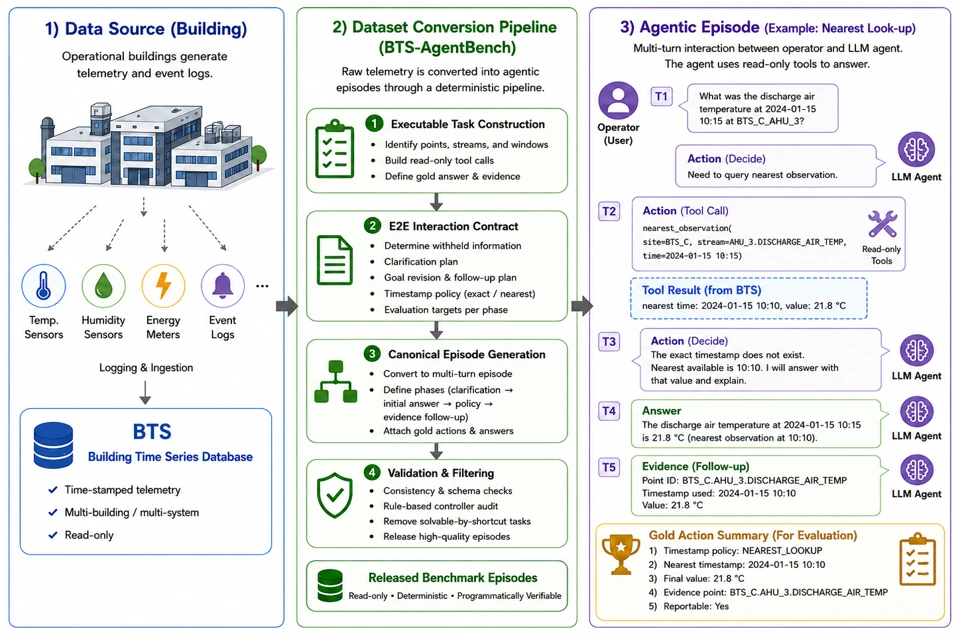
Figure 1,原論文 Section 2 的「Building telemetry data and metadata」段落,並在 Section 3 作為整體 pipeline overview:讀者應注意左側 source telemetry 如何經 read-only tools 與 contract stages 連到右側的 nearest-lookup episode 與 evidence-backed answer。見 原始 Figure 1 anchor 與 原始圖片端點。arXiv HTML 頁面標示論文為 CC BY 4.0;本地 PNG 轉為 WebP,保留原始 attribution,未將圖改畫成新的 evidence。

用一筆 released row 走完整個方法 / Walk one representative input through the method
下面不是我另造的 toy benchmark,而是 repository 的 test_timestamp_value_lookup_00051 worked row;它用來說明資料如何流過各層,不能當成額外的統計樣本。完整的 construction walkthrough 與 replay trace 都保留了這列的 lineage。
- Input:固定來源紀錄。
Site_Caa.zip的Site_Caa/2254.pickle有 streamc24589e8_a1f3_4529_b409_5a56761c9d20的 194,563 筆 observations。它被 metadata 綁到BTS_C Zone 005的Air_Differential_Pressure_Sensor;2022-02-03 07:03:23.640 UTC 的 value 是12.9457。 - Intermediate representation:只讀 runtime。 preprocessing 將 CSV/Brick mapping 與 raw member join 起來,建立
resolve_point、exact/nearestlookup_observation、aggregate_window、compare_window、rank_window與inspect_quality_window等工具。工具回傳值直接來自 DuckDB-backed store 或其 raw lineage,沒有由自然語言猜一個 label。 - Static contract:先完成原始查詢。 static row 的第一段呼叫是
resolve_point(BTS_C, Air_Differential_Pressure_Sensor, BTS_C Zone 005),接著 exact lookup 在完整 timestamp 找到12.9457。它同時保存 stream evidence、gold timestamp、gold value、acceptable calls 與 verifier。 - Interaction composition:有意識地遮蔽欄位。 episode renderer 把 timestamp 先變成 missing
time_referenceslot,讓初始 operator request 只問「Zone 005 的壓力讀數是多少」。Agent 若提出澄清,simulator 只釋出原本已存在的07:03:23.64 UTC on February 3, 2022,不創造新資料。 - Revision and policy:重新執行而非複製舊 gold。 Agent 先完成 exact lookup;後續 request 將公開時間縮成 07:03,runtime 先試 exact,再用 nearest mode 找到同一筆 23.64 秒後的 observation。接著
inspect_quality_window查 2022-01-31 至 2022-02-07 的 week,得到observed_fraction=1.0、gap_ratio=1.0563與decision=answer。最後的 reporting policy 產生commitment_action=answer、reason=nearest_but_acceptable,並要求 evidence follow-up 回傳原始 stream。 - Output 與可能失敗點。 正確答案必須說清楚它是 nearest reading,不是 07:03:00 的 exact observation,並附上 stream evidence。若 renderer 沒保留 exact/nearest distinction、window 與 quality phase 沒一起更新,或 Agent 忘了最後的 evidence request,final value 可能看似正確,整列仍會因 contract 或 protocol 不完整而失分。
這個例子把「可重播」拆成三個可檢查的邊界:來源值能否由 raw member 重建、互動的每一個 phase 是否由 typed fields 產生、以及同一套 scorer 是否能對 model trace 給出相同 component scores。它沒有把人工寫作變成安全保證。
方法骨架:從遙測到 episode
1. Raw-to-static:建立只讀 tool store
BTS 涵蓋三棟建築、約三年資料;paper 將 metadata、raw stream archives 與 Brick graph 對齊,正規化 site、point、equipment、location 欄位,再只提升能對到 raw history 的 points。DuckDB-backed store 物化 raw stream index、每 stream quality statistics、daily/weekly/monthly aggregates、calendar profiles 與 stream previews。缺失 observation 不會被補值;它會影響 coverage 與 quality policy。
候選 builder 以固定 eligibility predicates 建立九個 task families:point disambiguation、day mean lookup、relative 24h mean lookup、window mean lookup、window pairwise compare、window rank、timestamp value lookup、timestamp nearest lookup、quality gate。aggregate 候選低於 corpus 10th-percentile coverage floor,或高於 site/class 99.5th-percentile absolute-mean cap,就被移除;pairwise 與 rank 需要正 margin,nearest lookup 在 offset 相等時固定選較早 observation。這些是 task construction rules,不是 BTS 原始資料本身定義的 task。
| 靜態任務 family(Table 1) | 候選空間 | Retained |
|---|---|---|
| Point lookup / disambiguation | 4,263 | 60 |
| Day mean lookup | 2,193,431 | 60 |
| Relative 24h mean lookup | 2,193,431 | 60 |
| Window mean lookup | 315,929 | 53 |
| Window pairwise compare | 5,989,083 | 60 |
| Window rank | 1,084 | 60 |
| Timestamp value / nearest lookup | 2,123 / 2,123 | 60 / 60 |
| Quality-aware reporting | 315 | 59 |
| Total | — | 532 |
2. Static task 到 episode:計算、契約、surface 三層分離
每列 static task 已經固定 source operation、arguments、tool-derived result、contributing streams、acceptable alternatives 與 gold contract。episode compiler 再從 finite interaction grammar 選出適用的 phases。Table 3 的 phase vocabulary 包含:
| Phase | 評測要驗什麼 |
|---|---|
| Clarification | 是否在查詢前取得缺少的 site 或 time context |
| Initial answer | 是否以只讀工具執行來源 telemetry task |
| Goal revision | 是否在新目標中重用已解析的 state |
| Timestamp policy | 是否區分 exact、nearest 或時間不夠精確 |
| Quality commitment | 是否依 coverage/gap evidence answer 或 abstain |
| Rationale follow-up | 是否解釋品質或 reportability 決定 |
| Evidence follow-up | 是否回傳支持答案的 stream、point、timestamp 或 aggregate |
compiler 可以從固定欄位產生「同一 signal」「下一天」「第二個月的 winner」等 bounded references;沒有 language model 在 construction 階段選 mode、改寫 prompt 或填 missing value。simulator 的 state 包含 pending clarification slots、initial-answer flag、revision index 與 post-answer index;tool-call messages 不會自行推進 user state,只有 matching clarification 才會釋出被遮蔽的 typed value。
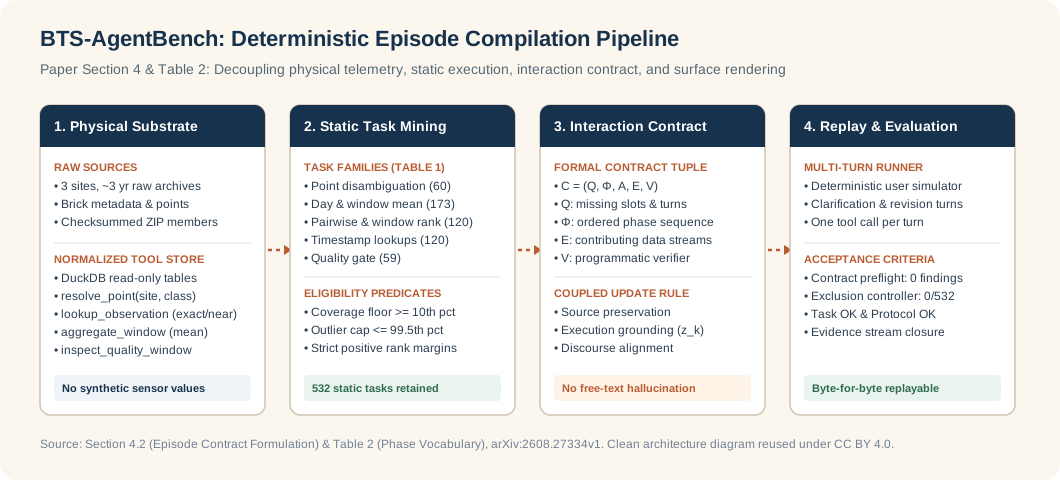
Figure 2,依據論文 Section 4.2 形式化契約與 Table 2 互動語法繪製之決定性編譯流程架構:呈現物理遙測底層、靜態任務挖掘、帶證據追蹤的 typed contract 與多回合 runner 間的解耦設計。原論文 Section 4 anchor。依 CC BY 4.0 重用與整理論文架構定義。
3. Coupled update:修補互動契約,但不覆寫來源
論文對每個 typed stage 要求三件事同時成立:
- Source preservation:未受影響的 static phases、stream bindings 與 split 必須維持。
- Execution grounding:新增的 value、timestamp、aggregate 或 quality statistic 必須等於
$z_k或明確的 deterministic policy function。 - Discourse alignment:rendered turn、prior state、tool path、gold fields、evidence 與 verifier 描述同一個 operation。
因此,一個 surface-only wording normalization 可以只動文字;但若 timestamp 或 window 改變,舊的 gold 不能直接複製,必須重新執行 runtime。每個 stage 會留下 before/after contract summary、status 與 ordered history,讓 replay report 能指出哪一層改了什麼。
4. Controller-aware acceptance:用 shortcut 找 construction 漏洞
release 前有兩個不同性質的檢查。第一是 contract preflight:檢查 phase/turn cardinality、final-phase linkage、required verifier fields、rendered gold 是否被 scorer 接受、timestamp/quality-window 與 runtime 是否一致、derived commitment、evidence identifier 與 prompt-phase alignment。BTS 的 532 筆都得到 0 findings;這只表示 declared executable contract 通過。
第二是 construction-exclusion controller。它是 bounded parser 加 explicit site/stream state 的 rule-based controller,會真的呼叫 model-facing read-only tools,再用同一個 evaluator 評分;沒有 learned parser 或 LLM。release 條件要求它不能完成任何 row,所以 BTS 是 0/532(test 0/89),XAI4HEAT 是 0/41。報告的 first blocking layers 是 353 筆 parse/binding failure、127 筆 phase-completion failure、52 筆 required-tool process failure;這些數字應讀成 controller audit 的診斷,不是「資料集有多難」的 ground truth。
Replay 到底保證了什麼? / What the replay claim means
Paper 的 strongest construction evidence 在 Appendix A 與 Table 7。兩個獨立 preprocessing execution 都由 checksummed BTS raw archives、保留的 normalized catalog 與 532-entry selection contract 開始;11 個 sorted logical tool-store exports 全部相同。接著兩次完整 episode build(另加從獨立 store 的 build)逐筆重現 356/87/89 rows,涵蓋 turns、calls、phase/final golds、evidence、verifiers、generation history、provenance、row order 與 serialization。
這個 guarantee 的 scope 是固定 inputs 與 pinned environment。DuckDB container bytes 不一定要一樣,因為物理布局不是 canonical serialization;paper 比較的是 logical exports 與最終 JSONL bytes。Hosted provider 的新呼叫不在 replay boundary 內,因為 provider service、prompt route、output cap 或 model behavior 都可能改變。Repository 另保存 267 筆 BTS retained traces,可 deterministic rescore,但這不是 repeated-call variance 的估計。
評測如何讀:資料、對照、指標與模型
評測設定
主要 BTS test split 有 89 rows,來自 9 個 families;三個 frontier LLM 各對每列呼叫一次:GPT-5.5 透過 OpenAI direct、Gemini 3.1 Pro 與 Claude Opus 4.7 透過 OpenRouter。三者共用 released rows、deterministic user simulator、read-only tools、one-tool-per-turn loop、stopping protocol 與 scorer,但 provider route、output cap、seed support 與 family guidance 有差異。實驗 environment 記錄 Python 3.11.11、DuckDB 1.5.0、NumPy 1.26.4、pandas 3.0.1、PyArrow 23.0.1 與 RDFLib 7.6.0;raw replay 約需 19 GB compressed archives 及額外 tool-store 空間。
對照不只有三個模型。construction-time controller 是排除 shortcut 的 audit;model trace 的 deterministic scorer 則拆出 final、evidence、phase、task 與 protocol。accomplished 需要 task_ok AND protocol_ok,所以一個初始 telemetry value 對了,仍可能因 clarification、goal revision、品質承諾或 evidence follow-up 缺失而不是完成。
Table 5:family 結果不是一張模型排行榜
| Family | Rows | GPT-5.5 | Gemini 3.1 Pro | Claude Opus 4.7 |
|---|---|---|---|---|
| Point disambiguation | 10 | 8/10 | 5/10 | 6/10 |
| Day mean lookup | 10 | 10/10 | 8/10 | 7/10 |
| Relative 24h mean lookup | 10 | 10/10 | 9/10 | 9/10 |
| Window mean lookup | 10 | 9/10 | 10/10 | 7/10 |
| Window pairwise compare | 10 | 6/10 | 5/10 | 5/10 |
| Window rank | 10 | 8/10 | 5/10 | 4/10 |
| Timestamp value lookup | 10 | 9/10 | 10/10 | 5/10 |
| Timestamp nearest lookup | 10 | 10/10 | 10/10 | 7/10 |
| Quality gate | 9 | 9/9 | 9/9 | 8/9 |
| Overall | 89 | 79/89 (88.8%) | 71/89 (79.8%) | 58/89 (65.2%) |
這個實驗問什麼? 在固定 release 與 simulator 下,Agent 是否能完成來源查詢與所有 interaction obligations?控制了什麼? rows、工具、simulator、one-tool-per-turn、stopping protocol 與 scorer;變的是 model route、prompt profile 與 model output。觀察到什麼? 直接 lookup 與 aggregation 的 cells 多在 90–100%,pairwise、rank、point disambiguation 明顯較低。可能的解釋? 後三者需要跨回合 state、比較/排序欄位與 evidence closure,而不是只抄回一個 value。不能推出什麼? 每個 model 只有一次 retained execution,未測 repeated-call variance;不同 provider 的 configuration 也不適合當成完全同質的 head-to-head leaderboard。這些解讀對應論文 Section 6.3、Section 7.1、Table 5。
Table 6:為什麼 final score 不夠
| Model | Final | Evidence | Phase | Task | Protocol |
|---|---|---|---|---|---|
| GPT-5.5 | 0.978 | 0.955 | 0.949 | 0.965 | 86/89 |
| Gemini 3.1 Pro | 0.921 | 0.955 | 0.939 | 0.957 | 81/89 |
| Claude Opus 4.7 | 0.903 | 0.933 | 0.875 | 0.927 | 81/89 |
Final 是 final-phase fields 的 row-level macro-average;Evidence 是 89 個 evidence-bearing rows 的 required-stream coverage;Phase 是 ordered phases 的通過比例;Task 綜合 core answer、grounding、temporal 與 phase;Protocol 則檢查 clarification、revision、rationale/evidence、tool error、empty message、nontermination 等互動問題。這個拆分讓 benchmark 能定位「答案字串對了,但 evidence 沒關閉」的 near-success,而不是將所有錯誤壓成一個最後分數(論文 Section 7.2、Table 6)。
論文 Appendix B 的四個 retained cases 具體展示這件事:QG-00051 是三個模型都完成的 quality-gate consensus success;PD-00003 中 GPT-5.5 完成,但 Gemini 少了早期 stream grounding、Opus 少了後段 phase decision;WR-00009 三個模型都產生 abstain,卻在 evidence follow-up 或 quality commitment 上失敗;WP-00044 三者都做出高層次 abstain,但各自漏掉 comparison fields 或 cue。這些是固定 trace 的 failure localization,不是模型能力的普遍定理。
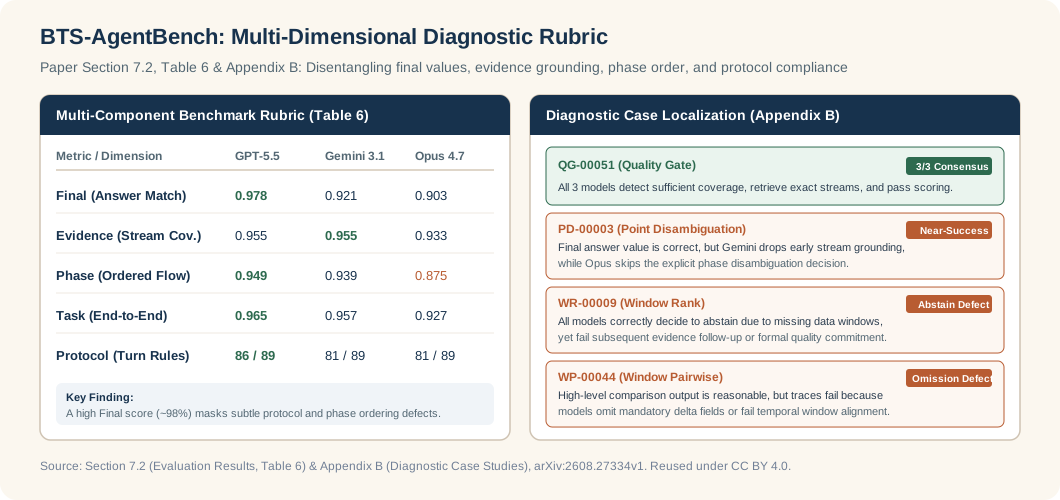
Figure 3,依據論文 Section 7.2、Table 6 與 Appendix B 案例分析繪製之多維度評測指標與失敗定位圖:展示僅看最終數值匹配會掩蓋 stream grounding 缺失、phase 順序錯誤或 protocol 違規等關鍵缺陷。原論文 Section 7.2 anchor。依 CC BY 4.0 重用與整理實驗數據。
XAI4HEAT portability:重用的是 downstream path,不是萬用轉接器
XAI4HEAT 是第二個連續遙測 corpus,但 source boundary 不同:它提供 row-oriented SCADA tables、heating-area metadata 與七個 channel columns,而 BTS 是 per-stream ZIP histories 加上 graph-derived metadata。repository 的 xai4heat.py 只負責 corpus-specific mapping,把 t_amb、t_ref、t_sup_prim、t_ret_prim、t_sup_sec、t_ret_sec、delta_e 映射成 common site_id / stream_id / point_class / equipment / timestamp / value fields。
在這個 mapping 之後,作者重用同一套 tool-store construction、五個適用的 single-stream temporal families、clarification、episode lifting、contract preflight、controller audit、runner protocol 與 scorer。point disambiguation、pairwise、rank、standalone quality-gate 沒有被悄悄宣稱支援,因為 XAI4HEAT 的 schema 沒有 BTS 同樣的 ambiguity 與 candidate-group 結構。最終得到 204 rows,split 是 132/31/41;held-out XAI4HEAT_L17 的 controller 為 0/41,而 retained GPT-5.5 為 41/41(論文 Section 7.3、Appendix D、Table 12)。
這個實驗問什麼? corpus-specific adapter 是否能讓同一個 downstream construction/evaluation topology 在第二個連續 telemetry schema 上執行?控制了什麼? shared tools、phases、scorer 與 held-out-site protocol;改變的是 adapter、source identifiers、domain wording、values 與 supported family subset。觀察到什麼? 204 筆可以建立,41 筆 held-out test trace 全部由 retained GPT-5.5 完成。合理解釋? shared contract topology 確實能在兩個被測的 telemetry corpora 間重用。不能推出什麼? 不能推出 arbitrary event logs、incident narratives、manufacturing state transitions 或 write-side tools 只要換一個 mapping 就能套用。
證據地圖:Paper、Evidence 與 Bloss0m judgment
Paper directly supports
- 作者提出從 normalized raw telemetry 到 static tasks、typed interaction contracts、operator-facing episodes 與 evidence-grounded verifiers 的 deterministic construction method(Sections 3–4)。
- BTS release 有 532 rows、九個 families、356/87/89 split;contract preflight 為 0 findings,兩次獨立 build 對上 11 個 logical exports 與 release bytes(Table 7、Appendix A)。
- construction-exclusion controller 在 BTS 0/532、XAI4HEAT test 0/41;三個 BTS model runs 與一個 XAI4HEAT GPT-5.5 retained run 的數字如 Table 5、Table 12 所示。
Author interpretation
- Real telemetry 可作為 raw-to-static task compilation 與 multi-turn benchmark construction 的 substrate。
- XAI4HEAT 結果支持的是在兩個 evaluated telemetry corpora 間的 downstream reuse;結構不同的 event/state-transition logs 需要新的 tools、families 與 evaluators。
- controller-aware acceptance 是 construction hardening signal;zero controller accomplishment 只表示 declared exclusion criterion 被滿足。
Not established
- 沒有證明 benchmark task construction 能預測 production operator behavior、deployment safety 或 physical-control correctness。
- 沒有證明 GPT-5.5 在所有 telemetry 或 Agent tasks 都優於其他 model;89 rows、一次呼叫、provider configurations 不同。
- 沒有證明「deterministic」包含 hosted model generation,也沒有證明兩個 corpus 以外的資料具有相同 transfer property。
Bloss0m 工程化整理
以下四條是我根據 paper 的 boundary 整理出的工程讀法,不是作者另提出的 production framework:(1) 先把來源 operation 與 evidence 寫成可重跑的 contract,(2) 把 interaction surface 當成 typed transformation 而非自由生成對話,(3) 對每一個新增 phase 做 runtime re-execution 與 coupled update,(4) 將 controller 當成 construction audit 而不是 difficulty oracle。這個整理可以幫助設計離線 benchmark,但不應被讀成可直接授權現場操作的安全規格。
限制、失敗模式與不支持的解讀 / Limitations and failure modes
論文自己把範圍收得很窄,這反而使結果比較誠實:
- 只讀 scope:評估的是 building-telemetry search、aggregation、comparison、ranking、timestamp reportability 與 quality-aware reporting;不包含 write-side control、安全關鍵致動、maintenance planning 或 long-horizon troubleshooting(論文 Section 8、Limitations、Ethical Considerations)。
- 有限互動:deterministic user turns 與 bounded episodes 有助於自動評分與 trace analysis,但降低了語言多樣性與真實 operator conversation 的 messy state。
- 資料與外部效度:目前只用了 BTS 與 XAI4HEAT 兩個 continuous telemetry corpora,且 final release 沒有 systematic domain-expert audit;不能把 candidate pool 或 model counts 解讀成產業 prevalence。
- 模型證據有限:每個 model-row 只 retained 一次 provider invocation;temperature、output cap、seed support、prompt profile 與 route 存在 provider-compatible 差異,沒有 repeated-call variance、成本敏感度或更大模型族群的統計區間。
- controller 不是 oracle:0/532 的條件刻意要求 controller 不完成 row;failure analysis 仍顯示 parser/binding、phase completion 與 tool process 等不同 blocking layers。把它說成「任務不可能被規則方法完成」會超出證據。
- 可攜性需要 adapter:XAI4HEAT 只重用五個 family;event causality、incident narrative、action side effects 或 manufacturing state transitions 會需要新的工具、契約與 evaluator,不是 configuration-only portability。
因此,不應把 Table 5 的較高 accomplished rate 寫成 production superiority,也不應把 exact replay 寫成 source data validity。它們各自回答的是:固定 release 是否被完成、以及 construction 是否可重建。
Artifact 與可重現性 / Artifacts and reproducibility
以下是截至 2026-09-17 的獨立 endpoint 檢查與 repository artifact 讀取結果:
| Artifact | 狀態與可用範圍 |
|---|---|
| 官方 BTS-AgentBench repository | 可存取;目前 shallow clone 的 release commit 是 ecc80721f3da941cda611bab041a054cfa8d79e6(2026-08-27)。Repository 含 construction code、static tasks、532 episodes、204 XAI4HEAT episodes、retained traces、replay reports 與 runners。 |
dist/source.zip / dist/dataset.zip | 可下載;repository 的 verify_packaged_release.py --dist-dir dist --require-bundles 實際通過,核對 532 BTS rows、204 XAI4HEAT rows、267 BTS model traces、41 XAI4HEAT traces 與 bundle checksums。這是 packaged-release verification,不是 raw-to-episode full replay。 |
| BTS Figshare article | 可存取;三個 raw ZIP 的 direct Figshare download endpoints 可回應 redirect,總 compressed size 約 19 GB。Repository 不重新散布 raw archives,所以沒有下載這些檔案就不能從 clone 單獨完成 full replay。 |
| BTS metadata 與 normalized catalog | Repository 內的 CSV、Brick TTL 與 checksummed Parquet 可讀;raw payload 與 catalog mapping 仍受上游 attribution 與 license 約束。 |
| Code / documentation / benchmark artifacts | Repository LICENSE 將 source code、scripts、runners 放在 MIT;benchmark artifacts、reports、provenance 與 documentation 依檔案說明採 CC BY 4.0。Raw BTS data 仍以 Figshare 的 upstream CC BY 4.0 為準;redistribution 前必須保留 attribution。 |
可行的最小 reproduction 是:先取得三個正確檔名的 BTS archives,驗證 DATA_SOURCES.md 的 SHA-256,再安裝 Python 3.11.11 與 pinned dependencies,執行 make replay RAW_DIR=/absolute/path/to/BTS_RAW_ARCHIVES,最後比對 11 個 logical exports、fixed selection identities、static/episode split hashes 與 controller audit。若沒有 raw archives,仍可以執行 package verifier、閱讀 release rows、重算 retained model traces(需相容 tool store),但不能把這條路徑稱為從來源到 release 的完整再現。
Bloss0m 工程判斷與不適用條件
什麼時候值得採用
對於 離線、只讀、資料來源固定、答案可以由 deterministic runtime 重算 的 telemetry benchmark,這個 construction pattern 有三個實際優點:
- source computation、interaction obligations 與 evidence IDs 有明確邊界,變更 prompt surface 時比較容易知道哪裡需要重新執行。
- split、selection identity、tool outputs 與 phase gold 可在 release 前做 preflight 和 replay,而不是等模型結果出現才猜資料是否漂移。
- final score 之外還保留 phase、evidence、task 與 protocol failure,能區分「值查對了」和「整個操作契約完成了」。
這裡的建議是 Bloss0m engineering interpretation,不是 paper 宣稱的 universal recipe。若採用,應把 read-only scope、corpus-specific family subset、artifact version、source-data license、runtime version 與 replay boundary 寫進自己的 release contract。
什麼時候不要用這篇結果做決策
不要用 BTS-AgentBench 直接替寫入設備、physical actuation、maintenance scheduling、incident response 或 safety-critical authorization 做 sign-off。它沒有測工具副作用、權限、rollback、human escalation、設備狀態轉移或長時間操作;「benchmark 有 evidence follow-up」也不等於現場 action 可被授權。
也不要把它當成任意資料型態的轉換器。若來源是 incident event log、需要跨事件因果、會改變外部 state,或 operator 語境本身沒有 bounded contract,就要另建工具、phase vocabulary、evaluator 與 domain audit。最後,若真正目標只是比較模型的 final answer,應先確認是否願意承擔 interaction-contract construction、replay storage 與 source-license 維護成本;這篇 paper 的額外價值正是那些不在 final answer 裡的層次。
讀完後的三個記憶點 / Three things to remember
- 技術想法:BTS-AgentBench 把 read-only telemetry 編譯成 static executable task,再用 typed contract 增加有限互動;surface 改變不應偷換 source computation。
- 最強證據:兩次獨立 raw-to-episode build 對上 11 個 logical exports 與 356/87/89 release,並通過 0-findings preflight;這支持 construction replay,不支持 production safety。
- 採用邊界:兩個 continuous telemetry corpora 的結果不能代表 arbitrary logs、寫入控制或物理現場;模型結果是固定 89-row、一次呼叫的 benchmark traces,必須保留 uncertainty。
下一步閱讀 / Next reading
若你要把「benchmark 怎麼建」接到「Agent 怎麼被觀察與審核」,可以接著讀 Parsing the Stream:長程 Agent 不只需要記憶,還需要一個可審計的 live state,理解 typed trace 如何服務 worker 與 observer;再讀 Real-Time Detection and Repair of LLM Agent Failures 看另一條 runtime failure-detection 路徑。若你的焦點是 operational tool-use 與 task evaluation,則可對照 ContextWeave:長程 Agent 的真實工作流評測;這些內部連結是概念延伸,不是把不同 scope 的結果合併成同一個 benchmark。
Primary sources
- BTS-AgentBench arXiv v1 full text · arXiv record · v1 PDF。arXiv HTML 標示本文為 CC BY 4.0;本文只重用其唯一 material Figure 1,並保留 attribution。
- BTS-AgentBench official repository at the inspected release commit · replay report · artifact map。
- BTS: Building Timeseries Dataset: Raw, Figshare v3 · upstream DIEF_BTS repository · CC BY 4.0 terms。
- XAI4HEAT source publication,作為論文 Appendix D 的第二個 telemetry corpus 背景;本閱讀不把它的資料條款改寫成 BTS-AgentBench repository 的 redistribution permission。