A Self-Evolving Ontology Layer for Data Agents
Series · 1 posts
-
EvoOntology: Turning a Static Data-Agent Semantic Layer into a Verifiable, Self-Evolving Interface
AdvancedA deep reading of EvoOntology: an MCP ontology layer built by evidence-grounded probing, then refined through attribution-guided typed edits and a backbone-conditional paired gate.
Understand it in 90 seconds
- Problem
- A data agent working over tables, files, and databases does not merely lack column names. It may not know which field, join, filter, or value constraint grounds a domain concept. Raw querying makes every trajectory rediscover the schema; a static semantic layer can be too large, stale, and expensive to maintain. This agent–data gap becomes wrong queries, longer trajectories, and ungrounded answers.
- Core insight
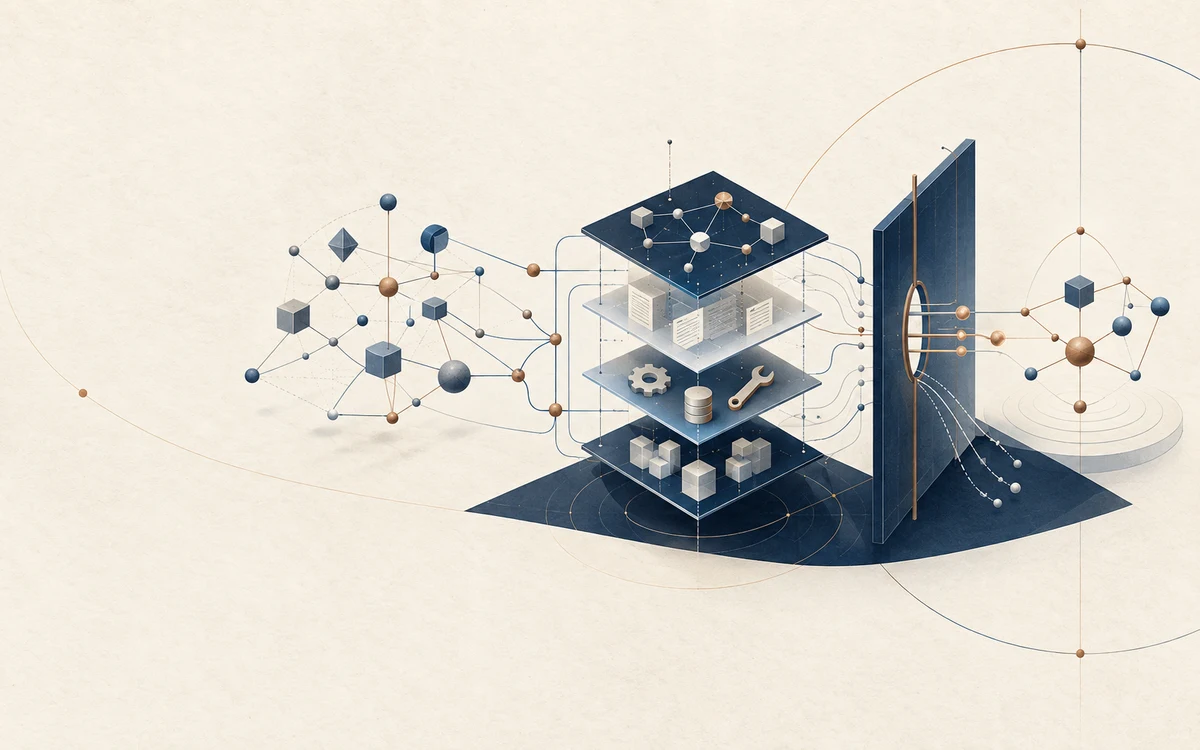
- Treat the ontology as a versioned MCP service with Content, Schema, and Tool layers rather than as a fixed prompt document. The builder agent probes the raw data to ground semantics. The evolution agent finds gaps in failed trajectories, proposes a typed, evidence-grounded patch at one layer, and accepts it only through a paired validation gate on the same backbone.
- Strongest evidence
- Figure 2 shows the three-layer architecture; Figure 4 shows four backbones improving across accepted rounds; Tables 5–7 isolate the contributions of the gate, attribution, diagnosis, editable levels, and content object families; Appendix B Table 8 shows that per-turn context grows while average turns per task fall from 14.6 to 8.4 and total tokens per task fall from 52.6K to 42.0K.
- Main boundary
- The headline gain must be read with scope labels: four-backbone analysis subset, six-backbone main tables, benchmark-specific metrics, and round-wise evolution are not interchangeable. The repository contains inspectable framework code and a demo, but benchmark raw data, prebuilt ontologies, model weights, and complete provider credentials are not delivered as one reproducible bundle.
For speaking invitations, internal engineering sessions, or architecture exchange, see the topics and public work I can bring into the conversation.
Speaking & contact