NotebookLM’s video outputs are expanding beyond narrated slides. In July 2026, The Verge reported a Short Video Overviews format that creates roughly 60-second vertical videos with narration and animation from notebook sources. The useful job of this format is “preview first, then choose what to read,” not replacing the source with a generated authority.
This article stays within publicly observable behavior. Google has not documented the complete retrieval, scripting, speech, and rendering pipeline for this feature, so plausible implementation guesses are not treated as product facts.
What is known—and where the evidence stops
The Verge’s feature report describes a roughly one-minute vertical format with narration, animation, and prompt steering. Separately, Google’s official Cinematic Video Overviews announcement confirms that NotebookLM combines Gemini 3, Nano Banana Pro, and Veo 3 for that cinematic format, with Gemini making narrative and visual decisions. The cinematic announcement does not establish every implementation detail of Shorts.
The responsible conclusions are:
- The output is grounded in notebook sources, and users can steer its topic and presentation.
- A short format reduces preview cost but necessarily drops detail and qualifications.
- Format, subscription eligibility, language support, and UI placement are changing product states; check the current NotebookLM interface and documentation before relying on them.
Public material does not establish a fixed vector-chunking strategy, a specific TTS model, the animation renderer, or the exact model handoff at each stage. Those details should not appear in an “official architecture” diagram.
Write prompts that produce checkable output
Instead of asking for “an engaging video,” constrain the content:
- Name the exact sources or chapters to use.
- State the audience and purpose, such as meeting preparation or exam review.
- Require numbers, dates, and uncertainty to be preserved without adding conclusions absent from the source.
- End with three questions that readers should verify in the original material.
For example:
Summarize chapter three as a vertical video under 60 seconds. Preserve units and comparison baselines for every number. If the source does not establish causality, say “associated with” rather than “caused.” End with two limitations that readers should verify in the original.
This does not guarantee correctness, but it makes errors easier to detect.
Where the format fits
| Task | Fit | Why |
|---|---|---|
| Previewing a long report | High | Builds a map before deeper reading |
| Aligning context before a meeting | Medium | Lowers entry cost, but decisions still need original citations |
| Creating public social assets | Medium | Requires human checks for rights, facts, and brand voice |
| Legal, medical, or financial conclusions | Low | Compression and generation can both erase qualifications |
Practical judgment
NotebookLM’s value is not proof that short video teaches better than text. It is another entry point into a source collection. In a formal workflow, treat the video as a derivative artifact and retain the original sources, generation prompt, and human review record.
For a broader reading workflow, continue with the three-pass approach to reading papers. For the underlying Google media models, see Nano Banana 2 Lite and Gemini Omni Flash.
Sources
Related engineering notes
- Industry Pulse Nano Banana 2 Lite and Gemini Omni Flash: Official Specs, Preview Limits, and Adoption Checks A grounded review of Google's published specs, pricing, and preview limitations for Nano Banana 2 Lite and Gemini Omni Flash, plus what to validate before adopting an image-to-video pipeline.
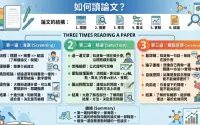
- Cloud & Platform Efficient Academic Paper Reading: The Three-Pass Approach Turning the 'three-pass reading method' into an actionable workflow: 5–10 minutes for screening, 1 hour to grasp methods and evidence, and 'virtually re-implementing' to master details. This article integrates Keshav's three-pass method with Mu Li's practical tips, complete with a checklist and literature review guide.
- Industry Pulse Robots Can Do the Task. Does Automation Pay? Anthropic’s Exposure–Cost Gap Anthropic estimates that robots can perform 74% of US physical tasks in some settings, yet are cost-competitive for only 0.3% of work today. This analysis explains the tiers, cost assumptions, and implications for deployment decisions.